
As an authority in cloud technology and a specialist in evaluating global tech stacks, Maryanne Baines offers a unique perspective on the intersection of physical infrastructure and geopolitical stability. With years of experience assessing how major providers like AWS and Google Cloud build and protect their assets, she has become a leading voice in understanding the vulnerabilities of the modern digital world during times of crisis. Her expertise is particularly vital now, as we witness the real-world consequences of localized conflict on global data systems.
When a data center is struck by external objects and local authorities cut power to manage fires, what specific protocols must be activated? How do you coordinate the assessment of cooling and electrical systems while ensuring the physical safety of operators before attempting a restart?
The immediate priority is always the preservation of life, so once a facility like the one in the UAE is struck, we trigger an emergency shutdown and evacuation protocol. We must wait for local authorities to stabilize the area, which often involves cutting power to stop “sparks and fire” from spreading through high-voltage equipment. After the fire is out, our technical teams conduct a painstaking structural assessment to ensure the building itself isn’t at risk of collapse before anyone steps back inside. Cooling and electrical systems are then inspected component by component, as even a small amount of heat damage or smoke residue can cause a catastrophic short circuit during a reboot. This entire process is methodical because a premature restart could permanently fry hardware that survived the initial strike.
Standard cloud architecture often assumes the loss of only one availability zone. When two out of three zones in a region fail, what are the technical consequences for data ingest? How can companies better design storage systems to handle high failure rates during such localized disasters?
In a typical region, losing one zone is an inconvenience, but losing two out of three, as we saw with the mec1-az2 and mec1-az3 zones, breaks the fundamental redundancy of the cloud. This leads to what we call high failure rates for data ingest and egress, meaning customers literally cannot upload or retrieve their information because the remaining infrastructure is overwhelmed or the data was only mirrored across the two failed sites. To survive this, companies must shift from “regional” redundancy to “multi-region” or “multi-cloud” strategies, ensuring their storage is replicated in geographically distant hubs. It is no longer enough to rely on S3’s standard design; you have to architect your system to expect that an entire metropolitan area or country might go offline simultaneously.
Major tech firms are increasingly building data hubs in regions prone to kinetic warfare. How does this shift affect the risk profile for global AI and cloud services? What specific steps should providers take to safeguard infrastructure located near potential military targets or naval headquarters?
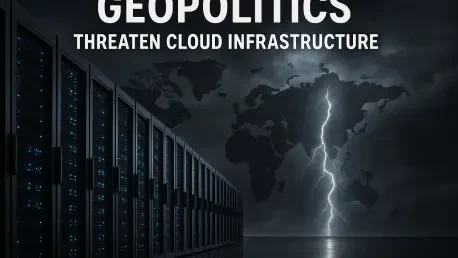
Building in regions like the Middle East is a double-edged sword; these nations have invested heavily in AI, partnering with giants like Nvidia and OpenAI, but they are also zones of intense geopolitical friction. When a data center is located near a strategic target, such as the US Navy’s Fifth Fleet in Bahrain, it becomes “collateral damage” by proximity during missile or drone attacks. Providers must move beyond digital firewalls and start thinking about physical hardening, such as reinforced concrete shells or subterranean server halls. They also need to diversify their physical footprint so that a single strike on a city like Manama doesn’t cripple the digital economy of an entire region.
Recovery for damaged facilities often takes a day or longer due to the need for structural and safety inspections. What are the logistical hurdles of working with local governments during active regional strikes? Could you detail the step-by-step process of repairing a facility caught in a crossfire?
The logistical hurdles are immense because you are competing for the attention of emergency services who are busy dealing with broader civilian or military crises. Once the area is cleared at the 1251 UTC mark or later, we have to coordinate with local power grids to restore high-capacity lines, which may have been damaged miles away from our actual facility. The repair process starts with debris removal, followed by the replacement of sensitive cooling units that likely failed the moment the power was cut. Finally, we perform a “staged power-up,” where we bring small clusters of servers back online one by one to monitor for thermal spikes or electrical instabilities before we tell the public that service is restored.
Infrastructure outages frequently cause a domino effect for data management and software providers. How can these secondary platforms maintain service when their primary cloud provider faces physical destruction? What metrics should these companies monitor to predict and mitigate the impact of regional power disruptions?
Secondary platforms, like Snowflake, often find themselves paralyzed when their underlying AWS or Google Cloud backbone fails, creating a cascading failure across the software-as-a-service ecosystem. To prevent this, these providers must monitor “regional health latency” and “cross-zone replication lag” as leading indicators of trouble. If they see power disruptions beginning in a specific zone, such as the issues reported in Bahrain at 0656 UTC, they should trigger an automated failover to a different geographical region entirely. Maintaining service in these scenarios requires a “zero-trust” approach to infrastructure, where the software assumes the physical facility could vanish at any moment.
What is your forecast for cloud infrastructure stability in the Middle East?
My forecast is that the Middle East will continue to be a high-growth but high-volatility environment where we will see a surge in “sovereign cloud” solutions. Despite the 326 data centers already operating in the region, the recent strikes on Bahrain and the UAE prove that digital resilience cannot be separated from physical security. I expect that over the next three to five years, we will see cloud providers move away from building large, centralized “megahubs” in favor of more distributed, smaller, and hardened facilities. While the technical sophistication of the region’s AI and cloud sectors will advance, the frequency of “localized power issues” and physical disruptions will remain a persistent threat as long as kinetic conflicts continue to intersect with digital infrastructure.