
We are joined by Maryanne Baines, a leading authority on cloud technology, to dissect one of the most talked-about moves in the tech sector. Oracle is betting big on AI, earmarking an additional $15 billion for capital expenditures, a move that, paradoxically, sent its stock tumbling. We’ll explore the disconnect between Oracle’s massive contract wins and Wall Street’s clear anxiety. Our discussion will cover the immense operational challenges of turning a half-trillion-dollar backlog into revenue, the strategic shake-up reflected in the company’s simultaneous restructuring and cloud growth, and the creative, if unconventional, financing strategies Oracle is proposing to fund this ambitious expansion.
Oracle announced a $15 billion capex increase for AI, which led to an 11% stock drop. Can you walk me through the disconnect here? What specific metrics or risks are investors focused on that Oracle’s leadership might be downplaying, despite the strong RPO justification?
It’s a classic case of “jam tomorrow.” On paper, having a Remaining Performance Obligation, or backlog, that totals over half a trillion dollars is staggering. But investors are looking at the immediate, concrete reality of the cash burn. That $15 billion isn’t just a number on a slide; it’s a massive, near-term capital outlay. Investors see the certainty of that expense, but they also see the uncertainty of the revenue timeline and profitability. They’re asking how long it will take to convert that backlog into actual cash flow, especially when a key piece of it involves a company like OpenAI, which hasn’t yet turned a profit. The market is signaling a deep concern about execution risk and the sheer weight of the debt Oracle is taking on to make this happen, a concern so significant that a firm like Morgan Stanley is actively telling people to bet against the stock.
The company’s backlog grew by $68 billion, citing deals with Meta and Nvidia. Could you break down what servicing these large-scale AI contracts actually entails operationally? Detail the kind of timeline and resource commitment needed to turn that massive backlog into recognized revenue.
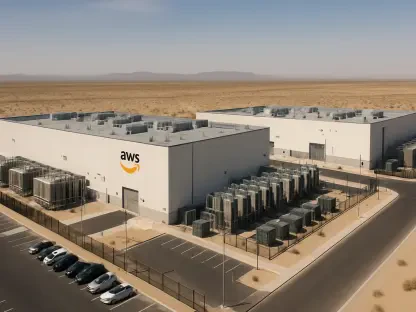
Servicing contracts of this magnitude is a monumental undertaking that goes far beyond just allocating server space. We are talking about a full-scale, physical construction and logistics operation. Oracle has to build out entire data centers, or at least significantly expand existing ones, which involves securing land, power, and state-of-the-art cooling systems capable of handling massive GPU clusters. Then comes the hardware. Procuring, installing, and networking the sheer volume of chips required by clients like Meta and Nvidia is a multi-quarter, if not multi-year, process. Revenue isn’t recognized when the deal is signed; it’s recognized as the service is consumed. This means Oracle is spending billions of dollars today on a buildout that will only start generating revenue incrementally over the next several years. It’s an incredibly capital-intensive and lengthy cycle, and any hiccup in the global supply chain or construction timeline directly delays their ability to monetize that impressive backlog.
The report shows a 387% jump in restructuring costs to $406 million, alongside explosive 68% growth in cloud infrastructure. What does this juxtaposition tell us about Oracle’s strategic pivot? Describe the type of talent or divisions being impacted versus those being aggressively hired for.
This juxtaposition is the financial narrative of a legacy giant aggressively retooling itself for the AI era. The $406 million in restructuring costs, driven by layoffs and severance, is the sound of Oracle shedding its old skin. They are trimming the fat in their legacy, on-premise software divisions and likely reconfiguring sales teams that were built for a different product and a different era. At the very same time, that explosive 68% growth in cloud infrastructure revenue tells you exactly where every dollar and every new hire is going. They are in a hiring frenzy for cloud architects, data center operations specialists, AI/ML engineers, and a new breed of salesperson who can navigate these incredibly complex, multi-billion dollar cloud consumption deals. It’s a painful but necessary pivot, trading the stability of its past for the high-growth potential of its AI-powered future.
Given Morgan Stanley’s concerns about Oracle’s debt, Doug Kehring mentioned creative financing like customers bringing their own chips. How viable are these strategies at scale? Please provide some examples or detail the steps involved in making these non-traditional financing options work with major clients.
These are certainly not your standard financing models, but they represent a pragmatic, if unusual, response to immense financial pressure. The idea of a customer like Meta bringing its own chips is actually quite viable for these hyperscale players. A company with Meta’s purchasing power can often secure huge GPU allocations directly from Nvidia, sometimes on better terms than even a large cloud provider. For Oracle, this is a massive de-risking move. It shifts a multi-billion-dollar hardware cost off their books, allowing them to focus on their core competency: providing the data center space, power, and networking. The other option, where suppliers lease chips instead of selling them, similarly converts a giant upfront capital expenditure into a more manageable operating expense, spreading the cost over time and making the balance sheet look much healthier. These aren’t solutions for every customer, but for the handful of massive clients driving this backlog growth, it’s a clever way to build capacity without taking on all the debt that has Wall Street so worried.
What is your forecast for Oracle’s high-stakes gamble on AI infrastructure over the next 18 to 24 months?
My forecast is for continued volatility, but with a monumental upside if they execute well. The next 18 to 24 months are Oracle’s crucible. Every quarterly report will be intensely scrutinized for two key metrics: the rate of capital expenditure and, more importantly, the speed at which they are converting their $523 billion backlog into recognized revenue. If they can demonstrate a clear, disciplined path to building out this infrastructure and monetizing these huge contracts without letting their debt spiral out of control, the market will have to re-evaluate the company, and the stock could soar. However, the execution risks are enormous. Any significant delays, cost overruns, or issues with a major customer could validate the skeptics’ fears. This period will definitively answer whether Oracle has successfully transformed into a premier AI cloud provider or if it bet too big, too fast.