
Listen to the Article
Cloud unit economics focuses on improving the cost-per-unit of business value by embedding cost-awareness directly into the engineering lifecycle. As organizations navigate the complexities of 2026, the shift from reactive budgeting to proactive, AI-driven financial orchestration has become a competitive necessity. The FinOps Foundation’s sixth annual State of FinOps survey, drawn from 1,192 practitioners managing more than 83 billion dollars in annual cloud spend, captures this shift.
The research found that scope expansion, governance, organizational alignment, and forecasting now collectively outweigh optimization alone, and that 98% of teams actively manage AI costs, up from 31% in 2024. The sheer volume of telemetry data generated by multi-cloud environments, spanning AWS, Azure, and GCP, has surpassed the capacity of manual human analysis. Modern enterprises are deploying machine learning models to reconcile billing data with real-time operational metrics, ensuring every dollar spent on cloud infrastructure is tied to business outcomes. By leveraging automated anomaly detection and predictive forecasting, finance teams can move beyond the month-end surprise of an inflated cloud bill. The goal has shifted from cost reduction to optimizing investment to drive maximum enterprise value through architectural efficiency.
Continue reading to learn how:
- AI shifts FinOps from cost cutting to value optimization;
- Machine learning improves anomaly detection and forecasting;
- Automation builds cost awareness into engineering;
- Finance teams can unify multi-cloud cost data;
- Automated governance reduces waste and scales operations.
You’ll also discover why autonomous FinOps is becoming a strategic approach to maximizing the business value of cloud investments.
Moving Beyond Cloud Cost Cutting
Integrating AI into the FinOps framework has fundamentally changed how organizations view cloud consumption. By using advanced natural language processing and deep learning algorithms, businesses can now parse millions of line items in billing reports to identify previously invisible patterns. This granular visibility enables the identification of micro-inefficiencies, such as orphaned snapshots or over-provisioned instances, that collectively contribute to significant waste.
Independent reporting notes that orphaned snapshots and idle load balancers are among the most common sources of cloud waste, and that fast self-service provisioning paired with slow, fragmented visibility lets that waste accumulate unnoticed. AI-driven insights also bridge the technical jargon of DevOps and the fiscal language of the boardroom. Financial leaders now have dashboards that translate virtual CPU usage into cost-per-transaction or cost-per-customer. This transparency fosters a culture of accountability where engineers understand the fiscal impact of their design choices, leading to more sustainable and profitable software development practices.
Machine Learning: Revolutionizing Anomaly Detection Systems
Anomaly detection has transitioned from a manual oversight task to an automated, real-time security and financial function. Traditional threshold-based alerts often resulted in either a deluge of false positives or missed critical spikes until the billing cycle ended. Academic work on anomaly detection in large-scale cloud systems confirms the limitation, finding that threshold-based methods struggle to detect seasonal and point anomalies, the very fluctuations and sudden spikes that matter most.
Today, machine learning models establish baseline consumption patterns that account for seasonal fluctuations, product launches, and cyclical usage trends, and pair detection with root cause analysis. When a deviation occurs, the system immediately flags the root cause, whether it is a runaway script or an unexpected surge in user traffic. This rapid response capability mitigates financial risk and prevents the bill shock that historically plagued cloud transitions. Moreover, these systems can provide prescriptive recommendations, suggesting specific remediation steps to resolve the anomaly.
Enhancing Budgetary Precision
Predictive modeling is the cornerstone of modern budgetary precision, enabling finance teams to project future expenditures with greater accuracy. By analyzing historical data and correlating it with future business roadmaps, AI can simulate various spending scenarios based on anticipated growth or infrastructure changes. Academic research on cloud resource forecasting confirms that the growing complexity of cloud workloads has driven a strong shift toward machine learning techniques for time-series prediction, enabling proactive adjustments such as autoscaling and capacity planning, though the same work cautions that more complex models do not automatically deliver more accurate forecasts.
Integrating Cost Awareness Through Automation
Integrating cost awareness into the engineering lifecycle requires more than tools; it also requires a shift in organizational philosophy. Automation plays a pivotal role in this transition by injecting financial guardrails directly into the continuous integration and continuous deployment pipelines. Independent analyst research finds that practitioners increasingly want financial context introduced before infrastructure is provisioned, and that most organizations already have the foundation for it, since infrastructure provisioning is largely automated, GitOps practices are common, and CI/CD pipelines frequently integrate infrastructure-as-code. For instance, automated policy engines can prevent the deployment of non-compliant or excessively expensive resources before they ever reach production.
This shift-left approach to FinOps ensures that efficiency is designed into the architecture from the outset rather than being treated as an afterthought. Engineers get real-time feedback on the cost implications of their code, empowering them to make informed trade-offs between performance and price. By democratizing financial data, organizations break down departmental silos and create a unified front focused on maximizing the value of every cloud-native service. This collaborative environment accelerates innovation while maintaining a firm grip on the bottom line.
Harmonizing Disparate Data Streams
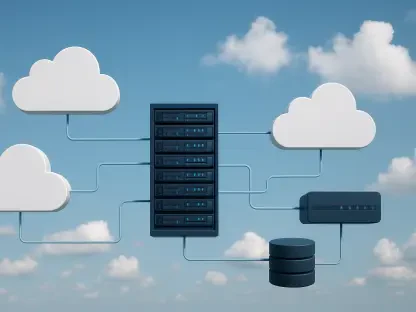
Multi-cloud orchestration has become the standard for modern enterprises seeking to avoid vendor lock-in and enhance resiliency. However, managing the disparate billing formats and pricing models of AWS, Azure, and GCP presents a massive data normalization challenge. Academic reviews of cloud cost management note this directly: provider-specific billing systems differ in cost metrics and reporting formats, and this fragmentation limits centralized governance and hinders real-time identification of cost inefficiencies across platforms. AI helps by creating a unified data layer that federates billing information into a single pane of glass.
This centralized visibility enables cross-cloud cost comparisons and workload optimization based on each provider’s pricing advantages. AI-driven platforms can automatically identify the most cost-effective cloud for a particular workload, considering factors like latency, data egress fees, and regional pricing differences.
Scaling Governance: Automated Policy Enforcement Frameworks
Automated policy enforcement strategies are essential for maintaining governance in a rapidly scaling cloud environment. As organizations expand their digital footprint, manual compliance checks become impossible to sustain without slowing development. Security commentary from the RSA Conference makes the same point, noting that the combination of human involvement and deployment velocity means misconfigurations keep happening, and that teams cannot manually track what is deployed and configured correctly in the cloud. AI-powered governance tools monitor infrastructure in real time, ensuring resources adhere to predefined tagging standards, security protocols, and cost limits. When the system detects a violation, it can automatically terminate the resource or notify the owner for immediate remediation.
This automation reduces the risk of human error and keeps the cloud environment organized and cost-efficient. Moreover, these tools can adapt policies based on emerging trends and historical performance, continuously refining the governance framework. By establishing a robust system of automated checks and balances, the organization can scale its cloud operations with confidence, knowing it maintains financial and operational integrity.
The Future of Autonomous FinOps
The transformation of cloud financial strategy through AI proved decisive for enterprise success. Organizations that adopted these automated frameworks achieved a level of fiscal precision that was previously unattainable through manual methods. By integrating cost awareness into the core of the engineering process, businesses bridged the gap between operational speed and budgetary control. Implementing predictive analytics and real-time governance allowed leaders to make data-driven decisions that maximized the value of their multi-cloud investments. This evolution shifted the focus from simple cost-cutting to a sophisticated model of value realization, where every technological advancement was weighed against its economic impact. The maturity of these autonomous governance systems largely resolved the historical challenges of bill shock and resource waste, paving the way for future growth. Leaders who prioritized this strategic alignment positioned their companies to thrive in a landscape defined by rapid innovation and rigorous fiscal accountability.