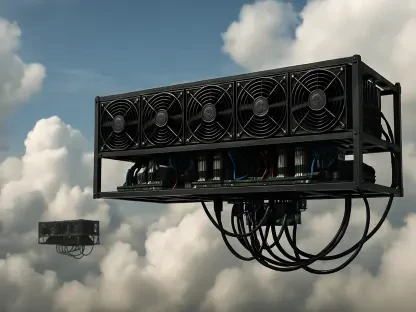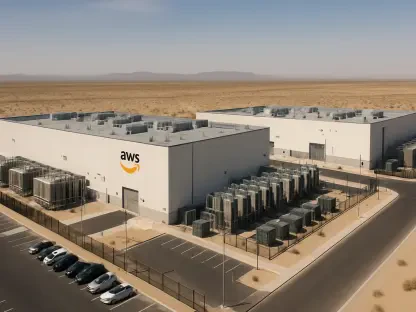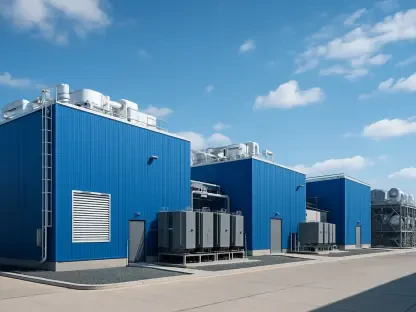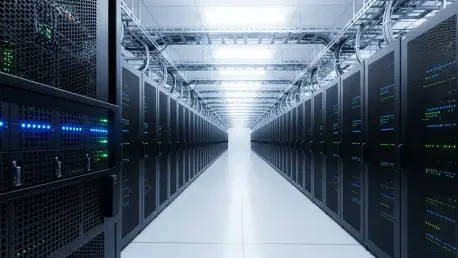

Data centers are projected to drive over 20% of global electricity demand growth through 2030. This surge is reviving power markets that had been stagnant for years. As AI adoption accelerates, these once-background facilities are now at the center of national infrastructure and economic strategy. To gain a better understanding of what this means for business, this article unpacks how AI is contributing to the shift and why the future of innovation depends as much on power supply as on processing speed.
The New Blueprint for Business: AI, Energy, and Infrastructure
Modern data centers were built for speed and scale, driven by a shift to highly virtualized, cloud-based architectures. By abstracting compute, storage, and networking from the hardware while managing it all through software, hyperscalers unlocked new levels of agility and efficiency. But that model, once a competitive advantage, is now running into its limits. The bottleneck isn’t digital anymore; it’s physical.
AI workloads demand more power than traditional computing, and the energy footprint is skyrocketing. According to a report by the International Energy Agency, global data center electricity consumption is projected to more than double by 2026, reaching over 1,000 terawatt-hours. This reality has sparked a search for energy solutions that go far beyond conventional grid infrastructure.
That pressure is forcing tech giants to think like utilities, not just software providers. Companies are now making massive, unprecedented bets on power. Microsoft is connecting data centers to build an AI superfactory in Atlanta, an integrated campus designed to accelerate AI utilization and train new energy models at scale. Meanwhile, Google is teaming up with Westinghouse to fast-track next-gen nuclear reactors, with AI playing a role in their design and deployment. This strategy aims to optimize reactor construction while improving operational safety and efficiency.
Based on these examples, the mandate for businesses is clear: first secure the energy, then build the future. For AI leaders, the power strategy is the business strategy. As energy becomes the new competitive edge, tech giants aren’t going it alone; they’re forging bold partnerships to secure the future of power on a global scale.
New Alliances in a Global Power Play
The scale of the AI era is too big for any one player to go it alone. As the cost of building gigawatt-scale data center campuses soars, a new wave of strategic alliances is taking shape, uniting tech giants, utilities, infrastructure developers, and governments in high-stakes partnerships.
This trend is global, with new technological hubs emerging to challenge established markets. For example:
Asia-Pacific: In Malaysia, palm oil conglomerates are converting vast tracts of land into data infrastructure hubs, combining their physical footprint with rising energy demand. In Thailand, a 1-gigawatt power platform is underway through a multi-party consortium focused solely on next-gen computing needs.
Middle East: The UAE and Saudi Arabia are racing to become global AI heavyweights, leveraging their energy reserves to attract some of the world’s largest tech investors to build cloud-scale infrastructure across the region.
These moves show that the race to build the future of computing is a worldwide phenomenon driven by access to land and, more importantly, long-term power commitments. Those who lock in long-term energy will shape the next era of AI infrastructure.
Rethinking the Approach to AI Factories
AI isn’t just reshaping software; it’s rewriting the physical blueprint of the data center. The intense power demands and heat output of AI hardware have pushed traditional air-cooling methods to the brink, making them too inefficient for the job.
In response, the industry is rapidly embracing advanced liquid cooling. Techniques like direct-to-chip systems, which channel liquid straight to heat-heavy processors, and full immersion cooling, where entire servers are submerged in non-conductive fluid, are moving from experimental to essential.
These innovations aren’t just about preventing hardware meltdowns. They’re key to improving energy efficiency, shaving operational costs by slashing Power Usage Effectiveness by up to 40%. But this transformation comes at a price, requiring new skills, new supply chains, and entirely new construction approaches. The AI factory of the future won’t just look different; it will be built with a unique set of rules.
The Shifting Economics of AI-Ready Infrastructure
As AI transforms the data center into a high-performance computing factory, the economics behind it are shifting just as dramatically. What was once a capital expenditure game (buying servers, building facilities) is rapidly evolving into a model driven by long-term operational costs, with energy emerging as the biggest line item.
Electricity isn’t just a utility anymore; it’s a strategic asset. For hyperscalers, the new challenge is securing enough reliable, affordable power to support continuous AI training and inference at scale. That’s pushing companies like Meta to explore bold new financial models. By directly trading electricity, Meta is forging the kinds of long-term agreements that give utility providers the confidence to fund and build new generation capacity.
For enterprises, this changes the ROI calculation for major AI initiatives. Planning an AI initiative now means modeling energy demand, factoring in power market volatility, and reevaluating what “total cost of ownership” really means, not just in dollars, but in megawatts. In this new landscape, financial agility matters as much as technical innovation.
A Distributed Ecosystem for Diverse Needs
While hyperscale AI factories dominate headlines, the broader data center ecosystem is far from one-size-fits-all. Most businesses don’t need a gigawatt-scale campus to stay competitive, but they do need infrastructure that aligns with their specific workloads, geographies, and compliance requirements.
Businesses should consider these key approaches:
On-Premises Data Centers: These facilities still play a critical role, especially for industries where data sovereignty, regulatory compliance, and security are non-negotiable. They enable complete control over infrastructure, which is essential for meeting regulatory standards such as GDPR and HIPAA while minimizing third-party risk.
Colocation Facilities: These offer a flexible alternative. Companies can place and manage their own hardware in professional-grade facilities without bearing the full responsibility for real estate, power, and operational staffing. It’s a cost-effective solution for businesses in transition or scaling regionally.
Edge Data Centers: These smaller installations are strategically placed closer to end-users. Edge locations are critical for reducing latency and supporting real-time applications like the Internet of Things, autonomous systems, and retail analytics.
This multi-tiered model ensures that computational power, from massive training clusters to low-latency inference servers, is available exactly where it’s needed most. For infrastructure leaders, navigating this diverse ecosystem requires clarity, agility, and a new kind of strategy; one that balances scale, performance, and proximity.
The Compact Playbook for Infrastructure Leaders
The rise of AI has transformed the data center from a passive storage facility into a high-performance computing engine. Infrastructure is no longer just about racks and bandwidth; it’s about power strategy, energy economics, and physical design. Today, future innovation depends not only on mastering silicon but also on mastering the electrical grid.
For infrastructure leaders operating in this new reality, the playbook is evolving. These are the core priorities:
Audit Your Power Strategy First: Don’t greenlight an AI deployment without understanding its full energy footprint. Ask tough questions of cloud providers, not just about compute performance, but about how they are sourcing power and whether their locations offer long-term grid reliability.
Evaluate Total Cost of Ownership, Not Just Compute: Factor in the projected energy costs over the lifespan of an AI application. Cheaper computing can come at a high operational cost in regions with volatile electricity prices. With that in mind, energy should now be a fundamental part of ROI modeling, weighed alongside performance, latency, and resilience.
Diversify Your Infrastructure Portfolio: Relying on a single model isn’t sustainable. Adopt a hybrid strategy that leverages hyperscale AI campuses for model training, colocation for specialized or high-compliance environments, and edge data centers to bring low-latency services closer to users.
Combined, these tactics offer a foundation for resilience, scalability, and smarter growth. In an environment where watts are as crucial as workloads, infrastructure leadership has never mattered more.
Conclusion
As AI accelerates, it’s reshaping the economics, design, and geography of digital infrastructure. From hyperscale superfactories and nuclear-powered partnerships to the rise of edge and colocation models, a new playbook is emerging in which energy strategy and innovation strategy are inseparable.
Infrastructure leaders must act with urgency. That means rethinking ROI in megawatts, building flexible infrastructure portfolios, and forging bold alliances that reach beyond IT. This is no longer just an operational decision; it’s a competitive one. The organizations that lead in AI by 2026 will be the ones that mastered the grid as well as the algorithm. The future is being built now, and it runs on sustainability and power.