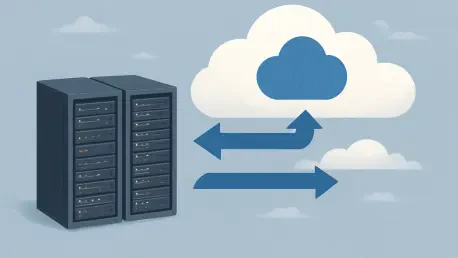

Most cloud programs that move fast do not fail on cutover day. They fail on the business case. Lift-and-shift delivers speed and risk control, but it often drags technical debt into the cloud and inflates run costs. Treat it as a short bridge to a better operating model, not the destination.
The right framing changes outcomes. Lift-and-shift is best used to hit an urgent deadline, exit a data center, or buy time for complex estates. Then a second phase must rightsize, modernize, and harden. Without that second act, the organization pays more for the same architecture and calls it progress.
What Lift-And-Shift Really Is
Lift-and-shift, often called rehosting, moves workloads to cloud infrastructure-as-a-service (IaaS) with minimal change. The goal is speed and predictability. Servers, middleware, and application binaries move largely as they are. Teams replicate the compute footprint with virtual machines, map storage and networking equivalents, and adjust configurations only where required.
This is different from replatforming or refactoring. Replatforming involves swapping some components, such as adopting a managed database service. Refactoring changes the application design to use cloud-native services. Rehosting preserves the structure and dependencies, allowing the organization to move quickly and stabilize before a larger change.
How Lift-And-Shift Works In Practice
A disciplined rehost follows a clear sequence.
Assess And Discover. Inventory servers, dependencies, data flows, and licensing. Identify risk, technical constraints, and target landing zones. Use automated discovery to reduce blind spots.
Design The Landing Zone. Build a governed baseline in the target cloud. Define identity and access, network segmentation, tagging, security controls, logging, and backup standards.
Provision Target Resources. Create VM templates, images, storage, and network constructs that mirror or safely rightsize the on-premises estate.
Replicate And Sync Data. Configure continuous block-level or snapshot replication. Establish runbooks for the final delta sync to reduce downtime for cutover.
Migrate And Validate. Execute migration waves. Test application function, performance baselines, dependencies, and failover. Confirm observability and backup jobs are active and passing.
Cut Over And Stabilize. Shift traffic, update DNS, and hold a hypercare window with strict change control. Decommission source systems only after the rollback windows and data retention requirements end.
Where Lift-And-Shift Makes Sense
Lift-and-shift delivers outsized value when time and risk dominate.
Data Center Exit. Lease expirations and consolidation deadlines make rehosting the pragmatic path to avoid extension fees and capital outlays.
Hardware Refresh Avoidance. Aging infrastructure and expiring warranties can be retired without new capital expenditure.
Mergers And Carve-Outs. Transitional service agreements put a clock on separation. Rehosting removes infrastructure as a blocker.
Licensing Traps. Complex or proprietary software may not support quick refactoring. Rehost first, then evaluate alternatives.
Compliance And Audit Pressure. Unifying controls in a single cloud landing zone can speed remediation. The team moves, then hardens.
The Trade-Offs Leaders Underestimate
Rehosting is not neutral. It changes cost, performance, and operating risks in specific ways.
Cost And FinOps Reality
Lift-and-shift often migrates overprovisioned VMs, idle resources, and outdated backup policies. The cloud makes every inefficiency visible on the invoice. According to multiple 2025–2026 industry benchmarks, baseline cloud waste across enterprises typically ranges between 28% and 35% of total cloud spend. The largest sources of waste include idle resources (20–25%), overprovisioning (15–20%), and orphaned environments (10–15%).
Performance Mismatch
An application tuned for high-frequency local storage or chatty east-west calls may slow down across cloud networks. Without replatforming or caching, latency-sensitive services can degrade. Production traffic patterns also change in cloud environments, thereby exposing hidden bottlenecks.
Operational Gaps
Tools that worked on-premises may not perform as well in the cloud. Backups, monitoring, and incident response need cloud-aware runbooks. Teams must define who patches guest operating systems, who manages immutability for backups, and how to restore at scale. Uptime risks increase when this is not clear. According to Uptime Institute’s 2024 Annual Outage Analysis, 60% of outages cost between $100,000 and $1 million, with 15% exceeding $1 million in total impact when factoring in recovery, reputation damage, and regulatory consequences.
Security And Identity
The shared-responsibility model is simple on paper and complex in production. Identity and access management, key management, network egress controls, and vulnerability management all change in the cloud. Reusing on-premises security groups or flat networks can create openings for attackers to exploit. Cloud-native policy-as-code is not optional once the footprint grows.
Licensing And Support
Some vendors restrict cloud deployment models or meter by core differently. A quick rehost can push workloads into noncompliant or expensive terms if the licensing team is not involved.
Designing For Measurable Outcomes
Leaders should set measurable targets for both the rehost and optimization phases. Agree on the score before the game begins.
Velocity. Migration wave throughput, percentage of automated cutovers, rollback rate, and mean time to cutover readiness.
Service Quality. Response time baselines, error budgets, recovery time objective (RTO), and recovery point objective (RPO) before and after migration.
Cost. Cost per application per month, unit costs (e.g., per user or per transaction), rightsizing savings, commitment coverage, and percentage of tagged spend.
Risk. Critical vulnerability exposure days, audit finding closure rate, backup restore success rate, and percentage of assets under policy-as-code enforcement.
Tooling Without the Hype
The tooling landscape is broad. The best tool is the one the operations team can run at scale, not the flashiest demo.
Azure Migrate provides discovery, assessment, and migration orchestration. Azure Site Recovery adds replication and failover capabilities for both disaster recovery and migration waves.
AWS Application Migration Service (MGN), based on technology from the CloudEndure acquisition, offers agent-based replication and cutover workflows. It replaced the older AWS Server Migration Service for most scenarios.
Google Migration Center consolidates assessment and planning. Migrating to Virtual Machines helps rehost VMware and other workloads into Compute Engine.
Enterprise tools and services from established vendors can help with heterogeneous estates and compliance-heavy environments. Integration with change management and CMDB systems matters more than feature checklists.
Tool choice does not remove the need for testing. Prove cutover steps, rollback paths, and data integrity with nonproduction runs. Capture every manual fix as a runbook item. Automate it on the next wave.
Build The Landing Zone And Day-2 Muscle First
Lift-and-shift is safer with a hardened landing zone and day-2 operations ready on day 1.
Identity And Access. Centralize identity. Use least-privilege roles, conditional access policies, and short-lived credentials. Enforce MFA for administrators.
Network And Connectivity. Segment networks, define traffic inspection points, and set egress policies. Plan hybrid connectivity capacity and failover.
Tagging And Cost Controls. Define mandatory tags for cost, owner, environment, and data classification. Enforce with policy, so untagged resources do not launch.
Observability. Standardize logging, metrics, and tracing. Ensure logs land in centralized stores with retention aligned to compliance.
Backup And Recovery. Define backup schedules, immutability, and tested restores. Measure restore time in hours, not weeks.
Security Baselines. Apply hardened images, patch cadence, vulnerability scanning, and configuration compliance as code.
Rightsizing alone can materially reduce compute costs when estates are overprovisioned. According to Flexera’s 2024 State of the Cloud Report, businesses waste an average of 30-40% on cloud resources due to overprovisioning, with rightsizing strategies and automated shutdown schedules for dev/test environments capable of recovering 12-25% of total cloud spend within the first 90 days of implementation.
Financial Planning And Unit Economics
The business case hinges on unit economics, not just a lower total cost. Model cost per user, per API call, or per order. The CFO will ask how unit costs trend over time.
A simple example shows the dynamic. An on-premises server with 16 vCPUs and 128 GB of RAM supports a monolithic application at an average CPU utilization of 12%. A like-for-like VM in the cloud at the same size will work, but it will likely be wasteful. Rightsizing two instance families and committing to a one-year term can significantly reduce monthly compute costs. Add storage tiering and snapshot lifecycle policies to reduce I/O and backup spend. The point is not the exact number. The point is to move from static capacity to elastic, cost-aligned to actual usage.
Market Context Matters
Cloud adoption continues to expand across regions and industries. According to Gartner’s November 2024 forecast, global end-user spending on public cloud services is expected to reach $723.4 billion in 2025, up from $595.7 billion in 2024, a 21.5% increase.
At the same time, cloud waste continues to account for approximately 32% of total cloud spend according to 2025 industry analyses from CloudZero and VMware, translating to over $200 billion in potential waste globally, underscoring why pure rehost strategies rarely meet cost expectations without rapid optimization phases.
Conclusion
Lift-and-shift earns its keep when time is short, risk tolerance is low, and complexity is high. It creates a clean break from aging data centers and shaky hardware. It also creates a fork in the road. Treat rehosting as a first phase with a defined end date, not a policy. Then move decisively into optimization and modernization to improve unit economics, resilience, and developer velocity.
Leaders who succeed write that expectation into the plan. They fund the landing zone up front, enforce day-2 controls on day 1, and set explicit targets for rightsizing, commitment coverage, and service quality improvements in the first 90 days after cutover. They also accept that not every workload warrants rehosting. Some should be retired. Some should be refactored before a move. The payoff comes from selecting the right path for each system and measuring progress relentlessly, not from celebrating a fast cutover that leaves the business paying more for the same results.