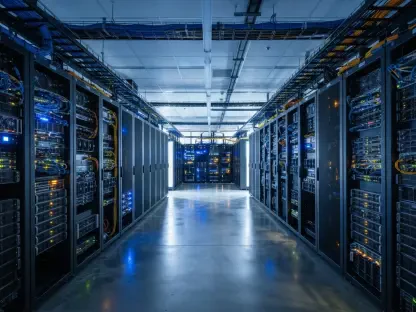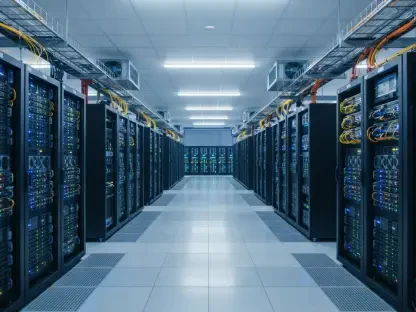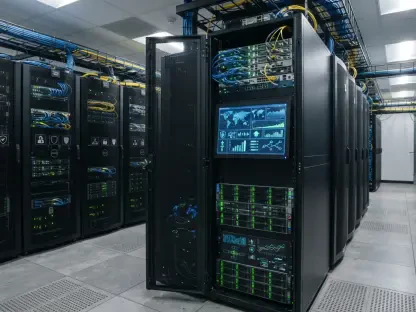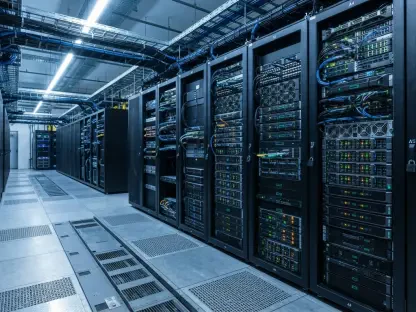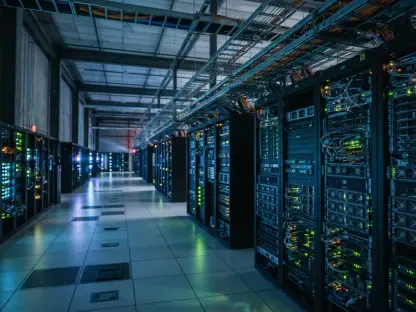

The sheer velocity of Amazon’s capital deployment has effectively transformed the company from a retail-centric digital marketplace into a global utility provider focused on the raw power of artificial intelligence. This shift is most evident in the recent procurement of a massive $80 billion loan facility, a financial maneuver that indicates a fundamental change in how technology giants manage their balance sheets to support long-term growth. The financing is not merely a liquidity buffer but a targeted instrument for the aggressive expansion of the Amazon Web Services (AWS) ecosystem, reflecting a broader market trend where infrastructure dominance is prioritized over immediate cash retention. By securing such a substantial credit line, the organization is acknowledging that the current phase of AI development requires a physical scale that cannot be funded through traditional operational cash flows alone.
Strategic Shift Toward AI-First Infrastructure Financing
The core principle behind this new financial strategy involves transitioning from a diversified investment approach toward one that is strictly AI-centric. In the current technological landscape, the distinction between general cloud computing and AI-specific infrastructure has blurred, necessitating a specialized framework for capital allocation. This financing model emerged as a response to the skyrocketing costs of high-density data centers, which require specialized cooling, massive power inputs, and advanced networking architectures. It places Amazon in a unique position where it can commit to multi-year construction projects without depleting the capital needed for its retail and logistics arms.
This shift is significant because it highlights the necessity of “infrastructure-as-a-bank” within the tech sector. While competitors often rely on traditional bond issuances or internal reserves, the use of a dedicated $80 billion facility specifically for technology procurement suggests a more modular and scalable way to manage debt. By isolating infrastructure costs within this framework, the company can better track the return on investment for its AI initiatives while maintaining a clear view of its fiscal health. This context is essential for understanding how the company intends to maintain its lead in the cloud sector as computing demands continue to evolve toward massive generative models.
Core Pillars of the $80 Billion Infrastructure Strategy
Asset-Backed Supplier Financing Framework
One of the most critical components of this strategy is the shift toward asset-backed supplier financing. Unlike unsecured loans, this framework allows the company to borrow against the very hardware and property it acquires, significantly lowering the cost of capital. This mechanism functions by linking the credit availability directly to purchase orders, ensuring that the debt is always tied to tangible assets like servers and networking equipment. This approach is significant because it mitigates the risk for lenders while providing the company with the flexibility to scale its borrowing in lockstep with real-world demand for cloud capacity.
Furthermore, this framework allows for a more efficient management of the hardware lifecycle. Because the debt carries a five-year maturity—matching the typical operational lifespan of modern server racks—the company can synchronize its repayment schedules with the depreciation of the assets. This level of financial engineering is unique compared to traditional corporate debt, as it essentially creates a self-liquidating cycle where the revenue generated by the AI services pays down the equipment that facilitates them. This specialized implementation ensures that the organization can maintain a modern fleet of hardware without facing a massive capital “cliff” when it comes time to refresh the technology.
Vertically Integrated Silicon and Hardware Acceleration
The second pillar of this strategy involves the technical integration of proprietary silicon, such as the Trainium and Inferentia chips, into the global data center footprint. By designing its own AI accelerators, Amazon reduces its dependence on third-party vendors and gains much tighter control over both performance and cost. These chips are specifically engineered to handle the high-throughput requirements of large language models, offering a more power-efficient alternative to general-purpose processors. This vertical integration is a performance differentiator because it allows AWS to offer specialized computing instances at a lower price point than competitors who must pay a premium for merchant silicon.
Real-world usage has shown that this integrated approach significantly improves the performance-to-cost ratio for developers training massive datasets. The significance of this technology lies in its ability to decouple infrastructure growth from the supply chain constraints of the broader semiconductor industry. While others may face delays due to chip shortages, the internal production of Graviton and Trainium processors ensures a steady supply of compute power. This technical advantage, funded by the new $80 billion facility, allows the company to scale its AI services at a pace that is difficult for less integrated providers to match.
Current Trends in Large-Scale Computing Capital Expenditure
The current landscape is defined by an unprecedented surge in capital expenditure, with Amazon’s spending reaching approximately $220 billion for the full year of 2026. This trend reflects a broader industry shift where the winners of the AI era are determined by the sheer volume of their physical infrastructure. As of late, the market has seen a transition from software-defined services toward hardware-defined dominance, where owning the underlying “metal” is the only way to ensure reliable service delivery. This increase in spending is driven by the fact that AI workloads are significantly more resource-intensive than traditional web hosting, requiring a complete reimagining of data center density.
Moreover, there is a visible move toward decentralized power procurement, where tech companies are investing directly in energy projects to secure their own utilities. This innovation in how capital is deployed—moving from just buying servers to buying the power plants that run them—is a major shift in industry behavior. This trend suggests that the future of large-scale computing will be as much about energy management and real estate as it is about software development. The trajectory of this expenditure indicates that the bar for entry into the top-tier cloud market is now measured in hundreds of billions of dollars, creating a significant moat for established leaders.
Real-World Applications of Expanded AWS Capacity
The deployment of this expanded capacity is already visible across various industries, particularly in sectors requiring high-frequency data processing and complex simulation. For instance, the pharmaceutical industry uses these expanded AI clusters to accelerate drug discovery, running millions of virtual molecular tests in a fraction of the time previously required. This capability is made possible by the rapid installation of AI accelerators, which are now being brought online at a rate of one every 14 seconds. Such implementations demonstrate that the investment is translating directly into high-value services that solve complex scientific challenges.
In the financial services sector, the expanded capacity allows for real-time risk assessment and fraud detection on a global scale. By leveraging the low-latency infrastructure provided by new data center builds, banks can process billions of transactions with near-instantaneous AI oversight. Another unique use case involves the media and entertainment industry, where generative AI models are being used to automate visual effects and rendering, tasks that were once prohibitively expensive. These real-world applications show that the massive capital infusion is not just a theoretical expansion but a practical upgrade to the global digital economy.
Technical Hurdles and Fiscal Sustainability Challenges
Despite the impressive scale, this aggressive expansion faces significant technical hurdles, particularly regarding power consumption and heat dissipation. Modern AI hardware generates heat at a density that traditional air-cooling systems cannot handle, necessitating the development of liquid cooling and advanced thermal management technologies. These requirements add another layer of complexity to data center construction, potentially slowing down deployment schedules. Furthermore, the reliance on a few key energy providers creates a bottleneck, as the power grid in many regions is not yet equipped to handle the massive load of new AI facilities.
Fiscal sustainability is another concern, as the increase in capital expenditure has led to a negative free cash flow of $42.4 billion over the past 12 months. While the company remains profitable, the sharp rise in depreciation and interest expenses could eventually pressure margins if revenue growth from AI services does not keep pace. There is also a market risk associated with the variable interest rates of the new $80 billion facility, which could increase the cost of debt in a fluctuating economic environment. Ongoing development efforts are focused on improving the energy efficiency of proprietary chips to mitigate these operational costs and ensure long-term viability.
The Future Trajectory of Global AI Utilities
Looking ahead, the role of AI infrastructure will likely evolve from a specialized service into a ubiquitous global utility. As we move from 2026 toward 2030, the focus will shift from building capacity to optimizing the distribution of intelligence across the edge and the core. This will likely involve the creation of smaller, more localized data centers that provide low-latency AI processing for autonomous vehicles and smart cities. The long-term impact of this trajectory will be a world where compute power is as accessible and reliable as electricity, fundamentally changing how businesses and societies function.
Potential breakthroughs in quantum computing and optical networking could further accelerate this development, allowing for even more massive datasets to be processed with minimal energy. The $80 billion financing is just the beginning of a multi-decade transformation that will see the consolidation of computing power into a few highly efficient global platforms. As these platforms become more integrated into every aspect of life, the companies that control the infrastructure will hold a position of unprecedented influence. This evolution suggests that the current investment cycle is merely the foundation for a much larger and more complex technological era.
Assessment of Amazon’s Infrastructure Evolution
The review of the financing strategy and infrastructure expansion revealed a company that successfully pivoted toward a high-risk, high-reward model. The shift in capital allocation demonstrated that the organization recognized the fundamental change in computing requirements before the market reached a saturation point. By utilizing asset-backed supplier financing, the company managed to secure the necessary hardware while maintaining a disciplined approach to debt maturity. The development of in-house silicon further distinguished the platform from competitors, providing a clear path to cost leadership in an increasingly crowded AI market.
Ultimately, the transition toward an AI-first infrastructure represented a necessary evolution for a global technology leader. While the fiscal impact was significant, the strategic benefits of securing energy and compute capacity outweighed the short-term pressure on free cash flow. This evolution set a new standard for how large-scale technology projects are funded and executed, proving that physical infrastructure is the ultimate competitive advantage. Moving forward, enterprises should look to integrate these high-capacity AI tools into their core operations to remain competitive in an environment where intelligence is the primary commodity. The success of this model will depend on the continued ability to innovate at the chip level while managing the immense energy demands of the next decade.