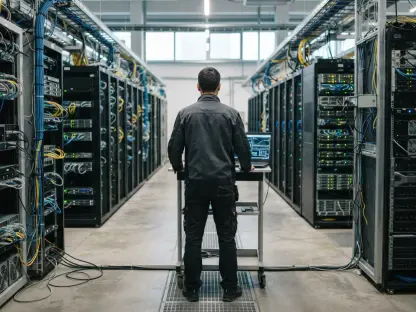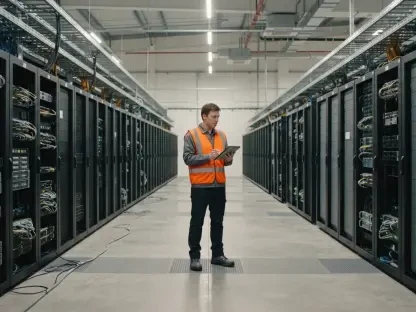

In regions like Texas and Virginia, the ability to secure air permits for on-site generation is now just as critical for data center developers as securing a grid connection. The global cloud infrastructure landscape is currently undergoing a pivotal transformation as the demand for high-performance artificial intelligence outpaces the traditional capacity of electrical grids. As of late 2026, the primary obstacle to technological growth has transitioned from the availability of specialized chips to the physical limitations of local power distribution. This fundamental shift has forced the industry to move beyond traditional hardware concerns and address the critical question of how to maintain operational stability when the grid can no longer sustain the load. In this environment, power is no longer merely a utility to be purchased but is a scarce input that must be managed with precision. The historical model of the data center as a passive, reliable consumer of grid electricity is being replaced by a model where the facility acts as an active, flexible grid participant. Operators are now treating energy as a strategic asset, acknowledging that the future of computing depends as much on electrical engineering as it does on silicon architecture. The rapid scaling of generative models has created a sense of urgency that traditional utilities, bound by decades-long planning cycles, are often unable to meet without significant technological intervention.
The Strategic Shift in Energy Procurement
The core problem stems from a fundamental mismatch in infrastructure development timelines between the high-tech sector and the utility industry. While electrical utilities traditionally plan for load increases that occur gradually over several decades, a single modern AI data center campus can demand hundreds of megawatts virtually overnight. This “step change” in electricity requirements creates localized grid overloads at specific substations, often before transmission upgrades can even clear the lengthy permitting stages required for new high-voltage lines. Consequently, the bottleneck for deployment has shifted from the data center’s internal design to the external constraints of the power delivery network. To navigate this disparity, developers are increasingly taking energy planning into their own hands, often years before a facility is even slated to break ground. This proactive approach involves coordinating with regional transmission organizations and pursuing independent power studies to identify potential points of failure in the local distribution system. Without these early interventions, the risk of stranded assets—data centers that are built but cannot be powered—becomes a reality that could derail the pace of innovation across the entire cloud sector.
This environment of scarcity has fundamentally altered the relationship between data center operators and the public power grid. Rather than simply requesting a connection and paying the prevailing rate, large-scale developers are now entering into complex partnerships with utilities to fund substation expansions or transmission line reinforcements. In some jurisdictions, the data center operator essentially acts as a co-investor in public infrastructure, providing the capital necessary to accelerate upgrades that would otherwise take a decade to complete. This shift also includes a move toward more transparent energy forecasting, where cloud providers share granular data about their expected growth trajectories to help utilities plan more effectively. However, even with improved coordination, the sheer volume of power required by the current generation of GPU clusters means that grid upgrades alone are rarely sufficient. The realization that the grid cannot be the sole provider of energy has led to the exploration of diverse technological solutions designed to reduce dependence on centralized power plants and traditional transmission corridors. By diversifying their energy sources, operators can mitigate the risks associated with grid instability and ensure that their computational capabilities continue to expand regardless of local infrastructure constraints.
Software Orchestration of Dynamic Workloads
Modern software solutions are becoming the first line of defense against grid overload by transforming data centers into intelligent, controllable energy resources. Grid-interactive software allows facilities to respond to utility signals in real time, effectively enabling the data center to act as a virtual power plant. By identifying and prioritizing workloads, these systems can pause or throttle non-urgent tasks—such as batch data processing, video transcoding, or AI model checkpointing—during periods of peak regional demand. This capability allows operators to shed significant load without compromising the integrity of mission-critical services. Instead of being a rigid block of demand, the data center becomes a fluid participant in the energy market, able to ramp its consumption up or down based on the health of the local grid. This flexibility is essential for maintaining stability in regions with high renewable energy penetration, as it allows data centers to absorb excess solar or wind power during the day and reduce their draw when the sun sets or the wind dies down.
Beyond real-time response, a sophisticated framework of flexible operations is emerging to manage compute loads across different dimensions. Temporal shifting involves moving non-critical workloads to take advantage of overnight troughs in energy demand, while spatial shifting transfers tasks across geographical regions to facilities where the grid is under less stress. For instance, a training job for a large language model might be shifted from a Virginia facility experiencing a heat-wave-induced power crunch to a facility in a cooler climate with an abundance of hydroelectric power. Intensity flexibility serves as a final safeguard, allowing a facility to lower its total operational draw through hardware-level power capping during regional emergencies. This operational shift requires a change in business models, particularly regarding service-level agreements. To make load shedding viable, operators must develop tiered contracts where customers can opt for lower-cost, interruptible compute time. By incentivizing flexibility through pricing, data centers can maximize their utility while minimizing their impact on the surrounding electrical infrastructure, creating a more harmonious relationship between the digital economy and the physical power grid.
Self-Sufficient Power via Modular Microgrids
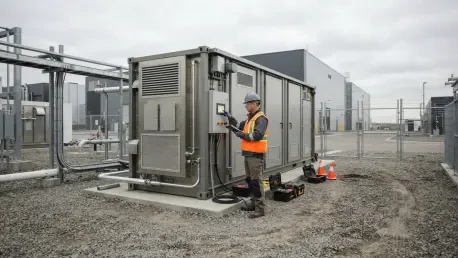
To bypass multi-year queues for grid interconnection, developers are increasingly turning to behind-the-meter solutions that allow for on-site power generation. These modular microgrids enable a facility to generate and consume its own energy without crossing the utility’s billing boundary for its primary load. This approach provides a path to rapid deployment in regions where the grid is already at its breaking point and the utility is unable to guarantee a stable connection within a reasonable timeframe. By taking control of their own power generation, data center operators can ensure that their expansion plans are not dictated by the limitations of external infrastructure. This move toward energy independence is particularly common among hyperscalers, who have the capital and technical expertise to manage complex electrical systems. The microgrid model also offers enhanced reliability, as it isolates the data center from grid-wide outages or voltage fluctuations that could otherwise damage sensitive hardware. This transition marks the evolution of the data center from a simple server farm into a sophisticated energy node capable of maintaining its own operational continuity.
Solid oxide fuel cells have emerged as a primary technology in this space due to their high electrochemical efficiency and modular design. Unlike traditional combustion engines that rely on burning fuel to create motion, fuel cells generate electricity through a chemical reaction, which is significantly quieter and produces fewer local pollutants. These systems provide firm, baseload power that is independent of grid fluctuations or the intermittency of renewable sources like solar and wind. Their scalable nature allows data centers to add power capacity in small increments that match the growth of their server halls, providing a flexible alternative to massive, one-time substation upgrades. However, becoming a self-sufficient utility carries significant regulatory and operational risks. Operators must manage fuel procurement, environmental compliance, and long-term maintenance while navigating complex local air quality permits. Despite these hurdles, the speed-to-market advantage of on-site generation makes it an increasingly attractive option for those who need to keep pace with the ongoing AI revolution. The ability to deploy reliable power in months rather than years is a competitive advantage that outweighs the complexities of managing a proprietary power plant.
Diversifying the Storage Portfolio for Resilience
Energy storage is being redefined as a layered system designed to mitigate risks across various time horizons, ranging from milliseconds to several days. Lithium-ion batteries remain the industry standard for immediate “bridge power,” providing the instantaneous response needed to protect sensitive GPU clusters from voltage sags and momentary interruptions. This short-term storage ensures that secondary power sources, such as on-site generators or fuel cells, have sufficient time to come online and stabilize the load without causing a system crash. As data centers adopt denser and more power-hungry hardware, the role of these batteries as a high-speed “shock absorber” becomes even more critical. However, while lithium-ion is excellent for short-term bursts of energy, it is often not cost-effective for long-duration storage. This has led to the adoption of a multi-tiered strategy where various battery chemistries are used to address distinct operational needs. By combining short-term and long-term storage, operators can create a comprehensive safety net that protects against everything from minor grid glitches to major infrastructure failures.
For longer disruptions, the industry is exploring long-duration energy storage technologies capable of sustaining operations for 10 to 100 hours. Innovations such as iron-air batteries, which store energy through the reversible rusting of iron, and redox flow batteries, which use large tanks of liquid electrolyte, offer scalable solutions for multi-day grid constraints. These systems are particularly valuable for arbitrage, allowing data centers to store energy when it is abundant and inexpensive—such as during peak solar production—and discharge it during periods of high prices or low grid availability. Thermal energy storage provides another innovative alternative by capturing energy as heat or ice for later use in facility cooling, effectively reducing the electrical draw required for air conditioning during the hottest parts of the day. By utilizing this diverse spectrum of storage chemistries, data centers can protect themselves against extended outages and contribute to overall grid stability by reducing their peak demand. This multi-tiered strategy transforms the facility from a vulnerable consumer into a resilient energy node that can navigate the complexities of a modern, often strained, electricity market.
Thermal Innovation for High-Density Racks
Cooling represents one of the largest non-compute energy draws in data centers. As AI racks exceed 100 kilowatts, traditional air-cooling methods are reaching their physical limits. The energy required to move massive volumes of air across heat sinks is becoming a significant portion of a facility’s total power budget, often leading to inefficiencies that the grid can no longer afford to support. This thermal challenge has made the adoption of advanced liquid cooling technologies a strategic necessity rather than a niche experiment. Liquid is significantly more efficient at capturing heat than air, allowing for much higher density in server halls while simultaneously reducing the total energy required for thermal management. This efficiency has a direct impact on the energy crisis; every watt saved in the cooling process is a watt that can be redirected to computational tasks or simply removed from the facility’s total demand on the local grid. For the next generation of AI-focused data centers, liquid cooling is transitioning into a foundational requirement for sustainable and cost-effective operations.
Liquid cooling technologies generally fall into two categories: direct-to-chip systems and immersion cooling. Direct-to-chip methods involve circulating coolant through cold plates that are mounted directly onto the processors, capturing heat at the source and carrying it away through a closed loop. Immersion cooling takes a more radical approach, submerging the entire server in a dielectric fluid that is thermally conductive but electrically insulating. Both methods offer dramatic improvements in power usage effectiveness and allow for much more compact facility designs, as they eliminate the need for large air handlers and complex ductwork. Beyond these high-end solutions, incremental efficiency steps also play a vital role in providing grid relief for existing facilities. Strategies such as hot-aisle containment, precision airflow management, and the use of dry coolers allow older data centers to optimize their current power allocations. By climbing this “efficiency ladder,” operators can extract more performance from their existing energy footprint, effectively doing more with less. This focus on thermal innovation ensures that the hardware can operate at peak performance without placing an unsustainable burden on the regional power infrastructure.
The Potential of Advanced Nuclear Fission
Looking toward the horizon of the next several years, advanced nuclear fission is increasingly viewed as a definitive solution for providing carbon-free, 24/7 power to the cloud industry. Small modular reactors are designed to provide steady, firm power that perfectly matches the constant, high-load demand of a modern data center. Unlike intermittent renewable sources such as wind or solar, which require massive battery backups to achieve the same level of reliability, nuclear energy offers the consistent baseload power required for mission-critical infrastructure. Several reactor designs are currently in the planning and prototyping phases, with power capacities ranging from 50 megawatts to over 300 megawatts. Because these reactors are modular, they can be manufactured in a controlled factory environment and then transported to the data center site for assembly. This approach has the potential to significantly reduce the cost and complexity associated with traditional large-scale nuclear projects, making it a viable candidate for the next generation of autonomous, energy-independent data center campuses.
While the promise of nuclear power is significant, it is a long-term strategy rather than an immediate fix for the current energy crisis. Complex licensing requirements, safety regulations, and high initial capital costs mean that only the largest hyperscalers and cloud providers are currently leading the charge in this sector. However, the pursuit of small modular reactors signals a long-term commitment to decoupling data center growth from the limitations of the traditional electrical grid. These reactors could eventually allow data centers to be located in remote areas where grid access is nonexistent but where cooling and land requirements are easier to meet. In the meantime, the industry is focusing on the regulatory and logistical groundwork necessary to make on-site nuclear power a reality. As these technologies mature, they will likely become the cornerstone of a sustainable, high-capacity energy strategy that can support the indefinite growth of artificial intelligence. The transition toward nuclear energy represents the ultimate step in the data center’s evolution into a self-contained, high-tech utility, ensuring that the digital revolution is powered by clean and reliable energy for decades to come.
Navigation of Local Regulatory and Environmental Hurdles
The pressure on the electrical grid is increasingly spilling over into the realms of local politics, regional economics, and environmental policy. In some jurisdictions, the massive power and water requirements of data centers have led to the implementation of moratoriums on new developments until local infrastructure can be sufficiently upgraded. These pauses are often driven by concerns that the rapid growth of the cloud sector will lead to higher electricity prices for residents or strain the local water supply used for traditional cooling systems. In other regions, lawmakers are beginning to reevaluate the tax incentives historically granted to data centers, questioning whether the economic benefits and job creation provided by these facilities outweigh the heavy burden they place on public infrastructure. This shifting landscape means that a developer’s energy and environmental strategy is now the primary factor determining its speed to market and long-term viability. Projects that fail to account for the social and political dimensions of energy usage run the risk of facing significant delays or outright rejection by local planning boards.
As a result, successful data center developers are adopting more holistic approaches that prioritize community integration and environmental stewardship. This includes investing in “circular” energy systems where waste heat generated by servers is captured and redirected to heat nearby homes or commercial greenhouses. By turning a waste product into a community benefit, operators can improve their public image and secure the local support necessary for expansion. Furthermore, the ability to secure air permits for on-site generation has become a critical skill set, as developers must demonstrate that their backup power systems and microgrids meet increasingly stringent emissions standards. The move toward cleaner fuels, such as green hydrogen or renewable natural gas for fuel cells, is a direct response to these regulatory pressures. In this new era, the most successful companies will be those that can navigate the complex intersection of technology, policy, and public perception. Energy planning is no longer a purely technical exercise but a multidisciplinary challenge that requires coordination across legal, environmental, and engineering teams to ensure that the growth of the digital economy remains sustainable and socially acceptable.
Collaborative Frameworks for Future Power Stability
Industry leaders recognized that the path forward required a fundamental decoupling of compute growth from traditional grid dependence. Those who successfully navigated this crisis implemented a layered strategy that combined immediate efficiency gains with long-term investments in carbon-free baseload power. It became clear that the data center of the future would double as a sophisticated energy plant, capable of generating, storing, and modulating its own electricity to ensure continuous operation. This transition was marked by an unprecedented level of collaboration between technology companies, utility providers, and government regulators. They worked together to create new standards for grid-interactive software and established tiered service models that incentivized operational flexibility. By treating the energy crisis as an engineering challenge rather than just a supply problem, the industry found ways to optimize every watt of power used, from the chip level to the substation. These innovations allowed the cloud to continue its rapid expansion while actually contributing to the stability and resilience of the broader electrical grid.
The lessons learned during this period of high-intensity growth provided a blueprint for future infrastructure development. Data centers moved beyond their role as isolated silos of computation and became integral parts of the regional energy ecosystem. The widespread adoption of liquid cooling and modular on-site generation reduced the strain on public utilities, while long-duration storage provided a critical buffer during times of energy scarcity. Policymakers eventually responded by streamlining the permitting process for advanced nuclear and green energy projects, recognizing that a robust digital infrastructure was essential for national economic competitiveness. This holistic approach ensured that the AI revolution was not stalled by a lack of power but was instead the catalyst for a more modern and efficient energy network. As the industry looked ahead, it focused on refining these technological solutions and expanding their reach to new global markets. The proactive management of energy resources transformed a potential crisis into an opportunity for structural reform, ensuring that the digital and physical worlds could grow in tandem for the next generation of technological progress.