
Distinguishing between foundation model training and retrieval-augmented generation is essential for selecting the most cost-effective cloud environment. The landscape of global computing is undergoing a fundamental transformation, signaled most poignantly by the massive $10 billion infrastructure agreement between the frontier AI laboratory Anthropic and the emergent AI cloud startup Volta. This transaction is not merely a high-profile headline; it represents the birth of a new institutional class in technology: the “neocloud.” As artificial intelligence moves from speculative experimentation to industrial-scale production, the traditional models of cloud service provision are being supplemented and, in specific niches, challenged by specialized providers designed from the ground up to handle the unique, resource-intensive demands of large language models and complex neural networks. These neoclouds focus almost exclusively on high-performance infrastructure tailored for AI training, inference, and GPU-heavy workloads.
The Mechanics of Specialist Infrastructure
The Economics of Scarcity: Aggregating Essential Compute Resources
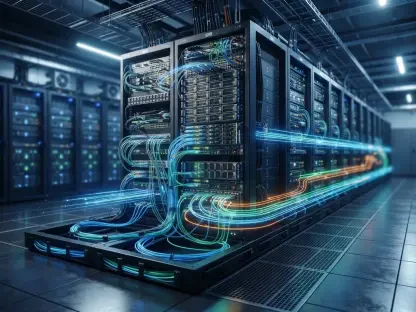
The business model of the neocloud is underpinned by hardware scarcity and market credibility, operating within a scarcity economy where advanced AI accelerators and high-bandwidth memory are constrained by supply chain bottlenecks. Beyond the silicon itself, even the electrical power and liquid cooling systems required for massive data centers have become finite, highly contested resources in the current industrial landscape. In this environment, neoclouds act as specialized aggregators of these scarce components, providing the essential compute oxygen that frontier AI labs need to survive the competitive race. By focusing entirely on high-density clusters, these providers offer performance metrics that general-purpose hyperscalers often struggle to match in their standard availability zones. This specialization allows neoclouds to optimize their entire operational stack—from power distribution to networking fabric—specifically for the unique demands of parallel processing at a massive scale.
For the neocloud provider, multi-billion-dollar contracts serve as vital proof of life to the broader market and financial investors. A massive commitment from a top-tier laboratory signals to chip manufacturers and creditors that the neocloud is a legitimate, high-volume player in the global AI supply chain. This credibility allows these startups to secure even more hardware and capital, further solidifying their position as essential middlemen between the manufacturers of high-end silicon and the developers of the world’s most advanced software. The financial structure of these deals often involves complex debt financing backed by the very GPUs they are purchasing, creating a high-stakes cycle of growth that requires constant validation from major enterprise clients. This dynamic has transformed the neocloud from a niche service into a systemic pillar of the digital economy, where the ability to secure physical hardware and energy is just as important as the software running on the servers themselves.
Strategic Market Dynamics: The Emergence of a Hybrid Ecosystem
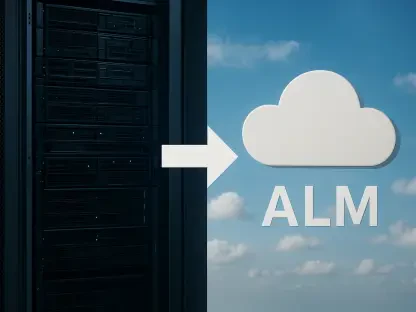
A critical finding in the analysis of this trend is that neoclouds are unlikely to topple existing hyperscalers, as the incumbent “Big Three” possess insurmountable advantages in global reach, security protocols, and regulatory compliance. Most enterprises will continue to run their core business logic, databases, and customer-facing applications on traditional platforms like Microsoft Azure or Amazon Web Services. Instead of a total takeover, a hybrid ecosystem is emerging where hyperscalers remain the operating system of the enterprise while neoclouds serve as specialized high-performance engines for specific AI tasks. This division of labor reflects the reality that most modern applications require a mix of standard microservices and high-end neural processing. By maintaining a presence in both environments, organizations can ensure that their sensitive data remains within a governed framework while still accessing the raw computational power necessary for training and deploying sophisticated models.
This dual-track approach allows corporations to maintain their data lakes on stable, legacy providers while routing intensive model-training jobs to neoclouds where specialized hardware is more readily available and performance-tuned. This synergy suggests that the future of the industry is not a winner-take-all battle but a diversification of the cloud stack to meet increasingly heterogeneous demands. By leveraging the strengths of both parties, organizations can achieve a balance between the reliability of established giants and the cutting-edge performance of specialized AI clouds. This strategic routing of workloads is becoming a standard practice for Chief Technology Officers who recognize that the one-size-fits-all model of the previous decade is no longer viable in an era of specialized silicon. The integration of neoclouds into the enterprise architecture represents a maturation of the market, where different cloud layers are selected based on their specific utility.
Risks and Strategic Implementation
Technical Debt: The Financial Consequences of Market Hype
While the rise of neoclouds provides much-needed capacity, it also introduces the significant strategic risk of over-provisioning due to market hype. The current AI gold rush is driving many organizations to sign massive infrastructure commitments before they have a clear understanding of their actual requirements or long-term utilization rates. This mirrors the mistakes made during the initial shift to the cloud a decade ago, where companies rushed to migrate applications only to spend years grappling with exorbitant costs and poor architectural fit. Today, the stakes are significantly higher because AI infrastructure is vastly more expensive than general-purpose computing, involving specialized cooling and high-cost networking components. A failure to accurately forecast usage can lead to locked-in contracts that drain capital without providing a proportional return on investment, creating a new form of technical debt that is both architectural and purely financial in its nature and impact.
The stakes today are significantly higher because AI infrastructure is vastly more expensive than general-purpose computing on a per-unit basis. A strategic miscalculation in the mid-2020s could result in costs ten to twenty times higher than an optimized solution, potentially leading to bankruptcy-level financial commitments for some firms that over-leverage their balance sheets for compute access. To avoid this trap, enterprises must move past the pressure to attach AI to every process and instead focus on objective requirement-setting to ensure their infrastructure spend aligns with actual utility. This requires a shift from a growth-at-all-costs mindset to one of operational efficiency, where every GPU hour is accounted for against a specific business outcome. The allure of neocloud capacity must be tempered by the reality of unit economics, ensuring that the cost of generating an answer or training a model does not exceed the value that the resulting intelligence provides to the customer base.
Beyond Monolithic AI: Segmenting Workloads for Maximum Utility
A recurring theme in the critique of current market trends is the lack of nuanced requirement-setting, as many problems currently funneled into expensive AI infrastructure could be solved through traditional analytics or better application design. The smart enterprise strategy involves a “slow down to speed up” approach, distinguishing between different types of workloads such as training, fine-tuning, inference, and retrieval-augmented generation. Each of these tasks has a different optimal infrastructure profile, ranging from long-term GPU clusters to geographically distributed hardware optimized for low-latency response times. Treating these diverse needs as a monolithic AI requirement leads to inefficient spending and rigid architectures that cannot adapt to future technological shifts. Organizations that failed to make these distinctions early on often found themselves overpaying for premium clusters when more modest, specialized hardware would have sufficed for their specific use cases.
The emergence of neoclouds represents a permanent maturation of the industry, but they are not a silver bullet for enterprise success or a replacement for sound architectural judgment. The winners in this new era will not necessarily be the companies that secure the most GPUs, but those that most accurately align their specialized infrastructure spending with tangible business value. This alignment requires a deep understanding of the underlying hardware requirements for different model architectures, such as the memory bandwidth needed for large-scale inference versus the interconnect speeds required for distributed training. By developing a granular view of their compute needs, enterprises can negotiate more favorable terms with neocloud providers and avoid the trap of paying for capacity they do not truly require. This technical discipline is the hallmark of a mature AI strategy, moving beyond the initial excitement into a phase of rigorous engineering and sustainable economic modeling.
Architectural Rigor: A Disciplined Path for Organizational Growth
The $10 billion deals currently making headlines are the opening salvos of a decade-long restructuring of global compute resources across the entire technological stack. Neoclouds are essential because they fill a capacity gap that hyperscalers cannot currently meet alone, offering the specialized environments critical for the next generation of breakthroughs in generative modeling and robotics. However, for the average enterprise, the availability of this “new power” should be met with disciplined caution rather than impulsive adoption based on industry trends. The ultimate goal for any organization should be to define technical requirements first, model the economics of those requirements second, and only then select a provider—whether it be a neocloud, a hyperscaler, or a hybrid of both. By avoiding the impulse to buy into the hype without a roadmap, enterprises can harness the power of specialized clouds without falling into the trap of generational technical debt.
The most successful organizations established a clear framework for compute procurement that prioritized architectural fit over mere availability of hardware. These leaders developed internal centers of excellence that evaluated the performance of neocloud clusters against their specific proprietary datasets before committing to long-term contracts. They utilized automated workload orchestration to move tasks between legacy hyperscalers and specialized providers based on real-time pricing and performance metrics. This disciplined approach ensured that the high costs associated with AI accelerators were always justified by the resulting business insights or product enhancements. By treating infrastructure as a strategic variable rather than a fixed utility, these firms maintained the flexibility needed to pivot as new silicon and software architectures emerged. Ultimately, the integration of neoclouds into the enterprise proved that architectural rigor was the most effective defense against the volatility of the AI market.