
New integrated workflows allow data to flow seamlessly from newsroom story planning through to the final edit and broadcast for better resource management. This fundamental shift in the media and entertainment industry’s technological infrastructure comes as a result of the strategic expansion of the partnership between Avid and Google Cloud. Announced in anticipation of the upcoming IBC2026 event in Amsterdam, the collaboration seeks to redefine the professional video editing landscape by transitioning Avid’s flagship platform, Media Composer, into a browser-based, AI-enhanced environment. By integrating Google Cloud’s Gemini Enterprise and BigQuery directly into the Avid Content Core, the company’s centralized data platform, the two entities are finally addressing the long-standing bottlenecks of physical hardware dependency and administrative overhead. This transition signals the true arrival of the Agentic Era in media production, where AI does not merely assist but acts as a proactive agent in the creative process today.
Modernizing the Creative Workflow
Aligning Technology: Professional Editor Needs
To ground these technological advancements in real-world professional needs, Avid conducted extensive research among seasoned editors in early 2026. The findings reveal a clear consensus among the creative community: professional creators are not resistant to the implementation of artificial intelligence. Rather, they are eager for specialized tools that are better integrated and more focused on practical utility within their high-pressure environments. Key findings from the survey indicate that 79% of professional editors already incorporate some form of machine learning or automation into their daily workflows, primarily for labor-intensive tasks like speech-to-text and automated transcription. There is a palpable demand for systems that do not replace the artist but instead remove the mundane technical obstacles that frequently stall the storytelling process. This desire for efficiency is driving the current evolution of cloud-based editing software.
The research further highlighted that an overwhelming 87% of respondents believe generative technology is most valuable when it empowers them to realize their creative intentions more efficiently. In the current landscape, 76% of editors identified the best use of this technology as unlocking more time for storytelling by removing technical drudgery. Furthermore, 63% of editors stressed that for these tools to be truly useful, they must be more tightly integrated into the professional software environments they use daily, rather than existing as external, third-party applications. This highlights a shift in focus from experimental features to deeply embedded functional workflows that address the modern media paradox. While global demand for high-quality content is at an all-time high, the workflows used to produce that content remain burdened by legacy constraints and physical tethering that the new partnership is specifically designed to eliminate.
Transitioning Workflows: Browser-Based Agentic Editing
Perhaps the most significant development stemming from this partnership is the migration of the industry-standard Media Composer to the Google Chrome browser. This move effectively decouples professional-grade editing from high-end physical workstations and specialized local hardware. Historically, the need for on-premises infrastructure made global collaboration difficult, slow, and expensive, but the browser-native approach removes these geographical and technical barriers. Through Ready to Edit capabilities and agentic systems, editors can now use natural language prompts to perform complex technical tasks that previously required manual intervention. These include syncing diverse media sources, aligning dialogue with transcripts, and organizing project bins automatically. This transformation allows media organizations to scale their operations rapidly without the traditional capital expenditure associated with purchasing and maintaining heavy local computing power for every member.
The user experience is further enhanced by a dedicated Gemini panel within the interface, which allows for the immediate generation of B-roll and the discovery of relevant stock footage without leaving the project timeline. This integration ensures that the editor stays in their creative flow, as the software proactively assists in the assembly of the narrative. By leveraging Google’s massive compute scale, the platform can handle high-resolution assets with minimal latency, providing a professional experience that rivals traditional desktop installations. This shift represents a democratization of high-end production tools, as powerful editing capabilities are now accessible on more modest hardware through a secure web browser. Such advancements are essential for modern production houses that need to pivot quickly between projects and maintain a flexible workforce of remote talent. The focus remains on empowering the narrative by ensuring the technology works as a background facilitator rather than a constraint.
Intelligence and Infrastructure
Semantic Discovery: Enhancing Media Search
The integration of Gemini Enterprise and BigQuery into the Avid Content Core introduces semantic search, a capability that understands context and intent rather than just basic keywords. Unlike traditional systems that rely on manually entered tags, semantic search analyzes the actual content of the video and audio. As media is ingested into the system, it automatically generates transcripts and detailed semantic descriptions of the footage. This allows production teams to find specific moments through natural language queries, such as searching for a sunset over a city skyline with a melancholic mood. This level of granularity eliminates hours of manual logging and metadata entry, ensuring that the right footage is always at the editor’s fingertips regardless of the archive size. By streamlining the discovery process, the partnership allows media organizations to leverage their existing libraries more effectively, turning massive quantities of raw data into searchable assets.
Beyond simple retrieval, this intelligent infrastructure provides a deeper understanding of content performance and resource utilization. Because the Avid Content Core acts as a centralized intelligence hub, it can track how specific clips are used across multiple projects and platforms. This data-driven approach to media management enables producers to identify which types of content resonate most with their audience, informing future creative decisions. Furthermore, the use of BigQuery allows for large-scale analysis of production trends, helping studios optimize their capture and storage strategies. As the industry moves toward more data-intensive formats, having an underlying system that can process and categorize information at speed is a significant competitive advantage. The goal is to move from a reactive storage model to a proactive asset management system where every frame of footage is indexed and available for immediate creative use. This ensures that valuable media assets do not remain buried in silos.
Secure Integration: Hybrid Cloud Deployment
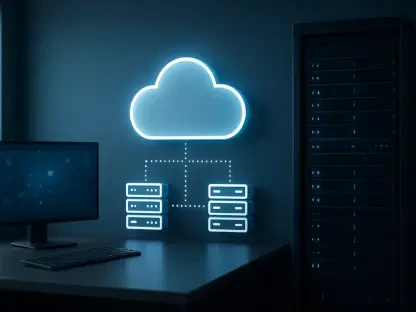
Security remains a paramount concern for major studios and news organizations dealing with sensitive intellectual property and high-value pre-release content. To address these concerns, the Avid Content Core Site Engine allows for a hybrid cloud approach that balances flexibility with rigorous protection. While the AI intelligence, media processing, and agentic workflows are managed centrally via Google Cloud, the actual high-resolution media assets and primary compute power can remain within the customer’s private cloud environment or on-premises storage. This architecture ensures that sensitive intellectual property is protected according to the highest industry standards, while still allowing editors to benefit from advanced cloud-native features. It provides the best of both worlds: the massive cognitive power of Google’s AI stack and the security of a controlled environment. Organizations can now confidently adopt modern workflows without the fear of data leaks or unauthorized access to their core media libraries.
The collaborative efforts between these two industry leaders established a new standard for media production that moved beyond simple cloud storage and into the realm of intelligent, automated creation. Moving forward, production houses prioritized the integration of these agentic tools to reduce the time spent on non-creative tasks. Media executives were encouraged to evaluate their current infrastructure to ensure compatibility with browser-based workflows, which offered significant savings on hardware maintenance and improved talent mobility. The focus shifted toward training editorial teams to leverage natural language processing and semantic search to streamline the discovery of archival footage. By adopting a hybrid cloud model, organizations successfully protected their intellectual property while utilizing the global scale of the cloud. Ultimately, the industry moved toward a future where the technical barriers to professional storytelling were significantly lowered, allowing the primary emphasis to return to the art of the edit.