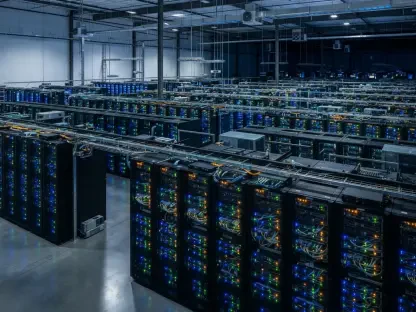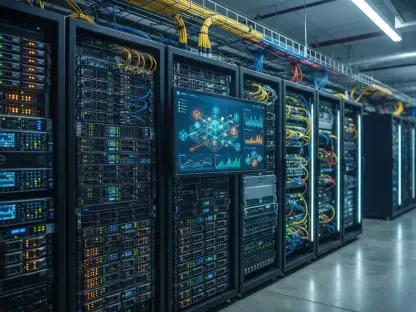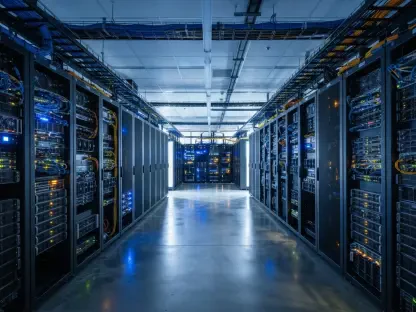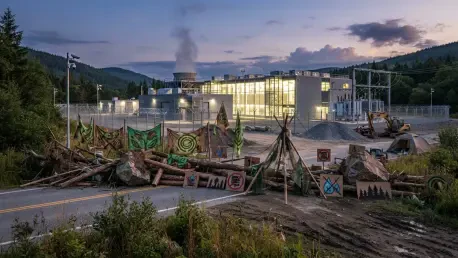

The historical presence of Google, Amazon, and Meta in Oregon suggests that local architects were likely aware of hyperscale technology when the city code was first drafted. This foundational understanding becomes the focal point of a sharpening debate in Salem, where municipal leaders are currently attempting to define the limits of high-tech industrial growth. At the heart of this legislative storm is Resolution No. 2026-46, a measure that seeks to clarify the application of existing land-use rules to the burgeoning field of Artificial Intelligence. While city officials present this as a routine interpretive exercise, developers see it as a calculated attempt to block substantial projects like the Oakline at Mill Creek campus. The tension reflects a broader national struggle as cities navigate the intense physical requirements of the digital age, balancing the promise of tax revenue against the massive consumption of local power and water resources. As the city council prepares to make a final determination, the legal and economic implications for the Pacific Northwest’s tech corridor remain profound, signaling a potential shift in how urban centers manage the infrastructure of the future. The outcome of this confrontation will likely dictate whether Salem remains a viable hub for the next generation of computing or if it becomes a cautionary tale of regulatory resistance.
Defining the Scope of Legislative Interpretations
Resolution No. 2026-46 represents a strategic legal maneuver by the city, framed not as a creation of new law but as a clarifying “legislative interpretation” of the Salem Revised Code. Specifically, it targets section 400.110(e), which historically provided the guidelines for data center facilities within the city limits. By positioning this action as an interpretation, the city government suggests that the rules have always functioned this way, and they are merely providing the necessary administrative guidance to ensure current projects align with the original intent of the 2013-2014 Unified Development Code. City Attorney Dan Atchison has consistently argued that this process is essential for maintaining the integrity of local zoning, as it prevents the uncontrolled expansion of high-intensity industrial uses that were never explicitly authorized by the previous council. This approach allows the city to bypass the more cumbersome and public-facing requirements of a full zoning amendment, which would require extensive state-level reporting and widespread notification to every property owner who might be affected by a change in land use.
From the perspective of the development community, this framing of a “legislative interpretation” is viewed as a procedural shortcut designed to circumvent the transparency and stability required by Oregon law. Aaron Stickney, representing the developers behind the Oakline at Mill Creek project, contends that the city is attempting a “de facto” zoning change under the guise of mere clarification. He argues that by narrowing the definition of a data center to exclude facilities focused on high-performance processing, the city is effectively rewriting the rules mid-game to target specific industrial players. This disagreement highlights a fundamental conflict in administrative law: the boundary between a city’s right to interpret its own code and its obligation to provide clear, predictable standards for property owners. If the resolution is successfully characterized as a new regulation rather than a clarification, the city could face significant legal challenges regarding its failure to follow proper legislative procedures, potentially opening the door for the Land Use Board of Appeals to intervene and invalidate the entire measure on procedural grounds.
The Technical Divergence of Storage and Computation
A central pillar of the city’s argument rests on a semantic distinction between “data storage” and “data processing,” a nuance that has sparked intense technical debate among engineers and urban planners. The existing city code defines data centers primarily as facilities for the storage or transmission of data, a definition that municipal leaders argue was meant for traditional “server farms” that act as digital warehouses. The proposed interpretation suggests that because the word “processing” is absent from the original text, facilities dedicated to the high-intensity computational workloads required by Artificial Intelligence training and large-scale inference are not covered by the existing permitted use. The city maintains that the scale of computation in modern hyperscale environments represents a fundamental shift in land use, moving from passive storage to active, high-heat industrial processing. This technical hair-splitting is intended to create a legal barrier for developers who seek to build massive computing clusters in areas that were previously thought to be compatible with standard data center operations.
In contrast, technical experts and developers argue that the city’s distinction between storage and processing is a functional impossibility in the world of modern computer architecture. Every act of data storage or transmission requires a corresponding level of processing power to manage the movement and security of that information. Whether a server is hosting a basic website, managing cloud storage, or training a complex neural network, the underlying hardware operates on the same fundamental principles of computation. Stickney and his technical team point out that the code already includes “computer centers” and “hosting services,” both of which are inherently processing-heavy environments. By attempting to draw an arbitrary line based on the intensity of the processing, the city creates a regulatory environment where no developer can be certain if their facility is legal. Without objective metrics or numerical thresholds for power consumption and heat dissipation within the code, the city’s current approach appears to rely more on the perceived “feel” of an industrial operation rather than on measurable, predictable engineering standards.
Oregon’s Goal-Post Rule and Developer Protections
One of the most significant legal obstacles facing the City of Salem is Oregon’s strict adherence to the “goal-post rule,” codified in Oregon Revised Statute 227.178. This rule is designed to ensure fairness in the development process by requiring that a project application be evaluated based on the standards and criteria that were in effect at the time the application was first submitted. The developers of the Oakline project filed their initial application in July, months before the current resolution was introduced for council consideration. Under this legal framework, even if the city council votes to adopt a more restrictive interpretation of data center use, they may be legally barred from applying that new standard to projects that were already in the pipeline. This protection is vital for the development industry, as it prevents local governments from changing the rules of the game after significant capital has been invested in land acquisition and engineering designs.
The city attorney’s office, however, contends that because the resolution is an “interpretation” and not a “new rule,” it does not violate the goal-post principle. Their position is that they are merely stating what the law has always meant, which would technically make the interpretation applicable to all current and future applications. This creates a high-stakes legal standoff that will likely be settled in the courtroom. Developers argue that if the city can simply “re-interpret” any vague section of its code at will to block specific projects, then the goal-post rule becomes effectively meaningless. The outcome of this specific legal dispute will have ramifications far beyond Salem, as it tests the limits of municipal power in Oregon. If the Land Use Board of Appeals determines that the city’s action constitutes a moving of the goal posts, it could set a powerful precedent that protects future industrial developments from reactive legislative shifts, ensuring that the regulatory landscape remains stable for long-term investments in high-tech infrastructure.
Assessing the Historical Intent of Zoning Codes
The city’s narrative asserts that when the Unified Development Code was finalized in 2014, the authors could not have anticipated the sheer scale and intensity of the modern AI revolution. From this perspective, the current regulations are simply outdated, failing to account for the unique environmental and infrastructure pressures created by hyperscale facilities. City officials argue that since the original intent of the zoning was to accommodate traditional industrial uses and smaller-scale technology firms, it would be a mistake to allow massive, resource-heavy complexes to take root without more specific oversight. This argument leans heavily on the idea that the “character” of a data center has changed so fundamentally that it requires a new, separate classification. This perception of technological obsolescence in the legal code serves as the primary justification for the council’s urgent push to refine the definitions before more large-scale applications can reach the final approval stage.
Developers refute this historical reconstruction by highlighting the fact that Oregon was already a global leader in hyperscale technology well before the city’s code was written. Google had already established its massive presence in The Dalles by 2006, and Meta was operating its cooling-intensive campus in Prineville by 2012. Given this context, the developers argue that any competent planning architect in the state would have been well aware of the trajectory of the industry. The presence of these tech giants in the region meant that “hyperscale” was not a future concept but a current reality during the code-drafting process. Consequently, the absence of specific restrictions on processing or electricity consumption in the 2014 code should be viewed as an intentional choice to keep the city competitive in the tech sector, rather than an oversight. This historical disagreement is more than just academic; it goes to the heart of whether the city is honestly updating its rules or if it is searching for an excuse to reverse a long-standing policy of welcoming industrial-scale computing.
Infrastructure Stress and Environmental Resource Management
Beyond the intricate legal arguments, the debate in Salem is fueled by very real concerns regarding the city’s physical capacity to host massive computing hubs. Hyperscale data centers are notorious for their significant demand on local electrical grids, often consuming as much power as a small residential city. This creates a dilemma for municipal planners who must ensure that the influx of high-density industrial users does not lead to increased utility rates for residents or compromise the stability of the power supply for other businesses. Furthermore, the cooling requirements for AI-driven hardware are immense, frequently necessitating the use of millions of gallons of water or the installation of massive air-cooling systems that can generate significant noise pollution. A dedicated city task force was even established to investigate these specific burdens, reflecting a growing anxiety that the unchecked growth of the data center sector could overwhelm the local infrastructure that was originally built for more traditional manufacturing and assembly operations.
The developer’s response to these infrastructure concerns emphasizes the potential for collaborative solutions and the modernization of local utilities. They argue that large-scale projects like Oakline at Mill Creek often include the construction of on-site electrical substations and state-of-the-art water management systems that can actually improve the overall resilience of the local grid. By bringing in massive private investment, these projects provide the funding necessary to upgrade aging infrastructure that the city might otherwise struggle to maintain. Moreover, the industry has shifted toward more efficient liquid cooling and closed-loop systems that significantly reduce the net impact on local water supplies. The developers suggest that instead of using infrastructure concerns as a justification for blocking projects, the city should work with the private sector to develop sustainable growth models. This tension highlights a fundamental question for urban managers: whether to treat high-tech industry as a parasitic drain on public resources or as a catalyst for much-needed infrastructure modernization and economic expansion.
The Economic Calculus of Industrial Land Use
The fiscal impact of the data center industry is a double-edged sword for the City of Salem, involving complex trade-offs between tax revenue and job creation. On one hand, projects like the 600,000-square-foot Oakline campus represent a massive injection of capital into the local economy, potentially generating millions of dollars in property tax revenue that could fund schools, parks, and public safety. For a city looking to diversify its tax base away from state government employment, the appeal of a high-value industrial project is undeniable. The construction phase alone would provide a significant boost to the local labor market, creating hundreds of high-paying jobs for trade workers and engineers. In the context of the Mill Creek Corporate Center, which was specifically designed to attract large-scale industrial investment, many argue that these data centers are exactly the kind of projects that the city should be courting to ensure long-term financial stability.
However, critics of the “data center gold rush” point to the relatively low number of permanent, full-time jobs these facilities provide once they are operational. Unlike a traditional manufacturing plant that might employ thousands of people in a similar-sized building, a modern data center can be managed by a relatively small staff of technicians and security personnel. This discrepancy leads some city officials to question if data centers are the most efficient use of prime industrial land, which is a finite and valuable resource. If a massive tract of land is occupied by a facility that consumes vast resources but offers few employment opportunities for local residents, the net benefit to the community becomes harder to justify. This economic tension is a primary driver behind the council’s push for more restrictive rules, as they seek to ensure that Salem’s limited industrial zones are reserved for businesses that provide a higher “job-per-acre” ratio. The debate forces the community to choose between the immediate, reliable revenue of tech infrastructure and the longer-term goal of fostering a high-employment manufacturing sector.
Procedural Vulnerabilities in Municipal Policymaking
The decision to pursue a resolution rather than a formal ordinance has created a significant procedural vulnerability for the City of Salem. In the state of Oregon, land-use changes that affect the permitted uses of property typically require a rigorous set of notifications known as Ballot Measure 56 notices. These notices are designed to inform property owners whenever a change in zoning might reduce the value or utility of their land, providing them with an opportunity to be heard in a public forum. By opting for a “legislative interpretation,” the city has essentially argued that no such change is occurring, thereby skipping the requirement to mail individual notices to thousands of residents and business owners. This choice significantly accelerates the process for the city council, but it also creates a major point of failure if the project is eventually appealed. If a higher court determines that the resolution actually functions as a zoning amendment, the city’s failure to provide these constitutionally and legislatively required notices could result in the entire action being struck down.
Furthermore, the city’s internal consistency has been called into question by the developers, who have cited previous staff assessments that seemingly contradict the new proposed interpretation. Throughout 2024, various city planning summaries and town hall materials reportedly indicated that data centers, including those of a hyperscale or AI nature, were considered permitted uses in the industrial zones without specific size or processing restrictions. These documents suggest that the city’s current push for a restrictive interpretation is a reactive pivot driven by political pressure rather than a long-standing legal understanding. While a city council has the authority to disagree with its staff’s preliminary assessments, such a dramatic shift in policy over a short period of time can be used as evidence of “arbitrary and capricious” decision-making in a court of law. This lack of administrative continuity not only weakens the city’s legal position but also undermines the trust of the broader business community, which relies on consistent and transparent application of local regulations to make informed investment decisions.
Jurisdictional Precedents and the Role of LUBA
The eventual resolution of the Salem conflict will likely find its way to the Oregon Land Use Board of Appeals, an administrative body that has the final say on most local zoning disputes in the state. LUBA’s past decisions suggest a complex relationship between local government autonomy and state-wide consistency. In cases such as Siporen v. City of Medford, the board established that local governments are generally entitled to “deference” when interpreting their own codes, provided that the interpretation is “plausible” and not clearly contrary to the express language of the ordinance. This gives Salem a significant tactical advantage, as the city attorney only needs to prove that their interpretation is a reasonable one, even if the developer’s interpretation is also logical. However, LUBA has also demonstrated a willingness to overturn local actions that it perceives as an attempt to bypass the formal legislative process or to add unwritten criteria to an existing code.
The developer’s legal strategy will likely focus on proving that the city’s new interpretation is not just one possible reading of the code, but an entirely new set of rules that were never contemplated by the original text. They will point to the specific absence of terms like “computational processing” or “electrical capacity” as evidence that the city is trying to inject new standards after the fact. If LUBA finds that the city’s interpretation is “clearly contrary” to the plain meaning of the words “server farm” or “computer center,” it will invalidate the resolution. This would force the city back to the drawing board, requiring them to go through the formal ordinance process if they wish to restrict AI data centers. The outcome of this jurisdictional battle will serve as a bellwether for other Oregon cities that are currently facing similar pressures from the tech industry, clarifying exactly how much leeway local councils have to redefine their industrial landscapes in the face of rapid technological change.
Strategic Integration of High-Density Computing
In order to avoid future legal and economic stalemates, municipal governments must transition toward more proactive and integrated planning strategies that acknowledge the unique requirements of the AI era. Rather than relying on retroactive interpretations or emergency resolutions, cities should develop specific “Technology Overlay Zones” that are pre-vetted for high electrical and water demands. These zones could include streamlined permitting processes for facilities that meet strict environmental and efficiency standards, such as those utilizing advanced heat recovery systems or 100% renewable energy sourcing. By creating a dedicated category for hyperscale and AI processing, cities can provide the clarity and stability that developers need while simultaneously ensuring that these projects are located in areas where the infrastructure is most resilient. This approach moves the conversation away from “blocking” growth and toward “managing” it in a way that aligns with long-term urban goals.
The integration of high-density computing also requires a shift in how cities value industrial land beyond the traditional metric of job density. While data centers provide fewer direct permanent roles, their role as “anchor tenants” for electrical grid upgrades and their contribution to the tax base can be leveraged to fund other community-centric projects. For instance, the tax revenue from a major data center could be specifically earmarked for the development of small-business incubators or vocational training programs that prepare the local workforce for the digital economy. Additionally, the waste heat generated by these facilities could be redirected into district heating systems for nearby industrial parks or greenhouse operations, turning an environmental burden into a community resource. By viewing AI infrastructure through a lens of circular economics and strategic integration, cities like Salem can transform a source of regulatory conflict into a platform for sustainable industrial innovation, ensuring that the digital revolution benefits the physical community it inhabits.
Evolving Standards for Resilient Urban Planning
The controversy surrounding Salem’s land-use rules highlighted the urgent need for municipal frameworks to adapt alongside the swift progression of high-intensity technologies. Local authorities identified the risks associated with infrastructure strain, and their actions reflected a determination to protect community resources from being overwhelmed by a single, high-demand industry. By challenging the traditional definitions of data center usage, the city council brought to the forefront a necessary conversation about how urban spaces are allocated and who should bear the cost of rapid technological expansion. The tension observed in this dispute served as a catalyst for a more rigorous examination of industrial standards, ensuring that future growth is not just fast, but also sustainable and compatible with the long-term resilience of the city’s power and water systems. This process forced a re-evaluation of how public and private interests can be reconciled when the requirements of the digital world clash with the physical realities of a growing city.
Moving forward, the establishment of clear, numerical thresholds for energy and resource consumption provided a more stable foundation for both planners and investors. These measurable standards allowed the development community to design projects with a greater degree of certainty, while granting the city the oversight necessary to maintain local services. The resolution of these legal and procedural disputes paved the way for more collaborative governance models where technological shifts are met with pre-emptive planning rather than reactive legislation. Other municipalities looked to the Salem experience as a template for balancing the lucrative prospects of the high-tech sector with the fundamental duty to preserve a high quality of life for their residents. The shift toward specialized zoning and performance-based criteria transformed the regulatory landscape into a more predictable and equitable environment, fostering an industrial ecosystem that remained responsive to the needs of the community while continuing to drive innovation within the Pacific Northwest.