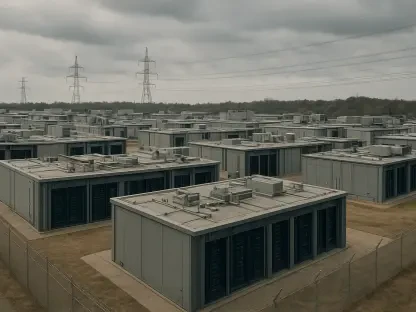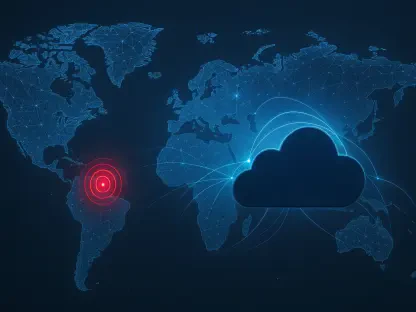

A regional blackout in the cloud infrastructure provides a terrifying glimpse into how quickly social stability can erode when digital payment rails are disconnected. The modern digital landscape often feels like a sprawling and infinite network, yet recent technical failures reveal it is actually built upon a surprisingly narrow foundation. When a single data center in Oregon experienced a disruption, the resulting cascading failure didn’t just break a few websites; it paralyzed the essential digital plumbing that keeps modern life moving. This incident serves as a stark reminder that our global connectivity is managed by a handful of corporate gatekeepers, creating a systemic vulnerability where a localized glitch can trigger a nationwide crisis. Behind the convenience of favorite apps lies a complex layer of cloud infrastructure known as Amazon Web Services (AWS). During the recent outage, several critical backbone services—including virtual servers and gateways—simultaneously went dark.
The Dangerous Illusion: Cloud Reliability
The tech industry has spent years marketing the cloud as a robust and indestructible entity, but the reality is much closer to a bottleneck with effective marketing. Today, three major corporations control approximately 70% of the world’s cloud infrastructure, with Amazon alone managing a third of the market. This massive consolidation means that a single internal mistake or hardware fault within one company can effectively freeze a significant portion of the internet, leaving banking portals, medical records, and school applications entirely inaccessible. Because so many companies rely on the exact same Oregon-based hardware, the failure instantly disabled everything from food delivery services and streaming platforms to essential payment systems like Apple Pay. This event proved that geographical distance offers no protection in a hyper-connected world where a single point of failure can disrupt millions of users across several different time zones and industries at once.
Despite frequent high-level discussions regarding multi-region architecture to prevent such disasters, actual structural changes remain rare among major enterprises. The tech sector’s current trajectory priorities efficiency and cost-cutting over true resilience, leaving the public dependent on a fragile system that prioritizes speed over stability. We are witnessing a recurring pattern where regional failures in Virginia or Oregon demonstrate that the digital rails of our society are far more prone to collapse than the public is led to believe. When engineers prioritize a single-region deployment to save on egress fees and management overhead, they are gambling with the availability of critical public services. From 2026 to 2028, the industry must decide whether to continue this centralization or invest in truly distributed models that can withstand the loss of a major hub. The persistent reliance on a handful of server farms creates a landscape where systemic risk is the standard.
Financial Vulnerability: The Cashless Reality
Perhaps the most alarming consequence of this centralization is the impact on the movement toward a cashless society. During the AWS outage, individuals who relied solely on digital wallets found themselves unable to purchase basic necessities like fuel or groceries for several hours. This event exposes a critical flaw in digital-only finance: if the underlying infrastructure fails, your access to your own money disappears instantly. A system that can be paralyzed by a minor configuration error is fundamentally unreliable for a functioning civilization. When local shops cannot process transactions because an authentication server thousands of miles away is down, the entire concept of local commerce breaks. This forced dependency on distant hardware makes every citizen a hostage to the technical competence of a third-party service provider. The convenience of a tap-to-pay interface becomes a liability the moment the invisible data connection between the terminal and the cloud server is severed.
This fragility raises serious questions about the push for Central Bank Digital Currencies (CBDCs) and further digital integration into the global economy. The same centralized architecture that causes accidental outages also provides a mechanism for intentional exclusion or control. When the rails of commerce are owned by a few private entities, the ability to freeze an individual’s financial life becomes a matter of technical feasibility. A prolonged outage of this nature could quickly lead to social destabilization once local supplies dwindle and payment terminals remain offline. If a simple regional blackout can prevent a parent from buying medicine or a commuter from fueling their vehicle, the social contract itself begins to fray. The transition to a fully digital economy requires a level of reliability that current cloud providers have failed to demonstrate. Without a local fallback or a decentralized alternative, the economy remains vulnerable to any disruption that strikes the primary digital hubs.
Strategic Redundancy: Resilience in a Centralized World
While the Oregon incident was likely an accidental hardware error, it serves as a perfect stress test for more sinister scenarios. Currently, 85% of American critical infrastructure is held in private hands, where security budgets are often secondary to quarterly profit margins. If an accidental failure can cause such widespread chaos, a coordinated attack targeting multiple data regions simultaneously could realistically freeze national logistics and communication. This would be long enough to deplete grocery store inventories, which typically hold only three days of stock. The fragility of the logistics chain is intrinsically tied to the uptime of cloud-based inventory management systems. When these systems go dark, trucks stop moving and shelves go empty, creating a vacuum that can lead to panic and civil unrest. The technological dependencies of the modern supply chain mean that a failure in the digital realm has immediate and physical consequences for every household.
To mitigate the risks of this centralized fragility, the only logical path was a return to analog redundancies and individual preparedness. It was determined that maintaining physical cash for transactions and moving essential documents from the cloud to owner-controlled hardware was the only way to ensure personal stability. Experts suggested that securing paper maps, physical contact lists, and basic survival supplies allowed individuals to build a life that remained functional even when a server thousands of miles away ceased to operate. This event demonstrated that the push for total digital integration lacked the necessary safety nets to protect the general public. By prioritizing local backups and offline functionality, society began to realize that true resilience required stepping back from total cloud dependency. The lessons learned from the Oregon blackout prompted a significant shift in how people viewed their relationship with digital gatekeepers. Proactive measures became the standard for those who understood that uptime is never guaranteed.