
Major hyperscalers like Amazon and Microsoft are signaling that available compute capacity is effectively sold out for years, creating a universal challenge for the tech industry. Within this constrained landscape, Alphabet Inc. has entered a pivotal stage where its executive leadership must navigate the fine line between satisfying shareholders and securing a dominant position in the artificial intelligence sector. CEO Sundar Pichai recently signaled a strategic shift, indicating a willingness to forgo immediate Google Cloud revenue to ensure that internal research teams have the necessary resources to develop frontier models like Gemini. This calculated expectation management suggests that the company is bracing for a potential deceleration in its cloud growth, which has served as its primary momentum engine recently. By prioritizing internal AI needs over external sales, Alphabet is betting that long-term technological leadership will outweigh the temporary impact on its financial statements, even as investors remain focused on the performance of its most profitable divisions.
Addressing the Infrastructure Squeeze
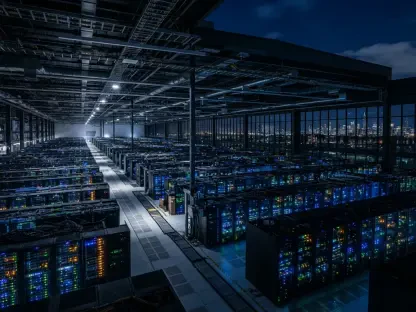
The current state of the global cloud market is defined by an aggressive race for infrastructure that has left even the largest players struggling to keep up with internal and external requirements. For Alphabet, this has translated into a daily operational challenge where the demand for compute power often exceeds the physical capacity available in its worldwide data center network. This bottleneck is not merely a matter of purchasing more hardware but involves complex negotiations for energy access, land development, and the fabrication of specialized chips that take years to come online. The strategic decision to prioritize internal AI research reflects a realization that the company’s long-term survival depends on being a leader in model development, even if it means limiting the growth of its commercial cloud offerings. As a result, the executive team has begun the difficult task of re-aligning investor expectations to match the physical constraints of the 2026 technological landscape.
The Physical Limits of Compute Capacity
Technological infrastructure is not a tap that can be turned on at a moment’s notice; rather, the compute power available today is the direct result of complex decisions and supply chain maneuvers executed years ago. This inherent lag means that Alphabet faces a rigid ceiling on the volume of services it can offer to the external market without starving its own internal innovation pipelines. While the market often views cloud computing as a purely software-driven enterprise, the current environment has transformed it into a battle of physical logistics and energy procurement. For Alphabet, the challenge lies in managing a global footprint where data center availability is limited not just by hardware, but by the power grids that support them. Consequently, the strategic diversion of resources toward internal research teams is not merely a preference but a necessity, as the company seeks to maintain its edge in a field where the next breakthrough is entirely dependent on available flops.
The Hyperscaler Dilemma and Market Realities
Alphabet is not alone in this struggle, as fellow hyperscalers like Amazon and Microsoft report similar supply shortages that have come to define the 2026 fiscal environment. Industry consensus suggests that compute capacity is effectively sold out through 2028, turning the cloud market into a game of physical logistics and chip procurement rather than one of software superiority. This universal supply crunch provides a convenient narrative for major players; if growth slows, they can collectively point to a lack of silicon and power rather than a decline in market demand or a failure in corporate strategy. For Alphabet, this means the pressure to capture market share is currently secondary to the pressure of simply maintaining its existing infrastructure. The massive demand validates the aggressive capital spending seen over the last few years, proving that the move to build out internal capacity was a necessary response to a market that is increasingly hungry for generative AI power.
Financial Implications and Long-Term Stability
From a financial perspective, Alphabet’s recent performance has been buoyed by strong margins, but the underlying cost structure is shifting in a way that warrants careful observation by the investment community. The company has maintained an operating margin of roughly 34%, yet the capital intensity of the AI revolution suggests that this level of profitability may be under threat as new infrastructure moves onto the balance sheet. Depreciation expenses for multi-billion-dollar data centers will soon begin to hit the income statement, potentially offsetting the revenue gains seen in previous quarters. Furthermore, the decision to divert resources toward internal frontier AI development means that some of the most expensive hardware in the world is not generating immediate external revenue. This creates a unique financial scenario where the company is essentially investing in its own future capabilities at the expense of current profit maximization, a move that requires significant long-term confidence.
The Impact of Rapid Technological Obsolescence
The expense of maintaining a global network of cutting-edge data centers is compounded by the rapid pace of technological obsolescence in the AI sector, where hardware can become outdated in a matter of few years. To mitigate these costs, Alphabet is increasingly relying on its vertically integrated hardware stack, specifically the TPU, which offers better performance-per-watt than general-purpose alternatives. However, the sheer scale of the required infrastructure means that even minor inefficiencies can lead to massive cost overruns. The decision to prioritize internal research over external sales also means that the immediate return on investment for these facilities is lower than if they were fully utilized by paying cloud customers. This temporary sacrifice is intended to secure future dominance, but it creates a complex financial narrative where the company must explain to shareholders why it is intentionally limiting its own revenue potential in the short term to avoid being left behind.
Reconciling Wall Street Expectations with Reality
The strategic decisions made by leadership throughout 2026 reflected a commitment to long-term survival over transient financial metrics, effectively positioning the company to weather a structural shift in the cloud market. By acknowledging capacity constraints early, the executive team provided a roadmap for navigating the friction that comes with transitioning from a software-first to an infrastructure-heavy business model. For market observers, the path forward required recognizing that sustained profitability involved moving beyond simple compute toward integrated AI solutions that were unavailable elsewhere. Investors were encouraged to look past quarterly cloud growth figures and instead evaluate the efficiency of the internal research ecosystem as the primary driver of value. As the year ended, the focus shifted toward maximizing the output of the existing footprint and exploring innovative ways to monetize internal breakthroughs, ensuring that the heavy capital outlays of today would serve as the foundational bedrock for future growth.