


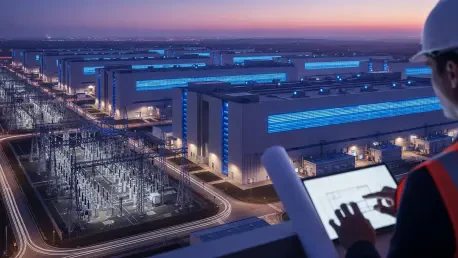

The global hunger for generative artificial intelligence has fundamentally altered the trajectory of cloud computing, transforming Amazon Web Services into an engine of unprecedented scale that now faces its own physical limitations. While the digital landscape appears infinite to the end-user, the reality on the ground involves massive concrete structures, vast cooling systems, and specialized hardware that cannot be summoned by simple code. Amazon is currently navigating a period where its technological ambitions are rubbing against the hard boundaries of power grid capacities and hardware supply chains. The current surge in demand is not merely a seasonal peak but a fundamental shift in how businesses utilize compute power, forcing a total reimagining of infrastructure deployment. As organizations transition from experimentation to full-scale AI implementation, the pressure on cloud providers to deliver immediate, reliable, and scalable resources has reached a boiling point that necessitates a multi-billion dollar response.
Financial Milestones and Revenue Engines
The Record-Breaking Growth: Cloud Operations
In the most recent fiscal quarter, AWS reported a massive 37% jump in revenue, reaching $42.2 billion and far exceeding what many analysts had predicted during the initial stages of the AI rollout. This surge represents the division’s strongest performance in 18 quarters, effectively adding billions to its top line in a span of just three months, which underscores the sheer velocity of the current market shift. This growth is largely driven by the “AI flywheel,” where new generative applications require more storage, databases, and networking, all of which are core components of the broader ecosystem. As companies rush to train large language models and deploy specialized agents, the underlying infrastructure must scale at an equivalent pace. The financial results indicate that the market is moving past the pilot phase, with enterprises committing to long-term cloud consumption that integrates artificial intelligence into every layer of their internal and external operations.
Sustaining Profitability: Financing the Infrastructure Expansion
The profitability of the cloud division remains a vital part of the overall business health, with operating income climbing to $16.6 billion despite the intense capital requirements of new builds. With a high operating margin of 39%, the unit continues to generate the cash necessary to fund experimental projects and the massive infrastructure developments required to keep pace with competitors. The total annualized run rate has now reached $169 billion, solidifying its position as the dominant force in the global cloud market and providing a buffer against the rising costs of specialized components. This financial strength allows for a level of aggressive expansion that few other entities can match, creating a cycle where high returns are immediately reinvested into the next generation of data processing capabilities. Maintaining these margins is critical, as the cost of entry for the AI era involves significant upfront investment in hardware that depreciates faster than traditional server equipment.
Navigating Physical and Logistical Barriers
Managing Scarcity: Infrastructure Capacity Shortfalls
Despite its financial might, AWS is struggling with a capacity shortfall that is expected to last until at least 2027, as the demand for high-performance compute outstrips the rate of construction. The company’s backlog has ballooned to nearly half a trillion dollars, meaning the majority of computing power planned for the next several years is already reserved by clients through long-term contracts. To manage this scarcity, a reservation system was introduced that allows customers to book specific blocks of hardware well in advance, ensuring that they have the necessary resources for their upcoming AI training cycles. This shift toward a pre-booking model highlights a fundamental change in the cloud’s nature, moving from an on-demand utility to a carefully managed resource pool where availability is guaranteed only to those who plan years ahead. This scarcity has also driven a shift in how resources are allocated, prioritizing high-value AI workloads over more traditional web hosting services.
Power and Land: The Physical Constraints of Expansion
External factors like aging power grids and shortages of specialized electrical components further complicate the expansion process, creating bottlenecks that money alone cannot solve. New facility lead times often stretch up to three years because of the difficulty in securing high-voltage connections and the necessary land with proximity to major fiber optic hubs. Additionally, the rising costs of high-bandwidth memory and specialized AI accelerators add another layer of difficulty to building out a global footprint that can keep up with the current supercycle. Many regions are seeing increased scrutiny regarding the energy consumption of data centers, leading to stricter environmental regulations that require innovative cooling and power management solutions. These physical limitations mean that even with a massive budget, the rate of growth is ultimately tethered to the speed of local utility upgrades and the availability of specialized transformers and switchgear that are currently in short supply worldwide.
Strategic Financial Management and Long-Term Outlook
Investing Today: Decades of Future Utility
The aggressive spending on data centers has temporarily pushed free cash flow into negative territory as the organization pours over $60 billion into equipment and property during the current fiscal year. Management justifies this by noting that while servers and networking gear have a relatively short lifespan of about six years, the data center buildings themselves provide value for over thirty years. This means the heavy spending today is expected to pay off significantly in the latter half of the decade, providing a permanent foundation for the next several cycles of technological innovation. By viewing these expenditures through a thirty-year lens, the company can absorb the short-term impact of high capital costs while securing a dominant position in the physical landscape of the internet. This long-term perspective is essential for surviving the current infrastructure race, where the winners will be those who control the most significant amount of physical real estate and power access.
Operational Efficiency: Custom Silicon and Software Optimization
To mitigate these physical limits, the focus has shifted toward efficiency by developing custom chips like Trainium and Inferentia, alongside optimizing software to extract more power from existing hardware. By securing five-year commitments from the largest customers, the company is de-risking its massive investments and ensuring that its expansion is grounded in guaranteed demand rather than speculation. This approach allows for a more predictable rollout of resources, even as the global supply chain remains volatile and unpredictable for those relying on off-the-shelf components. The development of in-house silicon not only reduces the reliance on external vendors but also allows for hardware that is specifically tuned for the unique demands of modern transformer models. This vertical integration is becoming a key differentiator, as it enables higher performance per watt, which is the most critical metric in an era where power availability is the primary constraint on total compute capacity.
Actionable Insights: Preparing for the Post-Scaling Era
Organizations that successfully navigated this period of transition focused heavily on optimizing their existing workloads to reduce their total footprint on the cloud. Engineers prioritized the implementation of more efficient model architectures that required less memory and fewer compute cycles, which mitigated the impact of the ongoing capacity shortages. Those who secured long-term hardware reservations early in 2026 found themselves in a much stronger position than competitors who relied on the spot market for their artificial intelligence needs. The industry moved toward a more decentralized model where edge computing and private data center partnerships complemented the centralized cloud, providing a more resilient structure against localized power grid failures. By adopting a strategy that balanced high-performance cloud resources with localized efficiency, leaders ensured their operations remained functional during the height of the infrastructure crunch. This era demonstrated that the ability to manage physical constraints was just as important as the ability to write sophisticated code.







