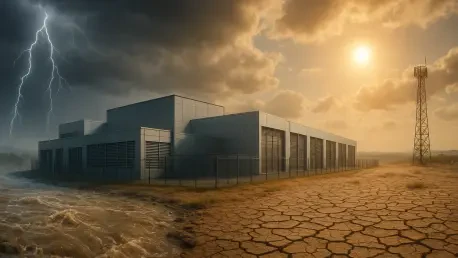

Reactive site management strategies are proving insufficient for protecting the specialized equipment and labor schedules required for high-density computing facilities. As the United Kingdom aggressively pursues its digital transformation goals, the sheer scale of data center construction has outpaced traditional environmental mitigation techniques. The industry is currently grappling with a paradox where the very infrastructure designed to host the future of artificial intelligence is being stalled by primordial forces of weather. Meteorological shifts, particularly those influenced by persistent El Niño-linked cycles, have transformed what were once manageable seasonal fluctuations into systemic project killers. With development pipelines stretched across the 2026 to 2028 window, the inability to shield construction sites from extreme moisture and wind is no longer just a site-level annoyance; it has become a macroeconomic bottleneck that threatens the delivery of the UK’s next-generation compute capacity.
The Growing Impact of Climate Volatility
Compounding Delays: The Reality of Seasonal Extremes
A phenomenon known as cumulative risk is currently redefining the operational parameters of UK construction sites. In the past, a single heatwave or a week of heavy rain could be absorbed into a project’s buffer, but the current climate reality offers no such recovery time. Many active developments are struggling to regain momentum after record-breaking summer temperatures, which forced labor halts to ensure worker safety, only to be immediately confronted by high-velocity wind events and localized flooding in the autumn. This back-to-back exposure prevents the normalization of site conditions, meaning that soil saturation levels remain high and structural integrity checks take longer. Consequently, the traditional catch-up periods that contractors rely on have evaporated, leaving project managers in a perpetual state of crisis management. This lack of a recovery window is pushing project completion dates further into the distance, often by months at a time, creating a domino effect across the pipeline.
Technical Vulnerabilities: Protecting High-Tech Infrastructure
Data centers are fundamentally different from standard industrial buildings because of their extreme sensitivity to environmental contaminants during the internal fit-out phase. Once the building envelope is established, the installation of server racks, fiber optics, and sophisticated cooling manifolds begins, requiring a clean and climate-controlled environment. Even minor leaks or high humidity levels can cause catastrophic damage to the sensitive electronics that represent the bulk of the project capital expenditure. If the main structure is not perfectly sealed against the increasing frequency of driving rain and high winds, the entire internal phase must be suspended to prevent long-term hardware degradation. This sensitivity creates a narrow window for error where a single failed roof membrane or an unsecured loading bay during a storm can result in millions of dollars in equipment replacement. Contractors are finding that traditional temporary screening and basic tarping are no longer sufficient to meet the standards demanded by clients.
Rethinking Planning and Economic Resilience
Strategic Integration: Moving Beyond Reactive Contingencies
The current financial model for many data center projects continues to treat weather protection as a discretionary contingency rather than a vital component of the core building program. This budgetary myopia often leads developers and quantity surveyors to select lower-cost site management options that lack the robustness needed for today’s climate. When procurement decisions are made solely on initial price comparisons, they fail to account for the exponential costs of project delays or the penalties associated with missing contractual handover dates. Industry leaders are now advocating for a paradigm shift where engineered weathering is integrated into the earliest stages of the planning process. By treating protective infrastructure as a mission-critical asset, developers can ensure that work continues regardless of external conditions. This strategy requires a higher upfront investment but offers a massive return by protecting the delivery schedule and de-risking the project for every stakeholder involved.
National Competitiveness: The Broader Economic Impact
The implications of these construction delays extend far beyond the balance sheets of individual developers, touching on the UK broader national economic strategy. As the country competes to become a global hub for artificial intelligence and cloud computing, the timely delivery of digital infrastructure is a matter of national importance. If the 2026 to 2028 pipeline is choked by weather-related setbacks, the UK risks losing its competitive edge to regions with more stable climates or better-prepared construction sectors. The demand for compute power is soaring, and tech giants are increasingly directing their capital toward markets that can guarantee reliable delivery dates. Consequently, the resilience of the construction process has become a key metric for national competitiveness. Any systemic failure to adapt to climate volatility could lead to a digital infrastructure gap that hampers productivity across every sector, forcing investors to look for more stable environments.
Strategic Resilience: Future-Proofing the UK Infrastructure
The industry successfully navigated the initial challenges of 2026 by reevaluating the relationship between climate risk and project delivery. Organizations that prioritized engineered weathering as a core budgetary line item observed a marked decrease in idle labor time and equipment damage. Moving forward, the focus shifted toward cross-industry collaboration between contractors, weather analysts, and technology providers to create more granular site-management plans. It became clear that the integration of real-time meteorological data into construction scheduling allowed for more dynamic resource allocation, minimizing the impact of unforeseen storms. To maintain this momentum, stakeholders recognized that treating environmental resilience as a fundamental requirement was essential for the viability of the digital economy. Future projects benefited from the adoption of standardized weather-hardened build protocols that prioritized building envelope integrity before any high-tech components were moved on-site.