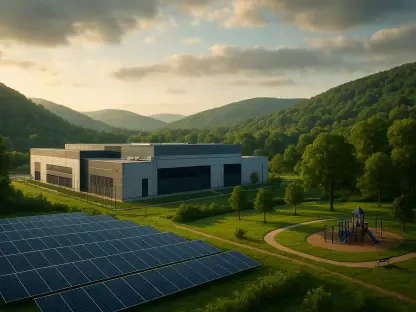

Environmentalists fear that the physical footprint of massive computer warehouses will disrupt the delicate balance of Marston Marsh regardless of the energy source used. This apprehension stems from the proposed Norwich Apex Data Center in Keswick, a quiet village that has suddenly become the epicenter of a national debate over the UK’s industrial future. With the British government designating these facilities as critical national infrastructure, the push for expansion is relentless. However, the site in question lies a mere 650 meters from a protected nature reserve, creating a direct conflict between technological advancement and environmental stewardship. Residents argue that the massive physical structure and the resulting heat dissipation could irreversibly alter the local climate and water table. This situation encapsulates the broader struggle of a nation trying to maintain its lead in the global AI race while honoring its commitment to conservation. The decision will set a crucial precedent.
The Resource Demands of An AI-Driven Future
The transition toward an economy powered by artificial intelligence has fundamentally altered the physical and operational requirements of modern computing hubs. Unlike the standard servers that managed email and basic web traffic in the past, today’s AI models require a staggering amount of processing power, leading to much higher thermal outputs. This shift necessitates the deployment of specialized high-density cooling systems that often rely on significant quantities of water or energy-intensive refrigeration. In the case of the Keswick proposal, the massive scale of the machinery required to support these advanced algorithms has raised alarms about the localized environmental footprint. Critics point out that the sheer energy density of such a facility could create a heat-island effect, potentially impacting the delicate flora and fauna of the nearby River Yare. As the UK attempts to scale its digital infrastructure, the demand for electricity is reaching unprecedented levels.
To mitigate these substantial resource requirements, developers are increasingly integrating sophisticated green technologies directly into their initial project designs. The Norwich Apex proposal, for instance, intends to capitalize on the region’s proximity to massive offshore wind farms operated by Ørsted. By establishing a direct link to renewable energy sources, the project aims to bypass the existing bottlenecks in the national grid, utilizing clean electricity that might otherwise be curtailed or wasted. Furthermore, the design incorporates a closed-loop water circulation system, which is intended to cycle water internally rather than drawing continuously from municipal supplies or discharging heated water into the local environment. This approach represents an attempt to decouple industrial growth from ecological degradation by ensuring that the facility operates within a self-contained metabolic cycle. Such innovations are becoming the baseline for obtaining a social license to operate in this sector.
Balancing National Interests With Local Preservation
The narrative surrounding the Norwich Apex project highlights a profound divide in how different stakeholders value the landscape of eastern England. On one side, corporate directors like William Anthony argue that the facility is a strategic necessity for the national economy, providing the foundational infrastructure for the next generation of digital innovation. They view the project as a way to modernize the region and create high-tech jobs while utilizing green energy that would otherwise be lost to transmission inefficiencies. Conversely, local residents and environmental advocates view the landscape through the lens of preservation and heritage. For them, the proximity to the Marston Marsh nature reserve is an insurmountable barrier, as they believe the industrialization of the rural fringe threatens the very qualities that make the area unique. This clash of priorities illustrates the difficulty of finding a middle ground today.
This tension is not merely a local dispute but a reflection of a wider trend where the UK now hosts nearly 500 data centers, making it the third-highest globally. The government’s classification of these sites as critical national infrastructure signifies their role as the backbone of economic growth and AI research. However, this designation often creates friction with local planning authorities and community groups who feel that national priorities are being forced upon them without adequate regard for local ecological impacts. The concept of sustainable localization is beginning to emerge as a potential solution, where developers must prove that their presence benefits the local environment rather than just the national economy. In Norwich, this has led to calls for more transparency regarding water table impacts and long-term thermal monitoring. The outcome of the planning process will signal whether the UK can truly integrate its high-tech ambitions with its goals for protecting biodiversity.
Future Considerations: A Litmus Test for Digital Expansion
The resolution of the Keswick project provided a clear blueprint for the future of industrial development within the British landscape. It demonstrated that technical mitigations, such as closed-loop cooling and direct renewable energy sourcing, were no longer considered optional extras but were essential for securing public trust. Moving forward, developers needed to adopt a more collaborative approach, engaging with environmental experts early in the design phase to ensure that infrastructure was truly harmonious with its surroundings. The case also highlighted the necessity for a national strategy that better synchronized grid upgrades with data center placement, reducing the reliance on sensitive rural areas. Leaders in the industry recognized that the path toward a digital future required transparent data sharing and verifiable ecological safeguards. Ultimately, the integration of technology and nature depended on a commitment to stewardship that looked beyond immediate economic gains for everyone.