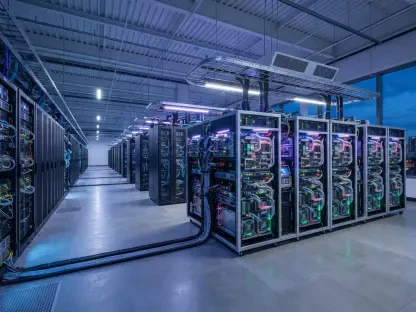

The development of Sovereign Core infrastructure reflects a growing necessity for enterprises to maintain strict data residency and meet regional regulatory requirements for AI workloads. As businesses transition from exploratory generative AI pilots to full-scale production deployments, the focus has shifted from the initial excitement of model training to the practical, daily demands of large-scale inference. This evolution requires a level of computational reliability and geographic specificity that traditional, centralized cloud models often struggle to provide. In response, IBM Cloud and Together AI have entered a multiyear, 240 million dollar partnership designed to bridge this gap by deploying massive GPU clusters optimized for the open-source ecosystem. By focusing on the specialized needs of enterprise-level inference, these companies are positioning themselves as the primary architects of a new, decentralized digital environment. This collaboration signals a broader industry movement where specialized AI startups and legacy technology giants combine forces to challenge the dominance of proprietary, closed-loop systems currently controlling the market.
Scaling Infrastructure Through Strategic Investment
Financial Commitments: Strategic Funding for Global Growth
The strategic collaboration centers on Together AI utilizing IBM Cloud’s robust infrastructure to build an expansive inference cluster, supported by a recent capital injection that valued the startup at 8.3 billion dollars. With operations scheduled to commence in early 2027, the initial phase of this deployment involves thousands of NVIDIA Blackwell GPUs situated within IBM’s highly secure U.S. data centers. This massive investment addresses a critical bottleneck in the industry, where the ability to serve AI models at scale has become as important as the ability to train them. By securing such a significant volume of high-performance compute, Together AI can offer its corporate clients the stability required to transition their most sensitive projects into permanent production environments. This move is not merely about raw power but about providing a consistent, predictable foundation for companies that cannot afford service interruptions. The integration of these hardware resources ensures that the next generation of enterprise software can operate with the speed and reliability that modern users have come to expect.
Capacity Planning: Navigating the Scarcity of Compute Power
A defining characteristic of this agreement is the pre-sold nature of the hardware capacity, where every available unit of compute power is expected to be claimed months before it officially launches. This trend reflects a broader industry environment where raw processing power is treated as a scarce commodity rather than a standard service. Large enterprises are now racing to secure long-term access to the necessary infrastructure to avoid being left behind as demand continues to outpace available supply. By locking in these resources through IBM Cloud, organizations can bypass the volatile spot markets and supply chain delays that often plague the high-end GPU sector. This forward-looking approach to capacity planning allows businesses to budget their AI expenditures with greater accuracy while ensuring that their application performance remains steady regardless of global market fluctuations. The partnership effectively creates a protected corridor for AI development, shielding corporate users from the aggressive bidding wars that typically define the current technological landscape.
Engineering the Modern AI Factory
High-Performance Hardware: Optimization for Inference Speed
To handle the demands of modern generative AI, the partnership relies on NVIDIA’s HGX B300 systems, which are specifically optimized for high-speed inference rather than just training. This hardware choice allows for significantly faster processing times and lower latency, which are essential for businesses that need to generate real-time responses from complex AI models. These systems are designed to bridge the gap between massive data sets and immediate, actionable insights, providing the throughput necessary for customer-facing applications. In the enterprise world, even a few milliseconds of delay can degrade the user experience or disrupt automated workflows, making specialized inference hardware a non-negotiable requirement. The deployment of these B300 systems within IBM’s infrastructure provides a level of architectural sophistication that was previously reserved only for the largest research laboratories. By making this technology accessible through a cloud-based model, IBM and Together AI are democratizing access to high-tier performance for a much wider range of commercial industries.
Networking Fabrics: Eliminating Bottlenecks in the Data Stream
The infrastructure is built around the AI Factory concept, using specialized Ethernet networking to prevent data bottlenecks between processors and high-speed memory. By using these advanced networking fabrics, IBM and Together AI can deliver significantly more output than previous-generation systems that relied on traditional data center architectures. This setup provides the reliability and scalability required for massive enterprise workloads, treating AI processing as a foundational utility similar to electricity or telecommunications. The focus on low-latency connectivity ensures that individual GPU nodes can communicate instantaneously, which is a vital requirement for the massive parallel processing used in today’s largest language models. By optimizing the physical layers of the network, the partnership reduces the overhead associated with data transfer, allowing the hardware to operate at its maximum theoretical efficiency. This engineering-first approach ensures that the underlying infrastructure does not become a limiting factor as models grow in complexity and the volume of incoming queries increases.
Transforming Enterprise AI Consumption
Open-Source Models: The Shift Toward Transparent Integration
There is a clear move toward open-source models like DeepSeek and Kimi, as businesses seek high performance without the high costs or limitations of proprietary systems. This shift is also paving the way for agentic AI, which consists of autonomous systems capable of handling multi-step tasks without constant human intervention. Such agents require a foundation of stable and incredibly fast infrastructure to function effectively at an industrial scale, as they often perform dozens of internal reasoning steps before providing a final output. By supporting these open-source frameworks, the IBM and Together AI partnership allows developers to inspect, modify, and fine-tune their models to suit specific business needs. This level of transparency is becoming a requirement for heavily regulated industries such as finance and healthcare, where the “black box” nature of proprietary models is often seen as a liability. The ability to run these transparent models on dedicated, high-performance hardware provides the perfect balance between the flexibility of open software and the power of specialized enterprise-grade chips.
Standardizing Throughput: Consumption Models for Modern Developers
Together AI is also changing how companies buy AI capacity through Provisioned Throughput Units, which let customers reserve a specific amount of data processing per minute. This token-based model allows developers to focus on building applications rather than managing complex hardware settings or fighting for GPU allocations in a crowded pool. It reflects a maturing market that prioritizes actual data outcomes and predictable costs over the complexities of managing raw machine time and physical server maintenance. By abstracting the hardware layer, the partnership provides a more streamlined experience for software engineers who need to deploy AI features quickly. This model also allows for better financial forecasting, as companies can purchase the exact amount of throughput they need based on their expected user traffic. This move away from traditional cloud billing toward a more granular, output-based system represents a significant shift in how technological resources are valued. It ensures that the focus remains on the value generated by the AI rather than the technical overhead required to keep the processors running.
Navigating the Global AI Landscape
Regional Compliance: Strategies for Sovereign AI Data Residency
The collaboration extends into a broader ecosystem involving IBM’s high-performance storage and Sovereign AI initiatives designed to meet strict regional data residency laws. By integrating these services with existing enterprise tools and consulting services, the partnership offers a full-stack solution that addresses security and compliance concerns simultaneously. This approach ensures that global organizations can scale their operations while adhering to local regulations that often prohibit the processing of sensitive citizen data outside of national borders. By maintaining a network of regional data centers, IBM provides the physical presence necessary to satisfy even the most stringent legal requirements. This geographic flexibility is a major competitive advantage for companies operating in the European Union and other jurisdictions with robust privacy frameworks. The integration of high-performance storage solutions further enhances this capability, ensuring that data is not only processed locally but also stored with the highest levels of encryption and accessibility required for modern corporate governance.
Competitive Outlook: Ecosystem Synergies and Market Future
The strategic alliance between IBM and Together AI ultimately addressed the urgent need for a more transparent and scalable alternative to closed-model ecosystems. By prioritizing open-source accessibility and specialized inference hardware, the partnership managed to provide a viable path for global organizations to scale their operations while maintaining strict control over their data. The successful deployment of these vast GPU clusters demonstrated that the future of enterprise technology lay in a combination of specialized networking, high-performance storage, and flexible consumption models. Industry experts noted that this collaboration set a new standard for how cloud providers and AI startups could synchronize their resources to meet the demands of a rapidly maturing market. As businesses moved away from experimental phases, they required infrastructure that acted as a reliable utility rather than a scarce luxury. This initiative paved the way for more diverse and competitive offerings in the artificial intelligence sector, ensuring that innovation remained accessible to companies regardless of their geographic location.