
The conventional cloud landscape has undergone a radical transformation as the insatiable appetite for massive computational resources moves beyond the capabilities of general-purpose data centers. In the current 2026 market, the transition from central processing units to graphics processing units has redefined the standard for enterprise efficiency. This pivot toward GPU-accelerated infrastructure serves as the bedrock for training large language models and advancing generative applications across every major vertical.
Specialized providers have filled the void left by traditional cloud giants who often struggle with the rigid hardware requirements of high-performance workloads. While hyperscalers offer a broad suite of tools, agile challengers provide the highly optimized environments necessary for rapid model iteration. The relationship between chip manufacturers and these cloud integrators has become a symbiotic pillar of the digital economy, ensuring that the most sophisticated hardware reaches the most ambitious developers.
The Rise of Specialized Cloud Services in the AI-Driven Economy
Market players are currently categorized by their ability to provide immediate access to specialized clusters that traditional providers cannot match. The competitive landscape has shifted as specialized challengers leverage their agility to deploy the latest hardware faster than the massive, bureaucratic hyperscalers. This shift ensures that companies working on frontier models can maintain their development velocity without being throttled by shared infrastructure limitations.
Moreover, the symbiosis between hardware manufacturers and specialized cloud integrators has created a new tier of service. These partnerships ensure that the latest innovations in silicon are immediately available in a cloud-native format. This specialized approach has allowed the industry to move away from general-purpose computing toward a more focused and efficient model of digital infrastructure that prioritizes raw throughput and low latency.
Market Trajectory and the Unprecedented Demand for Compute Power
Hypergrowth Drivers and the Shift in Enterprise Spending
CoreWeave stands at the center of this tectonic shift, evidenced by a massive revenue backlog that recently surged to over 104 billion dollars. This backlog reflects a wider trend where enterprise demand far outpaces existing infrastructure supply, creating a market environment where capacity is essentially sold out before it even goes online. By securing elite partnerships with industry leaders, the company has built a competitive moat that prevents rivals from catching up.
Even established tech titans have increasingly turned to specialized providers to handle their most intensive workloads. This outsourcing strategy allows larger firms to maintain agility without overextending their internal hardware divisions during periods of peak demand. Consequently, the reliance on specialized clouds has shifted from a tactical choice to a fundamental strategic requirement for any company aiming to lead in the modern technology space.
Financial Forecasts and the 2026 Capital Expenditure Outlook
For the current 2026 fiscal year, capital expenditure guidance has been adjusted to an aggressive range of 35 billion to 39 billion dollars. This massive reinvestment signal indicates a firm belief in the longevity of the current investment cycle and the necessity of rapid physical expansion. Wall Street analysts have responded with a bullish consensus, noting a potential 61 percent upside as the sector capitalizes on its unique position as an essential utility.
Looking ahead from 2026 through 2030, the infrastructure sector is projected to maintain a steep growth curve as global industries integrate autonomous systems. The current spending patterns suggest that the shift toward high-performance computing is not a temporary bubble but a structural reordering of global capital. Investors are prioritizing firms that can prove long-term margin sustainability while managing the high costs of hardware procurement and facility management.
Navigation of Scaling Hurdles and the Global Chip Supply Chain
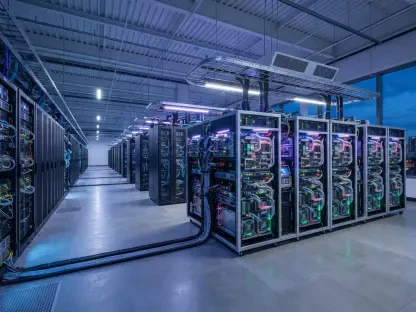
Expanding a global network of data centers requires navigating a complex web of power grid limitations and physical site constraints. As the density of hardware increases, the demand for electricity has reached levels that challenge existing municipal infrastructures, forcing providers to seek innovative energy solutions. Managing these power requirements while maintaining a rapid construction schedule remains a primary obstacle to sustaining the current pace of growth.
Strategic hardware management has also become a critical skill as global supply chains face periodic bottlenecks. To combat these challenges, companies are implementing sophisticated liquid cooling systems and proprietary networking stacks that allow for higher compute density. These technical innovations are no longer optional; they are the baseline requirements for operating a profitable and efficient high-performance cloud environment in the current economic landscape.
Governance and Security Standards in High-Performance Computing
International trade regulations and export controls have introduced a layer of complexity to the distribution of high-end processing units. Maintaining compliance with these evolving standards is essential for serving elite clients who require absolute certainty regarding data sovereignty. By achieving industry certifications and being recognized as visionaries by analysts, specialized providers establish the trust necessary to handle sensitive intellectual property and high-value data.
Security protocols for multi-tenant environments must be significantly more robust than those found in traditional cloud settings. Protecting the weights of proprietary models and the privacy of massive datasets requires a combination of hardware-level isolation and advanced encryption. As the value of the information stored in these clouds increases, the focus on zero-trust architectures and rigorous auditing has become a defining characteristic of successful market leaders.
The Future Frontier of the AI Infrastructure Backbone
The industry is currently transitioning from a focus on training massive models to the widespread implementation of enterprise-level inference. This shift means that compute power must be distributed closer to the end user, driving a new wave of investment in edge computing and localized data centers. As the cloud infrastructure map expands into new territories, the ability to provide low-latency services will become the next major competitive frontier for providers.
Emerging technologies like custom silicon and quantum readiness are also beginning to influence long-term planning for the end of the decade. While high-end GPUs remain the primary tool for now, the development of specialized chips tailored for specific tasks could disrupt the current hardware hierarchy. The providers that can successfully integrate these new architectures into their existing frameworks will be the ones that sustain dominance as global economic conditions evolve.
Synthesizing CoreWeave’s Dominance and the Path Forward
The successful transition of specialized providers into essential utilities demonstrated that the market valued speed and hardware access over general-purpose flexibility. Strategic stakeholders recognized that navigating the volatility of the cloud sector required a dual focus on energy security and hardware diversification. It became clear that the next phase of growth depended on the ability to monetize the inference cycle while maintaining strict adherence to international regulatory standards.
Future considerations involved a shift toward sustainable power sourcing to mitigate the environmental impact of massive data center operations. Investors and leaders moved to secure long-term energy contracts and invested in proprietary cooling technologies to protect their margins. This proactive approach ensured that the infrastructure backbone remained resilient against potential supply chain disruptions and shifting global economic conditions as the industry matured.