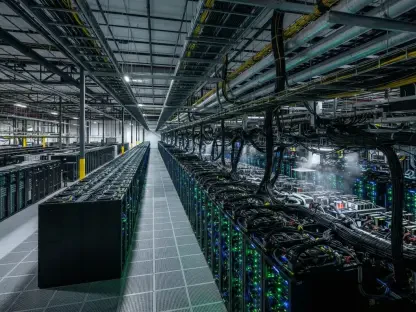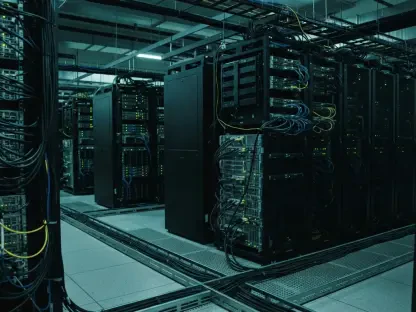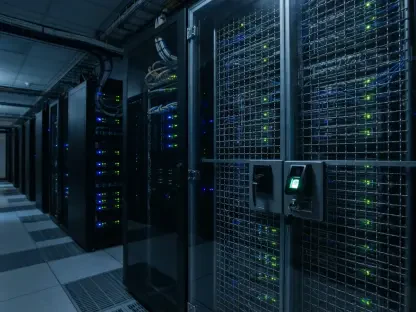

The collaboration between Google and Meta ensures that the widely used PyTorch framework runs seamlessly on specialized silicon, simplifying model portability for developers. This development represents a critical milestone in Google’s long-term strategy to democratize its custom hardware, transforming what was once a proprietary internal tool into a formidable pillar of its commercial cloud offering. As the demand for high-performance computing reaches unprecedented levels in 2026, the company has pivoted from a general-purpose provider to an AI-first powerhouse. By tightly integrating custom silicon with its software ecosystem, Google Cloud addresses the significant computational bottlenecks that have historically hampered large-scale AI deployment. This strategic realignment is not merely a technical upgrade but a fundamental shift in how the cloud operates, prioritizing specialized environments that cater to the unique needs of generative models. This approach has allowed the firm to carve out a distinct competitive advantage in the market.
Financial Growth and Market Maturity
The recent financial performance of Alphabet provides clear evidence of the success of this strategic transition, with Google Cloud emerging as a central driver of the company’s overall growth. In the third quarter of the current fiscal year, the division reported that its revenue more than doubled to reach $30.71 billion, a surge that directly reflects the intensifying global demand for sophisticated artificial intelligence infrastructure. This growth trajectory is part of a larger success story for the parent company, which saw total revenue climb by 16 percent to $127.6 billion. CEO Sundar Pichai has emphasized that this momentum necessitates an aggressive expansion of data center capacity to keep pace with long-term requirements. The cloud business has matured into an expansive enterprise portfolio, now featuring 18 distinct product lines that each generate more than $1 billion in annual revenue, proving that the move toward specialized AI services is yielding substantial and sustainable returns.
This rapid financial expansion underscores a broader shift in the competitive landscape, where traditional cloud metrics are being replaced by the ability to provide high-density compute for machine learning. The maturity of the Google Cloud division allows it to operate with a level of scale and efficiency that was previously unattainable, enabling the company to reinvest heavily in next-generation hardware and software integration. As enterprises across all sectors prioritize AI-driven digital transformation, the sheer volume of capital flowing into Google’s infrastructure demonstrates that its specialized approach is resonating with decision-makers. The transition from a third-place market position to a specialized leader has been facilitated by this massive revenue influx, which provides the necessary resources to outpace competitors in hardware innovation. This financial stability creates a foundation for long-term dominance, allowing the firm to experiment with new delivery models and distribution strategies that reach beyond its own ecosystem.
Advancements in Specialized Silicon Performance
The technological backbone of this market dominance is the Tensor Processing Unit, or TPU, which represents Google’s significant lead in custom silicon engineering. The current generation of hardware includes the TPU 8t, which is specifically optimized for model training, and the TPU 8i, which focuses on the efficiency of inference tasks. These units are not just incremental improvements; they offer dramatic performance gains that are essential for managing the costs of modern AI. Specifically, the TPU 8t delivers nearly 2.7 times better training performance than previous versions, while the TPU 8i provides an 80 percent improvement in inference price-performance. By moving away from general-purpose processors and toward these specialized systems, Google is able to offer its clients a level of efficiency that is difficult to replicate with off-the-shelf hardware. This technical edge is a primary reason why major AI labs and traditional enterprises are increasingly migrating their most intensive workloads to the platform.
Beyond the raw hardware specifications, the strategic focus on software portability has been a game-changer for the adoption of TPU technology in the broader developer community. The launch of the TorchTPU initiative has effectively removed the high barriers to entry that once existed for those accustomed to different hardware environments. By ensuring that the industry-standard PyTorch framework runs natively and efficiently on Google’s custom chips, the company has made it possible for developers to port their existing code with minimal friction. This move directly challenges the dominance of established hardware ecosystems by providing a viable, high-performance alternative that does not require a total rewrite of existing models. As a result, the TPU has evolved from a niche specialized tool into a versatile platform capable of supporting a vast array of machine learning applications. This focus on interoperability ensures that Google’s hardware remains attractive to the world’s leading researchers who prioritize both speed and flexibility.
Expanding Distribution: The Hybrid Strategy for Infrastructure
Google’s distribution strategy has evolved significantly, moving from a closed ecosystem to a more open and collaborative model that emphasizes broad accessibility. Currently, the company supports nearly 100 significant customers on its TPU infrastructure, including industry titans like Apple and innovative AI startups like Anthropic. To further extend its reach, Google has embraced partnerships with other major technology providers, such as Oracle, to make its AI hardware available in a wider variety of settings. This shift includes the creation of sovereign clouds and hybrid data center solutions, which are increasingly important for organizations with strict regulatory requirements or data residency concerns. By collaborating with partners like Blackstone on ventures such as Crux AI, Google is effectively placing its specialized silicon in third-party environments. This allows the company to capture a larger share of the market, catering to enterprises that maintain multi-cloud strategies or prefer to host their data on-premises.
The expansion into third-party data centers represents a calculated move to decouple Google’s hardware advantages from its own cloud hosting services. This flexibility is essential for engaging with large-scale financial institutions and government agencies that require more control over their physical infrastructure than a standard public cloud allows. By offering TPUs as a service that can exist within diverse environments, Google is positioning its silicon as the industry standard for AI compute, regardless of the underlying cloud provider. This approach not only increases hardware sales but also embeds Google’s technological standards across the entire industry. Furthermore, the ability to support hybrid deployments ensures that companies can scale their AI initiatives without being forced to abandon their existing investments in other cloud platforms. This pragmatic strategy acknowledges the reality of the multi-cloud enterprise landscape, allowing Google to remain a central player in the AI race even when it is not the primary cloud host.
The Synergistic Ecosystem of Gemini and Cloud Services
The rapid adoption of the Gemini AI suite has acted as a powerful catalyst for the growth of the broader Google Cloud ecosystem, creating a symbiotic relationship between software and infrastructure. Currently, approximately 90 percent of the Fortune 100 utilize Gemini Enterprise, demonstrating a profound level of market penetration for Google’s generative models. The scale of this usage is staggering, with high-intensity users processing upwards of 10 trillion tokens through the platform. This massive volume of activity does not exist in isolation; rather, it drives demand for a wide range of complementary services across the Google Cloud portfolio. As organizations build complex AI agents, they require significant amounts of storage for agent memory and advanced database services to provide the necessary context for reasoning. This “virtuous circle” of adoption ensures that every successful AI deployment generates additional revenue for Google’s core compute, storage, and cybersecurity offerings, creating a self-sustaining growth model.
The practical application of these technologies is already visible across a wide range of industries, where Gemini-powered solutions are driving measurable improvements in efficiency and customer engagement. For instance, the global financial group BNP Paribas successfully deployed Gemini to 65,000 employees to streamline internal workflows and enhance productivity. Similarly, Tata Steel has leveraged the platform to create more than 300 specialized AI agents designed to optimize complex manufacturing processes and supply chain logistics. In the retail sector, Ulta Beauty reported a threefold increase in conversion rates after implementing a Gemini-driven shopping assistant, proving that AI can have a direct impact on the bottom line. These diverse use cases highlight how Google’s integrated approach provides the tools necessary for enterprises to move beyond experimentation and into full-scale production. This success in real-world environments solidifies the company’s reputation as a reliable partner for large-scale AI transformation.
Future Outlook: The Strategic Roadmap for AI Dominance
The strategic investments made in hardware and software integration positioned the company for a significant revenue ramp-up through 2027. While Google focused on its own cloud growth, the industry noticed a shift as rumors surfaced regarding major players like OpenAI seeking to diversify their hardware reliance by potentially utilizing TPU systems. This potential validation from a major competitor suggested that Google’s specialized silicon reached a level of maturity that challenged existing market monopolies. Moving forward, enterprises must evaluate their infrastructure strategies to ensure they are utilizing hardware that is purpose-built for the specific demands of machine learning. The lessons from Google’s rise indicate that the future of cloud computing lies in the tight coupling of custom silicon with flexible software frameworks. Organizations that prioritize this level of integration will likely find themselves better equipped to handle the computational intensity of future models. This evolution successfully turned specialized compute into a standard utility.