
Maintaining direct consumer relationships in the age of automated shopping assistants requires companies to build sophisticated omnichannel capabilities powered by agentic AI. As traditional digital storefronts face disruption from autonomous intermediaries, brands must evolve beyond simple automation toward systems that can reason and execute complex tasks without constant human intervention. This shift is exemplified by the Swiss sportswear innovator On Holding, which recently demonstrated how agentic systems can compress years of technical debt into only a few months. By moving away from rigid software, organizations are utilizing large language model agents to orchestrate cloud migrations and supply chain adjustments. This is not only about speed; it is about building an intelligence layer that allows a company to pivot its global strategy in real time. The integration of these tools marks a new era where business agility is dictated by the efficiency of the autonomous software ecosystem.
Streamlining Complex Infrastructure with Cloud Automation
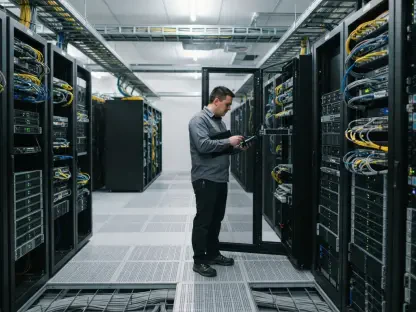
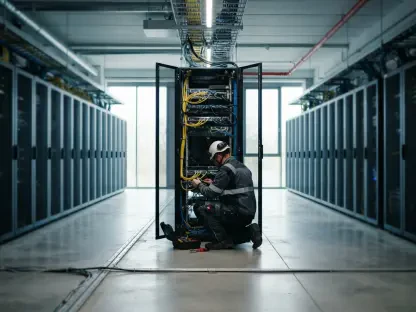
One of the most striking examples of this transformation is the rapid migration of core digital assets between major cloud providers. On Holding recently undertook a massive shift from Amazon Web Services to Google Cloud, a project that traditional estimates placed on an eighteen-month timeline. However, by deploying specialized AI agents to handle the heavy lifting of code conversion and database restructuring, the company completed the entire transition in just three months. This sixfold increase in efficiency illustrates how agentic AI removes the typical bottlenecks associated with manual refactoring and testing. Instead of human engineers spending thousands of hours mapping legacy architectures to new environments, the AI agents autonomously identified dependencies and generated optimized configurations. This level of acceleration allows global enterprises to modernize their backend systems without the prolonged periods of downtime or the high risk of human error that usually haunt large migrations.
Beyond the initial technical migration, the use of agentic AI creates a self-healing infrastructure that continuously optimizes for performance and cost. These agents are not merely scripts but are capable of monitoring traffic patterns and automatically redistributing workloads across global regions to ensure low latency for users. In the context of On Holding, the move to a new cloud environment was not a static goal but a prerequisite for scaling its 2029 strategic plan. By automating the migration, the company freed up its engineering talent to focus on high-level innovation rather than repetitive maintenance. The success of this approach highlights a fundamental shift in corporate IT strategy: the focus has moved from managing servers to managing the agents that manage the servers. This allows for a more resilient digital presence that can adapt to sudden market shifts or technological advancements without needing a total overhaul of the existing tech stack.
Redefining Consumer Experiences and Manufacturing Efficiency
The consumer-facing side of global business is undergoing a similarly radical change as AI becomes the primary point of contact for retail interactions. On Holding has already begun integrating these agents into its customer service sector, where they handle a significant portion of inquiries with a level of nuance that previous chatbots lacked. By leveraging a single customer view, these agents can provide personalized recommendations and resolve complex logistical issues across digital platforms and physical stores. This strategy is partly a defensive maneuver against the rise of external AI shopping assistants like Google’s Muse. If a brand does not provide its own sophisticated agentic interface, it risks losing its direct connection to the consumer as shoppers begin to rely on third-party AI to make purchasing decisions. Building an internal omnichannel intelligence ensures that the brand maintains control over its narrative and the overall quality of the user experience.
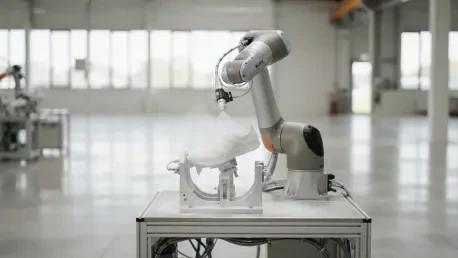
The successful scaling of proprietary LightSpray manufacturing technology demonstrated how robotic precision redefined global production standards. By utilizing high-precision robots to produce shoe uppers, the company achieved a defect rate of only 5%, which proved competitive with traditional manual assembly. This innovation, coupled with record net sales of CHF 931.4 million and gross margins of 66.9%, confirmed that aggressive investments in AI and robotics were essential for maintaining agility. The leadership maintained that these upfront costs were necessary to build the technology foundations required for the 2029 strategic plan. Ultimately, the synthesis of cloud computing and robotic automation provided a clear roadmap for modernization. Organizations were advised to integrate these agentic systems across all operational silos to ensure long-term resilience. This proactive stance allowed businesses to future-proof their brands against the shifting landscape of the global market.