
The scale of modern digital transformation has reached a point where the physical and virtual worlds are essentially inseparable, driven by a compute-intensive paradigm that requires massive industrial collaboration. The strategic inclusion of the Vera CPU in new data center architectures signals a fundamental industry move toward autonomous AI agents that require independent tool use. This shift was underscored by the recent landmark agreement between Amazon Web Services and Nvidia, which serves as a definitive pivot toward the next generation of cloud scale. By committing to the deployment of two million high-performance accelerators across the 2027 and 2028 calendar years, AWS has set a new benchmark for infrastructure investment. This massive scale-out is not merely a response to current market trends but a proactive engineering of a global backbone intended to support trillions of concurrent operations. As enterprises move beyond static chatbots toward dynamic, physical AI and autonomous agents, the requirements for low-latency, high-throughput compute have forced a total re-evaluation of how data centers are constructed and cooled. This collaboration represents more than a purchase order; it is a blueprint for the future of synthetic intelligence, ensuring that the necessary hardware foundations are laid before the next surge in autonomous software capability arrives in the late 2020s.
Strategic Shifts in Global Cloud Capacity
The Two-Million-GPU Commitment: A Multi-Generational Planning Strategy
The late August 2026 announcement detailing the integration of two million high-performance accelerators into the AWS global footprint represents an expansion of a strategy that began earlier this year. Initially, the commitment made during the Nvidia GTC event suggested a move toward one million units, but the rapidly accelerating demand for generative models necessitated a doubling of that figure. This procurement is not restricted to a single hardware generation; instead, it encompasses a sophisticated mix designed to provide continuity as the industry transitions between architectures. The strategy includes the Blackwell Ultra series, specifically the B300 GPUs and GB300 NVL72 racks, which provide the immediate high-end capacity required for current training workloads. By diversifying the hardware mix, AWS ensures that it can maintain a steady supply of compute resources while progressively introducing the Vera Rubin and Rubin Ultra platforms as they reach mass production. This tiered approach allows the cloud provider to balance the immediate needs of developers with the long-term goal of building a future-proof infrastructure capable of sustaining the next decade of AI growth.
Furthermore, the scale of this commitment serves as a stabilizing force in a market often characterized by volatility and supply chain uncertainty. By locking in such a significant volume of silicon, AWS effectively secures its position at the front of the manufacturing queue, a move that is essential for maintaining its competitive edge against other hyperscalers. The integration of these two million units involves more than just plugging in servers; it requires a massive logistical effort to upgrade electrical substations, deploy advanced liquid cooling loops, and optimize fiber-optic networking across multiple geographic regions. This multi-generational planning ensures that as older hardware like the #00 or ##00 begins to depreciate, the new Rubin-based systems will be ready to take over the most demanding tasks without a transition gap. The ultimate objective is to create a seamless environment where researchers can scale their models from a single instance to thousands of nodes without encountering hardware-level bottlenecks or architectural inconsistencies.
Competitive Benchmarking: The Race for General Availability
While AWS has secured a massive future supply, the competitive landscape in late 2026 is defined by a race for immediate availability of the latest silicon. Oracle Cloud Infrastructure (OCI) recently achieved a significant milestone by becoming the first major provider to announce “General Availability” for the Vera Rubin NVL72 systems and the accompanying Vera CPUs. This first-mover advantage is a result of Oracle’s aggressive expansion into multi-gigawatt data center designs and its narrow focus on providing highly specialized clusters for researchers. By having these systems live and operational in October 2026, Oracle has positioned itself as the primary destination for organizations that cannot afford to wait for the broader AWS rollout scheduled for 2027. This discrepancy highlights a fundamental tension in the cloud market between those who prioritize massive, long-term capacity and those who focus on the speed of deployment for the newest technological breakthroughs.
Other players are also making strategic moves to carve out their share of the AI infrastructure market. Google Cloud has initiated its “A5X Rubin” plan, targeting the deployment of nearly one million Rubin-specific GPUs to bolster its own AI ecosystem and internal model development. Specialized providers like CoreWeave and Nebius have also entered the fray, offering production-level Rubin racks to early adopters such as Cognition. These “neoclouds” are focusing on the integration of the Vera CPU, leveraging its unique capabilities to offer services that larger, more generalized providers have yet to fully implement. The competitive pressure created by these diverse offerings forces every major player to accelerate their roadmap, ensuring that the technological gap between the leading hardware and cloud-based access remains as small as possible. As the market matures, the differentiation between these providers will likely shift from raw GPU counts to the sophistication of their integrated software stacks and the reliability of their specialized AI services.
Technical Foundations of the Next Decade
Engineering Efficiency: The Rubin Platform Performance Standards
The transition to the Vera Rubin platform marks a paradigm shift in how data center efficiency is measured and achieved. Unlike previous generations that focused primarily on raw mathematical throughput, the Rubin architecture is optimized for “tokens per megawatt,” a metric that has become essential as global power grids face increasing strain. Nvidia’s internal data suggests that the Vera Rubin NVL72 can deliver a tenfold increase in efficiency compared to the older Blackwell systems. This improvement is critical because it allows cloud providers to pack more compute power into existing data center footprints without requiring a proportional increase in electricity. By reducing the operating cost per million tokens by approximately 90%, the Rubin platform enables a new class of affordable, high-volume AI applications that were previously cost-prohibitive for most enterprises.
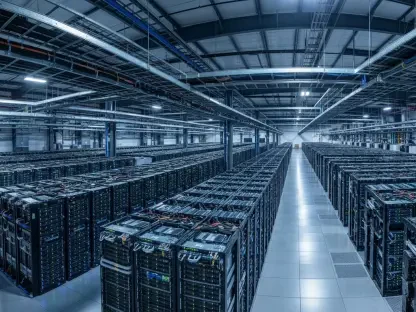
Central to this performance leap is the NVL72 rack-scale architecture, which represents a move away from traditional server design. In this model, the entire rack is treated as a single, massive GPU unit, utilizing a sophisticated network of liquid cooling and advanced NVLink interconnects to manage data flow. The use of liquid cooling is no longer optional for high-end AI clusters; it is a necessity for managing the intense thermal loads generated by high-density silicon. By eliminating the need for traditional air-based cooling in these specific racks, data centers can achieve a significant reduction in their Power Usage Effectiveness (PUE) ratings. Furthermore, the DSX POD reference design allows for these units to be deployed in a fraction of the time required for traditional builds, with some sites going live in as little as 14 days after the physical infrastructure is ready. This combination of speed, efficiency, and scale is what will allow AWS and its competitors to keep pace with the exponential growth of neural network parameters.
The Vera CPU: Redefining Agentic AI and Sandboxing
The introduction of the Vera CPU alongside the Rubin GPU architecture addresses a growing bottleneck in AI system design: the need for independent logical processing. While GPUs are unparalleled at the matrix multiplication required for deep learning, they are often less efficient at the administrative and logic-heavy tasks associated with “agentic” AI. The Vera CPU is specifically engineered to handle these workloads, such as reinforcement learning and complex tool-use scenarios. A single rack equipped with Vera CPUs can support over 22,500 concurrent sandbox environments, which are isolated spaces where AI agents can execute code, test simulations, and interact with digital tools without compromising the security of the host system. This capability is essential for the shift from passive chatbots to active autonomous agents that can perform tasks like software engineering, financial modeling, or industrial coordination.
By offloading these “sandboxing” and logic tasks to a specialized processor, the primary GPUs are freed to focus entirely on inference and training, which significantly streamlines the overall workflow. This specialization prevents the performance degradation that often occurs when a system is forced to juggle different types of computational demands. The Vera CPU architecture is built on the open MGX platform, ensuring that it can be easily integrated into various data center configurations. This move toward specialized silicon for AI coordination signals that the industry is preparing for a future where AI systems are not just processing data, but are actively managing complex, multi-step processes in real-time. For AWS, integrating the Vera CPU provides a way to offer more sophisticated “Agentic AI” services, allowing customers to build autonomous systems that are faster, more secure, and more capable than those running on general-purpose cloud hardware.
Logistical Realities and Economic Forces
Navigating Infrastructure Bottlenecks: Power and Supply Chain Realities
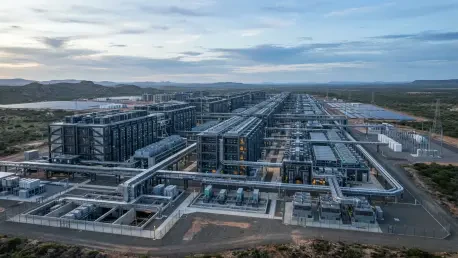
The ambitious goal of deploying millions of GPUs faces several non-technical hurdles that could potentially slow the pace of global AI adoption. The most significant of these is the availability of power and the physical capacity of data centers to handle the immense electrical and thermal loads of modern AI racks. The 2027 and 2028 timeline for the AWS rollout is largely dictated by the speed at which electrical infrastructure can be upgraded or built from scratch. Many existing data centers were not designed for the high-density power requirements of liquid-cooled systems, necessitating extensive retrofitting of power distribution units and cooling loops. This physical bottleneck means that even if silicon production is high, the “speed to market” for cloud capacity is limited by the physical realities of heavy industry and utility coordination.
Simultaneously, the global supply chain for advanced semiconductors remains under pressure, particularly regarding specialized components like high-bandwidth memory (HBM) and advanced substrate packaging. Nvidia has moved to increase its substrate capacity by 2.5 times over the next few years, but the sheer volume of orders from hyperscalers like AWS and Google creates a high-stakes environment where any manufacturing hiccup can have global repercussions. To mitigate these risks, cloud providers are diversifying their suppliers and investing in proprietary logistics solutions to ensure that hardware reaches the data center floor as quickly as possible. The competition for these scarce resources has created a hierarchy in the technology sector, where only the largest capital spenders can secure the necessary components to build out a truly global AI infrastructure. This dynamic underscores the fact that the AI revolution is as much a challenge of logistics and physical engineering as it is one of software and algorithms.
Strategic Co-opetition: Balancing Proprietary Silicon and Nvidia Partnerships
AWS occupies a unique position in the market by simultaneously being one of Nvidia’s largest customers and one of its most significant competitors in the specialized silicon space. While the deal for two million Nvidia GPUs is historic, it does not signal a retreat from Amazon’s internal chip development programs. The company continues to invest heavily in its Graviton and Trainium lines, creating a “hybrid” infrastructure environment where customers can choose the hardware that best fits their budget and performance needs. This dual-track strategy provides AWS with a crucial safety valve; if Nvidia’s supply becomes constrained or its pricing becomes too aggressive, AWS can shift certain workloads toward its own proprietary silicon. This internal capacity also allows AWS to offer lower-cost alternatives to price-sensitive customers who may not require the extreme performance of the Vera Rubin platform.
The emergence of “NVLink Fusion” hints at a future where the lines between proprietary silicon and Nvidia’s ecosystem become increasingly blurred. This technology could potentially allow Amazon’s custom chips to interface directly with Nvidia’s high-speed data fabrics, enabling a unified compute environment that leverages the strengths of both architectures. Such integration would give AWS customers unparalleled flexibility, allowing them to use Nvidia GPUs for heavy model training while utilizing Graviton or Trainium for specific inference tasks or data processing. This “co-opetition” ensures that AWS is not entirely reliant on a single external vendor, while still providing its users with access to the industry-leading performance that Nvidia provides. As the market moves toward more complex AI deployments, the ability to mix and match different types of silicon will become a primary differentiator for cloud providers seeking to optimize both performance and cost.
Financial Implications and Market Projections
The Economic Ripple Effect: Hardware Valuation and the Compute Divide
The rapid introduction of exponentially more efficient hardware like the Vera Rubin platform has profound implications for the economics of the cloud computing market. If the promises of a tenfold increase in efficiency and a 90% reduction in operating costs are realized, the rental value of older generations such as Blackwell or Hopper could drop precipitously. This creates a significant financial risk for smaller cloud providers or specialized “AI neoclouds” that may have taken on substantial debt to build out fleets of older hardware. As the market shifts toward the most efficient silicon, these companies may find themselves forced to lower their prices to remain competitive, potentially impacting their long-term viability and balance sheets. This dynamic could accelerate the consolidation of the cloud market, as only the largest hyperscalers have the capital to continually refresh their fleets with the latest technology.
This economic shift also risks creating a “compute divide” between a few dominant tech giants and the rest of the industry. Companies like AWS, Google, and Microsoft, with their multi-billion dollar infrastructure commitments, will control the vast majority of the world’s high-end AI capacity for the foreseeable future. For startups and mid-sized enterprises, accessing this level of compute power will likely require deep partnerships with these hyperscalers, potentially influencing the direction of AI research and development. However, the increased efficiency of the Rubin platform may eventually democratize access by lowering the entry price for inference once the initial rollout phase is complete. The tension between the concentration of hardware and the falling cost of compute will be a defining theme of the late 2020s, shaping the competitive strategies of every company in the digital economy.
Actionable Pathways: Strategies for Enterprise Infrastructure Adoption
Organizations looking to navigate the transition to the 2027 and 2028 infrastructure cycles must adopt a flexible approach to avoid becoming trapped by rapid technological turnover. The primary recommendation for enterprise buyers is to focus on software abstraction layers that support multiple hardware generations. By utilizing tools like CUDA 13.x and cross-platform orchestration frameworks, developers can ensure that their models and applications remain portable across Blackwell, Rubin, and proprietary silicon like Trainium. This architectural flexibility is essential for maintaining operational agility as new capacity becomes available and pricing models evolve. Furthermore, enterprises should carefully monitor performance benchmarks like MLPerf to verify the real-world efficiency gains of the Vera Rubin platform before committing to multi-year reserved instance contracts.
The upcoming AWS re:Invent conference is expected to provide critical details regarding the specific instance types, regional availability, and tiered pricing structures for the new hardware rollout. Decision-makers should use this information to align their model deployment roadmaps with the physical availability of the next-generation racks. Those who prioritize high-end “Agentic AI” applications should begin experimenting with sandboxing and reinforcement learning frameworks that can leverage the unique capabilities of the Vera CPU. By preparing for the specialized hardware requirements of autonomous systems now, organizations can position themselves to lead their respective industries once the massive scale of the 2027–2028 infrastructure expansion is fully realized. Ultimately, the successful adoption of these technologies will depend on a combination of strategic hardware selection and a commitment to maintaining a flexible, vendor-agnostic software stack.
The transition toward the Vera Rubin architecture and the deployment of two million additional accelerators proved to be the defining infrastructure movement of the mid-2020s. The industry successfully moved beyond the constraints of traditional data center design by embracing liquid cooling and specialized CPUs to meet the rigorous demands of autonomous agents. This period established a clear separation between companies that invested in multi-generational hardware strategies and those that focused solely on immediate capacity. As the 2028 rollout cycle concluded, the focus shifted from raw GPU acquisition toward the optimization of these “AI Factories” for specific industrial and creative applications. The next steps for the industry involve refining the integration between proprietary silicon and standardized AI fabrics to further lower the barriers to entry for high-scale computing. Moving forward, the emphasis will remain on sustainable expansion and the continued evolution of agent-based software that can fully utilize the immense power of this global infrastructure.