
The rapid evolution of generative artificial intelligence has fundamentally shifted the requirements of modern data centers from simple rack space to complex, software-defined environments that require seamless orchestration. This new reality prompted IREN Limited to execute a transformative business strategy through the acquisition of Mirantis, an all-share transaction valued at approximately $625 million. By absorbing one of the most prominent names in cloud infrastructure, IREN signaled its intent to evolve from a provider of raw GPU power and facility capacity into a vertically integrated AI Cloud powerhouse. Investor sentiment responded with immediate enthusiasm, pushing share prices up by more than 8 percent to reach a high of $49.48. This surge reflected a broader market recognition that the success of high-performance computing depends on the harmony between high-end hardware and the software layers that govern it. The deal represents a massive step toward bridging the gap between physical infrastructure and enterprise-ready cloud services, providing a blueprint for how data center operators can capture more value in a hardware-constrained market.
The Integration of Software and Silicon
Bridging the Gap: Intelligence and Hardware
Providing raw computational power is no longer the sole benchmark for success in the competitive landscape of AI infrastructure, as enterprises now demand turnkey solutions. As companies scale their machine learning models, the complexity of managing thousands of interconnected GPUs across diverse environments becomes a significant bottleneck for growth. Mirantis brought decades of experience in Kubernetes-powered orchestration to the table, offering a proven method for managing these intricate workloads at scale. By integrating this expertise, IREN positioned itself to solve the multifaceted challenges of provisioning and managing large-scale AI environments that previously required separate vendors. The strategic alignment ensures that clients are not left to navigate the technical hurdles of infrastructure management alone, as the combined entity provides a cohesive roadmap for deployment. This fusion of software intelligence with physical assets allowed IREN to offer a level of operational reliability that hardware providers typically struggle to match independently.
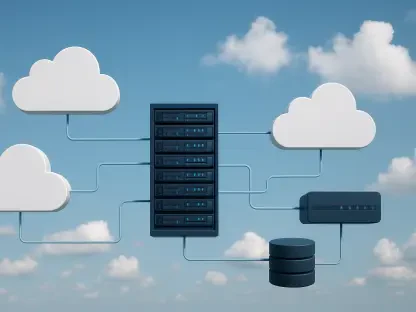
A central component of this acquisition is the k0rdent AI platform, a sophisticated tool designed to manage infrastructure orchestration across a variety of disparate systems. Whether an enterprise is running workloads on bare metal servers, traditional virtualized environments, or modern Kubernetes clusters, the platform provides a unified management plane. This flexibility is critical for organizations that must balance legacy systems with the latest NVIDIA ##00 or B200 clusters. The ability to abstract the underlying hardware allows developers to focus on model training and inference rather than the underlying plumbing of the data center. By owning this software layer, IREN effectively removed the friction associated with moving workloads between different types of compute resources. This capability is particularly valuable for hybrid cloud strategies, where data residency and latency requirements often dictate where specific tasks must be processed. Consequently, the deal transformed IREN from a landlord of digital space into a critical partner in the AI development lifecycle.
Strengthening the Foundation: Enterprise Scale
Mirantis brought an impressive pedigree to the merger, including its status as a founding Independent Software Vendor partner in the NVIDIA AI Cloud Ready Initiative. This designation is not merely a title; it signifies that the software is optimized to run on the latest NVIDIA Blackwell architectures, ensuring maximum throughput and minimal latency for AI training. With a global footprint spanning over 1,500 enterprise clients, the acquisition provided IREN with an immediate and high-quality customer base. These organizations, many of which are in the Fortune 500, require the highest levels of security and uptime for their mission-critical applications. By leveraging these existing relationships, IREN can now cross-sell its high-density data center capacity to companies already using Mirantis software for their cloud operations. This creates a powerful synergy where the software drives the hardware utilization and the hardware provides the performance necessary to justify the software investment, reinforcing the company’s market position.
The operational improvements expected from this merger focus on four key areas: deployment efficiency, operational transparency, enterprise-grade assistance, and deeper market penetration. Deployment efficiency is perhaps the most immediate benefit, as the integrated software stack can automate the configuration of thousands of nodes in a fraction of the time required for manual setups. Transparency is equally vital, as enterprise clients demand granular data on power consumption, thermal performance, and GPU utilization to optimize their operational expenditures. With Mirantis’s monitoring tools, IREN can provide a level of visibility that helps clients justify their massive investments in AI compute. Furthermore, the specialized support teams from Mirantis bring a wealth of knowledge in solving complex networking and storage issues that often plague large-scale AI clusters. This comprehensive support model allows IREN to compete directly with hyperscalers by offering a more personalized and technically proficient service tailored specifically for high-performance AI workloads.
Strategic Evolution of the Data Center Model
Redefining Advantage: Cloud Infrastructure
Under the terms of the agreement, Mirantis will continue to function as an independent subsidiary, a decision aimed at preserving its culture of innovation while fueling IREN’s broader initiatives. This organizational structure is designed to prevent the disruption of services for current Mirantis customers, who rely on the company for everything from OpenStack management to cloud-native security. Simultaneously, this independence allows IREN to utilize Mirantis’s engineers to build a proprietary, high-performance AI cloud that is fully optimized for the company’s specific hardware configurations. By maintaining a dual-track approach, the company can serve the general enterprise cloud market while building a specialized enclave for cutting-edge AI research. This hybrid model provides a diversified revenue stream, mitigating the risks associated with the cyclical nature of hardware demand. It also positions IREN to act as a full-stack alternative to traditional cloud providers, offering more control and lower costs for specialized high-compute tasks.
The transition toward full-stack solutions reflects a broader trend in the technology sector where infrastructure providers are moving up the value chain to capture higher margins. Historically, data center operators were focused on real estate and power, leaving the software layer to third-party providers or the clients themselves. However, the unique demands of AI—specifically the need for massive data throughput and low-latency interconnects—have made it difficult for companies to manage these environments using generic software tools. By owning the management stack, IREN can implement custom optimizations that significantly improve the performance-per-watt of their facilities. This vertical integration is a powerful competitive moat, as it is difficult for pure-play hardware or pure-play software companies to achieve the same level of architectural alignment. In an environment where power availability is the primary constraint on growth, the ability to extract more performance from every megawatt through software efficiency becomes a defining characteristic of market leadership.
Future Implications: Workload Management
The integration of Mirantis and IREN is set to redefine how enterprises approach the 2026 to 2027 development cycle for large language models and autonomous systems. As the industry moves toward more decentralized AI processing, the need for a robust orchestration layer that can span across multiple geographical locations and edge sites becomes paramount. IREN’s expanded portfolio now includes the tools necessary to manage these distributed architectures, ensuring that data and compute are always positioned where they are most effective. This capability is essential for industries like healthcare and finance, where data privacy regulations often require localized processing. By providing a unified software environment that can govern these distributed assets, the combined entity simplifies the compliance and operational burdens for global enterprises. This strategic foresight allows IREN to remain relevant even as the landscape of AI hardware continues to shift toward more specialized and diverse silicon solutions beyond the current GPU dominance.
The acquisition of Mirantis effectively transitioned IREN into a comprehensive provider of AI-focused computational solutions, rather than a simple infrastructure host. Industry leaders recognized that the path forward required a significant investment in the software ecosystems that allowed hardware to perform at its peak potential. By completing this merger, the company successfully bridged the gap between raw power and actionable intelligence, providing clients with a streamlined path to deployment. Organizations looking to scale their AI operations were advised to evaluate their infrastructure providers based on their ability to offer these integrated management layers. The shift toward vertical integration proved to be a decisive move that addressed the growing complexity of modern high-performance computing. Moving forward, the focus shifted toward optimizing these combined resources to ensure that the next generation of AI breakthroughs could be supported by a resilient and transparent infrastructure. The successful execution of this deal provided a clear signal that the future of the cloud belonged to those who could master both the physical and the virtual realms.