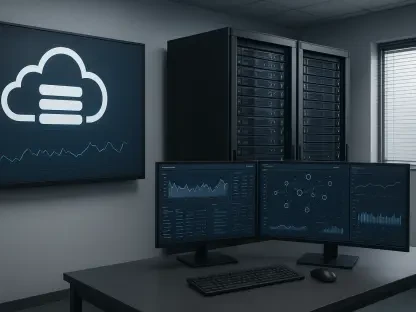

Modern cloud platforms must tailor their interfaces to the specific roles of users, ensuring that data is both relevant and actionable for every stakeholder. As enterprises manage tens of thousands of accounts across disparate providers like AWS, Azure, and Google Cloud, the inherent fragmentation of these environments creates operational friction. Currently, large organizations struggle with siloed metrics where provisioning data, security findings, and health statuses exist in isolation, offering only a fragmented view of the digital estate. This lack of a unified control plane makes it nearly impossible to maintain a consistent security posture or optimize spending across the board. By centralizing these disparate data streams, platforms like RunOn provide a comprehensive map of infrastructure, allowing teams to see how technical assets relate to business objectives. This shift from visibility to a context-aware environment represents a fundamental change in modern cloud strategy.
Navigating the My Cloud Universe: Mapping Context to Infrastructure
The core innovation within this new paradigm is the concept of the My Cloud Universe, a centralized environment that replaces generic dashboard views with context-specific maps. In this model, every cloud resource is directly linked to its organizational significance, such as its funding department, primary account owner, and functional purpose within the stack. This mapping allows for a much more granular understanding of how resources are utilized, moving beyond basic tags to a deep integration with internal business logic. When an administrator looks at the infrastructure, they no longer see a sea of anonymous virtual machines; they see a structured ecosystem where every component is accounted for within the company hierarchy. Such clarity is essential for managing the scale of modern deployments, where data volume can otherwise overwhelm technical teams. By grounding technical data in organizational reality, this approach ensures that every infrastructure decision is fully informed.
Beyond simple visibility, the transition toward proactive execution allows teams to manage the entire lifecycle of cloud assets with precision. Instead of toggling between various provider consoles to address security vulnerabilities or health alerts, engineers can now leverage a single view that prioritizes urgent issues based on potential impact. This integration extends from the initial provisioning phase, utilizing intent-aware guidance to ensure that new resources meet compliance standards from the start, all the way to the eventual decommissioning of legacy systems. This streamlined workflow reduces the manual burden on technical teams, allowing them to focus on high-level architecture rather than mundane administrative tasks. By consolidating health, resilience, and security findings into a unified actionable interface, the platform empowers organizations to stay ahead of failures. This move to a proactive management style is critical for maintaining high availability in an interconnected world.
AI-Driven Intelligence: From Natural Language to Automated Action
Central to this technological shift is the deployment of RunOn Cloud AI, which introduces three distinct levels of assistance to simplify complex multi-cloud operations. The first level involves learning, where the AI provides instant, grounded answers based on platform documentation to help users navigate features efficiently. Moving beyond simple assistance, the second level focuses on querying, allowing stakeholders to use natural language to analyze spending trends or summarize findings across multiple providers. This capability enables a finance manager to ask complex questions about budget allocations without needing to master specialized database query languages. The final level, acting, represents the most advanced stage of this evolution, where the AI executes technical tasks such as resource provisioning through direct chat commands. By enabling users to translate intent into action through a conversational interface, the platform lowers the technical barrier for managing sophisticated cloud estates.
The integration of AI-native platforms with advanced agent technology effectively transformed how large-scale cloud estates were governed and optimized during the current operational year. Organizations that adopted these unified control planes successfully reduced overhead by consolidating disparate security and financial data into a single source of truth. Moving forward, it was clear that stakeholders needed to focus on refining internal data governance to leverage the full capabilities of conversational AI interfaces. It was observed that successful implementations prioritized the alignment of technical roles with specific platform personas, ensuring that engineers and executives received the exact information necessary for their functions. For those who achieved this success, the next phase involved auditing cloud permissions to ensure they were compatible with automated reasoning engines. By treating cloud management as a strategic asset, enterprises positioned themselves to adapt to market shifts and master complexity.