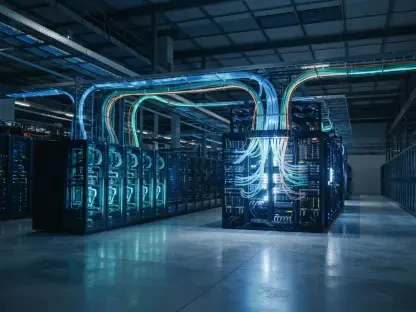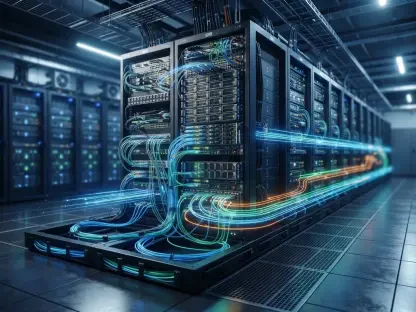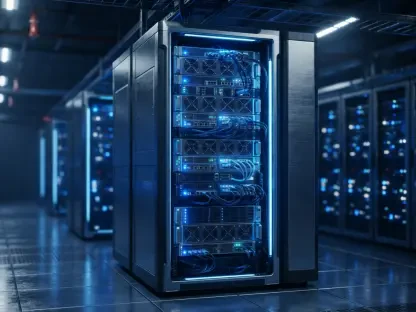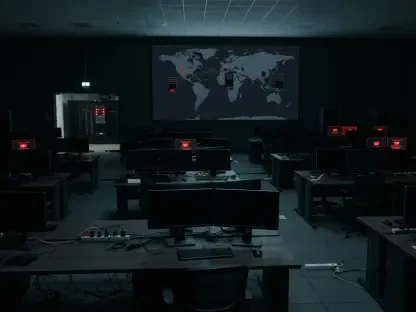

The sudden collapse of a critical high-voltage line in Northern Virginia’s Data Center Alley recently exposed the precarious foundation upon which the modern digital landscape is built. Because this specific geographic corridor handles nearly seventy percent of all global internet traffic, a localized failure quickly reverberated through the operational pipelines of industry leaders like Amazon and Google. This incident demonstrated that while software capabilities are advancing at an exponential rate, the physical infrastructure supporting them remains tethered to an electrical grid that was never designed for such concentrated intensity. The expansion of artificial intelligence has moved from a theoretical demand to a physical strain that threatens to outpace the availability of stable electricity. Engineers now face a reality where sophisticated neural networks are only as reliable as the aging transformers that deliver their fuel. This vulnerability has turned energy procurement into a primary strategic bottleneck for a decade of technological progress.
Escalating Energy Demands and Reliability Constraints
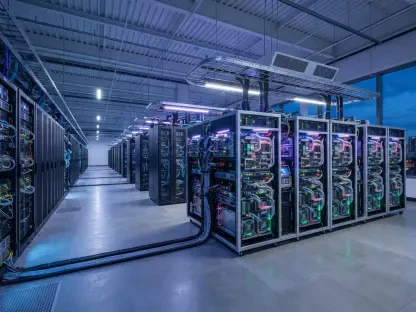
Training a single large language model today requires a consistent and massive stream of electricity that dwarfs the requirements of traditional cloud storage or consumer applications. Unlike standard web hosting services that experience peak usage during business hours and remain relatively idle at night, high-level AI compute clusters operate at full capacity around the clock. This continuous thermal and electrical load places an unprecedented level of stress on local substations and distribution networks. A standard data center might consume thirty megawatts of power, but the latest generative AI facilities are requesting upwards of five hundred megawatts for a single site, an amount equivalent to the consumption of a mid-sized American city. This surge creates a complex challenge for utility companies, which must balance these concentrated loads without compromising service to residential neighborhoods. The scale of this consumption has forced a shift in how utility planners forecast long-term growth.
Reliability standards in the tech industry have traditionally targeted “five nines” of uptime, but the financial stakes of AI training have elevated this requirement to a necessity. When a multi-billion-parameter model is undergoing training, a process that can last for months and cost millions of dollars in compute time, even a momentary drop in voltage can cause catastrophic data corruption. Unlike a standard website that might experience a brief lag, an AI training run often cannot simply resume from where it stopped after a power flicker, necessitating an expensive and time-consuming restart of the entire process. Current backup solutions, such as diesel generators and battery arrays, were primarily designed to bridge short gaps until primary power was restored. These legacy systems are increasingly viewed as inadequate for the long-term stability required by massive GPU clusters that must maintain consistent electrical profiles. Consequently, the industry is looking beyond traditional grid connections toward more resilient power delivery systems.
Structural Bottlenecks and Geographic Shifts
A fundamental disconnect exists between the rapid deployment cycles of the technology sector and the glacial pace of infrastructure development within the regulated utility industry. A state-of-the-art data center can be fully constructed and ready for hardware installation in less than eighteen months, yet the high-voltage transmission lines required to power it often take over a decade to plan, permit, and build. This structural timing gap has created a backlog of requests that grid operators are struggling to process, leading to situations where finished facilities sit idle while waiting for a viable connection to the power source. This delay is not merely a bureaucratic hurdle but a physical limitation of the existing grid, which is often congested and lacks the capacity to move large volumes of energy from remote generation sites to urban hubs. As a result, tech companies are increasingly forced to scout for locations based on grid availability. This search for power has triggered a geographical shift in digital infrastructure.
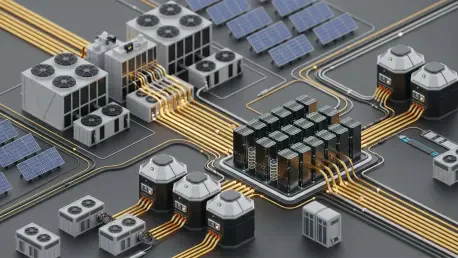
To bypass these persistent bottlenecks, many hyperscale operators are pursuing a strategy of energy independence by developing on-site power generation capabilities. This movement toward “islanded” data centers involves building dedicated power plants, such as natural gas turbines or small modular nuclear reactors, directly on the campus to ensure a consistent and private supply. By creating sophisticated microgrids that can operate independently of the public utility, these firms are insulating their most valuable assets from the systemic risks of a broad grid failure. This approach allows for greater control over power quality and helps companies meet their carbon-neutrality goals by integrating renewable sources like solar and wind with reliable baseload generation. Small modular reactors, in particular, have emerged as a promising long-term solution, offering high-density carbon-free power with a footprint that fits within a standard industrial park. While these private projects require capital, they represent a necessary evolution.
Environmental Resilience and Strategic Solutions
The increasing frequency of extreme weather events and prolonged heat waves has added another layer of complexity to the challenge of maintaining a stable digital infrastructure. Data centers are vulnerable to high ambient temperatures because they require immense amounts of energy for cooling systems to prevent hardware from overheating and failing. During a severe heat wave, these facilities must ramp up their power consumption at the exact same time that residential and commercial demand for air conditioning is peaking, placing a double-edged strain on the electrical grid. This convergence of high demand often forces utilities to implement load-shedding measures or ask industrial customers to curtail their usage, creating a conflict between public safety and the continuity of the global digital economy. Furthermore, the reliance on water-intensive cooling methods in drought-prone regions has sparked concerns about the sustainability of large-scale AI operations. This reality is forcing a redesign of cooling technology.
Industry leaders recognized that the path forward required a radical reimagining of how digital and electrical systems interacted at a fundamental level. They prioritized the development of integrated energy-aware software that could dynamically shift processing loads to regions where the grid was under less stress or where renewable output was highest. This proactive approach allowed for a more balanced distribution of energy consumption, reducing the risk of localized grid failures while optimizing the use of clean power sources. Furthermore, the implementation of massive battery storage systems at the edge of the network provided a critical buffer that absorbed fluctuations and maintained steady voltage during peak demand periods. Collaboration between technology firms and utility providers evolved into a partnership where data centers functioned as flexible assets that could support grid stability. By diversifying energy sources and investing in localized generation, the sector secured its operational future.