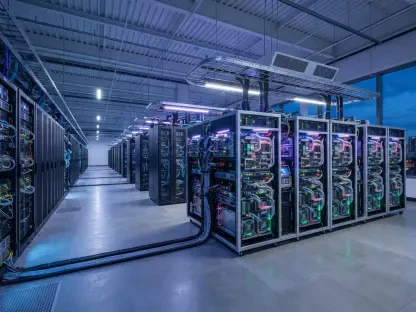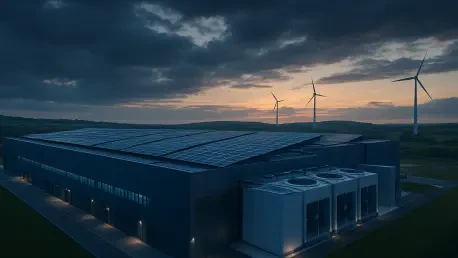

Advocacy groups like Foxglove warn that massive grid upgrades required for data centers may drain resources intended for residential and small business users. This friction arises as the United Kingdom attempts to position itself as a global artificial intelligence superpower while simultaneously grappling with the stringent requirements of its statutory carbon budgets. The sheer scale of proposed developments, such as the hyperscale facilities planned for the London periphery, creates a significant strain on the aging electrical transmission network. Current estimates suggest that digital infrastructure could consume up to thirty percent of the available regional power supply by the end of the current decade. Government ministers face a delicate balancing act, attempting to expedite planning permissions for these critical national infrastructure sites while local councils express growing concern over the displacement of renewable energy investments. The conflict highlights a fundamental paradox where technological advancement challenges the grid.
Grid Capacity: The Infrastructure Strain of Hyperscale Expansion
Integrating these massive facilities into the existing power network requires more than just high-voltage connections; it necessitates a total overhaul of local distribution hubs. In areas like the Thames Valley, the demand from newly approved server farms has already forced the National Grid to prioritize industrial power over housing developments. This shift has led to delays in constructing affordable residential units, as the electrical capacity needed to support new homes is redirected to maintain the uptime of cloud computing clusters. Furthermore, the reliance on gas-fired backup generators during peak periods threatens to derail the immediate carbon reduction targets set for the period from 2026 to 2030. While operators claim that their presence will eventually stimulate the market for green energy, the immediate reality remains a heavy dependence on the carbon-intensive base load. This mismatch between future promises and current consumption patterns has sparked a nationwide debate regarding who should bear the financial burden.
Beyond the immense electrical requirements, the environmental impact of cooling these facilities presents a secondary crisis for regional water authorities. Traditional evaporative cooling techniques consume millions of gallons of water daily, often in regions already experiencing significant water stress due to changing climate patterns. Recent proposals for liquid-to-chip cooling and closed-loop systems offer a partial solution, yet the capital expenditure required for these technologies remains a barrier for many mid-market developers. The lack of standardized environmental reporting across the industry makes it difficult for regulators to assess the true cumulative impact of multiple sites operating in close proximity. As local ecosystems face potential thermal pollution from wastewater discharge, environmental protection agencies are demanding stricter adherence to biodiversity net gain requirements. This regulatory pressure is forcing a shift toward high-density configurations that minimize physical footprint but maximize the complexity of heat management.
Strategic Innovation: Harmonizing Digital Growth and Sustainability
The approval process for these massive projects has become a focal point for grassroots resistance and legal challenges across the country. Local planning committees often find themselves caught between central government mandates to approve critical infrastructure and community demands to preserve green belt land. In regions like Hertfordshire, residents have successfully challenged the aesthetic and noise impacts of cooling fans and backup turbines, leading to prolonged delays and increased project costs. To address these concerns, some forward-thinking developers are exploring community heating schemes that funnel waste heat from servers into local municipal buildings or social housing projects. However, the lack of existing district heating infrastructure in many parts of the UK makes these initiatives difficult to implement on a large scale. The competition for land remains fierce, with data centers vying for the same strategic locations as logistics hubs and renewable energy farms, creating a complex web of land-use conflicts.
Stakeholders prioritized the implementation of modular microgrids and on-site renewable generation to decouple data center operations from the fragile national supply. This strategy involved integrating large-scale battery storage systems that allowed facilities to act as flexible loads, supporting the grid during periods of high renewable penetration. Policy experts recommended that future planning frameworks mandated the inclusion of waste-heat recovery systems as a non-negotiable condition for all hyperscale approvals. Industry leaders also moved toward standardized liquid cooling and AI-driven energy management software to optimize power usage effectiveness in real-time environments. By fostering a closer collaboration between technology firms and utility providers, the sector began to align its expansion with broader national sustainability objectives. These proactive measures ensured that digital growth did not come at the expense of residential energy security. The focus remained on transparency and the adoption of circular economy principles to mitigate the conflict over resources.