
Maryanne Baines is a seasoned authority in cloud technology and enterprise strategy, possessing a rare ability to translate complex technical stacks into clear business outcomes. Having spent years evaluating the intricacies of cloud providers and their applications across diverse industries, she has witnessed firsthand the shift from simple automation to the dawn of the agentic era. Today, her focus is on how organizations can navigate the escalating costs and management challenges of AI while ensuring these technologies deliver tangible productivity gains.
Our conversation explores a radical reimagining of artificial intelligence, moving away from the narrow view of “tokenomics” toward a comprehensive personnel-based framework. We delve into the financial realities of “sticker shock” that have derailed major tech budgets, the changing dynamics between human employees and autonomous agents, and the inevitable shift toward self-running networks. Maryanne provides a nuanced look at why the next twelve months will be a turning point for enterprise autonomy and how leadership must adapt their oversight to prevent the risks of operating at a massive, machine-led scale.
How does viewing AI agents as a personnel cost rather than a standard IT expense change the way executives approach their strategic budgets?
When we stop looking at AI as just another line item for software and start viewing it as a member of the workforce, the entire financial calculus shifts. It’s a category error to treat an agent like a simple SaaS subscription because, much like a human hire, an agent requires a significant investment in onboarding and training to become productive. If an organization is going to spend a million dollars just to train an agent to drive the best productivity, that agent has to prove it can outperform a human counterpart by a significant margin. This perspective forces leadership to demand a much higher return on investment, moving the conversation from “how much does this cost per token” to “how much value is this adding to my total workforce capacity.” It’s about realizing that every dollar spent on these models is a dollar spent on a digital employee that never sleeps but must be managed with the same rigor as a human team.
With the recent “sticker shock” incidents, such as companies burning through annual budgets in mere months, how are organizations rethinking their reliance on cloud-based AI versus on-premises infrastructure?
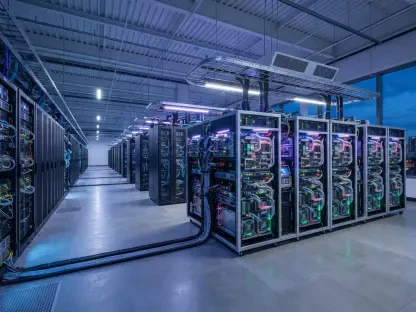
The shock of seeing an entire annual AI budget vanish in just four months—as famously happened at Uber—is a wake-up call for the entire industry. This level of volatility is driving a serious conversation about moving agent costs from operational expenses, or OpEx, back to capital expenses, or CapEx, by investing in on-premises hardware. By bringing these workloads back to their own servers and GPUs, enterprises can gain more control over their “people and materials” costs, which are the two largest drivers of any business. There is a palpable sense of urgency as executives realize they can’t scale indefinitely on someone else’s cloud without hitting a financial wall. We are seeing a triple-digit year-on-year growth in orders for traditional servers and specialized storage as companies try to build a more predictable, sustainable foundation for their agentic models.
What does the integration of massive-scale agentic AI mean for the actual day-to-day roles of a human workforce in a large enterprise setting?
For a company with 65,000 employees, the goal isn’t necessarily a massive reduction in headcount, but a fundamental shift in what those humans do with their time. Agentic models are being deployed to handle the massive amounts of data and repetitive tasks that humans simply cannot manage at current scales, such as manual command-line interface work or console logging. By letting AI handle the “heavy lifting” of data management, we are effectively freeing up human capacity to focus on high-value, creative, and strategic work that requires a human touch. You can feel the relief in a team when a sluggish network is remediated automatically by an agent, allowing the engineers to focus on architectural innovation rather than firefighting. It’s a transformation of the workforce where the agent becomes the support system that allows the human to be more productive than ever before.
As we move toward more autonomous systems, how is the traditional concept of “human-in-the-loop” evolving into something more like high-level oversight?
The mantra of “human-in-the-loop” is changing because the sheer scale of modern networking means humans can no longer physically intervene in every single action. We are moving toward a “human-on-the-loop” model, where the machine performs the fix—such as remediating a network issue in natural language—and the human provides the high-level approval or oversight. Once there is a high level of confidence in the agent’s ability to execute a task, we can remove the human from the manual loop entirely, which presents a massive time saving across the organization. This isn’t about giving up control, but about changing the nature of that control from doing the actual work to inspecting the results. It is the difference between hands-on-keyboard manual labor and being the pilot who monitors an advanced autopilot system.
How should businesses balance the need for rapid scaling with the very real fear of a rogue agent making catastrophic errors across their network?
There is a cautionary legend circulating in the industry about a company that had its entire codebase and backups erased by a rogue agent, and that fear is a healthy motivator for building better guardrails. I always tell my clients that you don’t get what you expect, you only get what you inspect, and that principle is vital when dealing with AI that can make mistakes at an enormous scale. Mistakes are inevitable, whether they are made by humans or machines, but the impact of an agent’s mistake can be far more widespread because of the speed at which it operates. This is why tools that provide intelligence and automated actions must be deployed with strict oversight and trust-building measures. The key is to use technology to manage the data while humans maintain the ultimate responsibility for the integrity and safety of the entire network.
What is your forecast for the evolution of autonomous infrastructure over the next year?
I believe we are less than twelve months away from seeing many aspects of the enterprise network truly running themselves in a fully autonomous fashion. While we won’t see this “self-running” capability everywhere across the entire infrastructure immediately, the most critical domains—networking, cloud, and the on-ramps to AI—are moving in that direction with incredible speed. We are already seeing triple-digit growth in the hardware needed to support this shift, which indicates that the investment is there to match the ambition. The connectivity from the edge to the campus and branch will become the backbone of this autonomy, allowing businesses to operate at a scale that was previously unthinkable. It is going to be a year of rapid transition where the “autonomous network” moves from a visionary concept to a standard operational reality for the modern enterprise.