
The world woke up to a digital standstill on July 24, 2026, as one of the most critical infrastructure hubs for Amazon Web Services faltered, triggering a cascade of failures across the global internet ecosystem. This was not merely a localized glitch but a profound demonstration of how the world’s dependence on centralized cloud resources has created a precarious single point of failure for modern commerce. While the incident was technically contained within a specific geographic zone, its ripples were felt by millions of users who found themselves unable to access essential services, process payments, or manage logistics. The event has forced a long-overdue conversation among technology leaders regarding the balance between the convenience of consolidated cloud storage and the absolute necessity of maintaining a resilient, decentralized digital presence. As the industry attempts to move forward, the focus has shifted from the theoretical benefits of cloud migration to the practical realities of managing inevitable system failures in an increasingly interconnected global economy.
This recent disruption highlights a growing tension between the streamlined efficiency offered by major providers and the inherent risks of over-concentration. As more of the global economy migrates into the cloud, even minor technical malfunctions can result in staggering financial losses and operational paralysis for businesses of all sizes. This particular event served as a catalyst for many organizations to re-evaluate their digital strategies, questioning whether they have become too reliant on a single provider for their mission-critical operations. The aftermath of the outage has sparked a renewed interest in multi-cloud architectures and regional diversification, as companies seek to insulate themselves from the vulnerabilities of a centralized infrastructure. It is no longer enough to trust that a provider will remain online indefinitely; instead, engineering teams must now build with the assumption that failure is not just possible, but inevitable, necessitating a fundamental shift in how digital platforms are designed and maintained in the current era.
The US-WEST-2 Crisis: Anatomy of a Regional Collapse
The technical epicenter of the July disruption was the US-WEST-2 region, a massive data hub located in Oregon that serves as a cornerstone for internet traffic across North America and beyond. Early on a Friday morning, the first signs of trouble emerged as users reported widespread login failures and broken checkout sequences on several prominent consumer websites. For many businesses on the East Coast, the outage struck just as the workday was beginning, leading to immediate productivity losses and a frantic search for alternative communication channels. The Oregon hub is traditionally considered one of the most stable and cost-effective regions, making it a favorite for startups and established enterprises alike, which only served to amplify the impact when the connectivity issues began to surface. By the time the full scale of the failure was realized, the ripple effects had crossed international borders, affecting supply chains and digital service delivery in multiple time zones.
Major consumer brands were caught in the crossfire of this localized failure, revealing the surprising lack of redundancy in many modern application stacks. High-profile platforms such as Apple Pay and DoorDash experienced significant difficulties processing transactions, while entertainment giants like Hulu and the PlayStation Network became inaccessible for a large portion of their user base. The fact that a single network issue in the Pacific Northwest could disable critical payment systems and social media platforms thousands of miles away underscores the extreme fragility of the modern web. It serves as a stark reminder that physical infrastructure still matters in a digital world, and the geographic concentration of data centers creates a landscape where a regional storm or a localized hardware fault can bring global commerce to a grinding halt. This incident has prompted a rigorous audit of how regional dependencies are managed, as businesses realize that being “in the cloud” does not automatically mean being immune to geographic disasters.
Temporal Analysis: The Eighty-Minute Ripple Effect
The progression of the July 24 failure was remarkably swift, moving from initial monitoring alerts to a widespread service crisis in less than twenty minutes. Technical teams at various monitoring firms first noticed a spike in error rates shortly after sunrise on the West Coast, but it took a significant amount of time for official communication to catch up with the reality on the ground. By the time the status dashboard reflected the true extent of the connectivity issues, millions of users were already facing persistent “service unavailable” messages. The delay in acknowledgment created a vacuum of information that fueled speculation and hindered the ability of customer engineering teams to implement their own disaster recovery protocols. While technical staff worked feverishly behind the scenes to reroute traffic and isolate the faulty hardware, the damage to consumer confidence and business operations was mounting with every passing minute.
Recovery from the outage happened in several distinct stages, with peripheral services seeing improvements long before the primary Oregon data centers returned to full functionality. While the actual duration of the critical disruption was limited to approximately eighty minutes, the recovery period for downstream applications lasted much longer as systems struggled to synchronize data and clear backlogs of failed transactions. In the high-speed environment of 2026, where even a few seconds of latency can drive customers to a competitor, an eighty-minute blackout is an eternity that can result in millions of dollars in lost revenue. The speed at which the modern digital economy operates means that the window for error has shrunk significantly, making even brief outages feel like catastrophic events. This timeline has led to a call for more rapid automated response systems that can detect and mitigate regional failures before they have a chance to impact the end-user experience on a global scale.
Back-End Vulnerabilities: When the Plumbing Breaks
To truly understand the scope of the July outage, one must look at the specific back-end services that failed, which are often referred to as the “plumbing” of the modern internet. AWS identified several critical components, including the API Gateway and IoT Core, that ceased functioning correctly during the disruption window. These services are essential because they allow different pieces of software to communicate with one another and enable physical devices to connect to the cloud. When these foundational layers fail, the applications built on top of them effectively lose their ability to “talk” to the outside world, rendering even the most sophisticated software useless. This dependency on abstract, managed services means that developers often have very little control over the most vital parts of their infrastructure, leaving them at the mercy of the provider’s internal maintenance schedules and hardware reliability.
A crucial point emphasized by the provider following the event was that there was no evidence of customer data being lost or any security breaches occurring during the connectivity crisis. This was strictly an availability failure, meaning that while the data was safely stored on physical disks, it was temporarily unreachable due to network routing errors. However, for a business that relies on real-time data processing and immediate transaction fulfillment, the distinction between “lost data” and “unreachable data” is often academic. If a customer cannot access their account or a logistics company cannot track a shipment, the result is the same: a failure of service that leads to reputational damage and financial penalties. The incident has highlighted a significant gap in how companies perceive risk, shifting the focus from data durability to data accessibility and the need for redundant pathways to reach the same information from multiple geographic points.
The Transparency DilemmNavigating Information Gaps
In the days following the July outage, a major point of contention within the developer community was the perceived lack of transparency regarding the root cause of the failure. In previous years, major cloud providers were known for releasing exhaustive post-incident reports that detailed the exact hardware failures or software bugs that led to a disruption. However, the official explanation for this specific event was notably vague, citing generalized “internet connectivity” issues without clarifying whether the fault originated within the internal network or through a third-party partner. This ambiguity makes it exceptionally difficult for external engineering teams to build better systems, as they are left without the necessary context to understand what specific scenarios they need to protect against. Without a clear understanding of why a system failed, businesses are forced to rely on guesswork when designing their own failover strategies and resilience protocols.
This lack of detailed information has created a trust gap between the provider and its most sophisticated customers, who require deep technical insights to maintain their own service-level agreements. When a company knows precisely why a system broke—whether it was a misconfigured router or a failed power supply—they can implement specific safeguards, such as choosing different hardware or diversifying their network providers. Without those details, organizations are left in a defensive crouch, unable to make informed decisions about their infrastructure investments. The industry is now seeing a push for more standardized reporting requirements, where cloud providers are held to the same level of accountability as utility companies or financial institutions. Transparency is increasingly viewed not just as a courtesy, but as a fundamental requirement for a stable digital economy, where the health of one provider impacts the stability of the entire global market.
Cumulative Instability: Three Months of Disruption
The July outage did not occur in a vacuum; rather, it was the third major incident for the provider in a span of just ninety days, creating a narrative of declining stability. Earlier in the year, a significant cooling failure at a Northern Virginia data center caused hours of downtime for some of the world’s largest websites, followed by a separate network routing issue in June that further strained the patience of enterprise customers. This cluster of failures suggests that managing global infrastructure at such a massive scale is becoming increasingly difficult as the systems grow in complexity and interconnectedness. For an industry that has long promised “five-nines” of reliability—meaning 99.999% uptime—having three high-visibility failures in a single quarter is a significant blow to the credibility of the cloud-first philosophy. These events have led many experts to wonder if the major providers have reached a point of diminishing returns in their quest for hyper-scale efficiency.
This pattern of recurring issues has also raised concerns about the long-term sustainability of the current cloud model, where a handful of regions handle a disproportionate amount of the world’s data. Each subsequent failure adds to a growing pile of evidence that the current infrastructure may be reaching its physical and logical limits. The frequency of these shorter outages may actually be more damaging than a single, massive event, as they create a sense of persistent unpredictability that makes long-term planning difficult for businesses. When stability can no longer be taken for granted, the cost of doing business in the cloud increases, as companies must spend more on redundant systems and insurance to protect themselves against the next inevitable failure. This has shifted the market’s focus toward “resilience-as-a-service,” where the ability to survive a provider outage becomes a primary selling point for third-party software and consulting firms.
Strategic Diversification: Escaping the Geographic Trap
One of the most critical lessons learned from the recent string of outages is the danger of “herd mentality” in geographic placement. For years, cloud architects steered their clients toward a few specific regions, like Northern Virginia or Oregon, because they offered the lowest latency and the widest variety of specialized services. However, this has created a massive single point of failure where a single regional problem can take down a huge portion of the global internet simultaneously. The July event proved that even if a company’s internal code is perfect, its reliance on a popular but vulnerable hub can lead to a total blackout. Consequently, there is a visible shift in how new projects are being deployed, with a much higher emphasis on secondary regions that may be more expensive but offer a different risk profile. The industry is beginning to realize that the cost savings of staying in a “standard” region are often erased by a single hour of downtime.
This geographic concentration means that even the most robustly designed applications can be rendered useless if they share the same physical cables and power grids as everyone else. Leading cloud architects are now advocating for a “geo-diverse” approach that mandates spreading workloads across multiple continents and providers to ensure that no single event can trigger a total service failure. This strategy requires a more sophisticated level of engineering, as it involves managing data synchronization and traffic routing across vast distances, but it is increasingly seen as the only way to guarantee high availability. The move away from these popular hubs marks a significant change in the tech landscape, as businesses prioritize sovereignty and stability over the convenience of a single-vendor solution. As the digital economy matures, the physical location of data centers is becoming as important a business decision as the software used to manage them.
Economic Realities: Market Share versus Trust
Despite the recurring technical issues and the public outcry following the July outage, the leading cloud provider still maintains a dominant share of the global market. Transitioning away from a major cloud environment is a complex, expensive, and time-consuming process that can take years to complete, making a mass exodus unlikely in the immediate aftermath of a single incident. However, these failures are significantly altering the tone of contract negotiations and future project planning for enterprise customers. Companies are now demanding more robust service-level agreements with higher penalties for downtime, and they are increasingly holding back a portion of their budget for alternative providers. The era of “blind loyalty” to a single cloud platform is coming to an end, replaced by a more pragmatic, multi-vendor approach that treats cloud resources as a commodity rather than a unique partnership.
While the market leader remains the largest player, the recent reliability struggles have provided an opening for competitors like Microsoft and Google to gain ground. These rivals have begun to leverage the narrative of instability to position themselves as safer, more transparent alternatives, emphasizing their own investments in redundant hardware and independent network paths. While no major provider is immune to downtime, the high visibility of the applications hosted on the market leader means that its failures are perceived as more significant national events. This competitive pressure is forcing all players in the industry to accelerate their investments in infrastructure hardening and automated recovery tools. In the long run, this competition may lead to a more resilient internet, but in the short term, it creates a volatile market where trust is the most valuable—and most easily lost—currency for any provider.
Resilient Architecture: The Shift toward Multi-Cloud
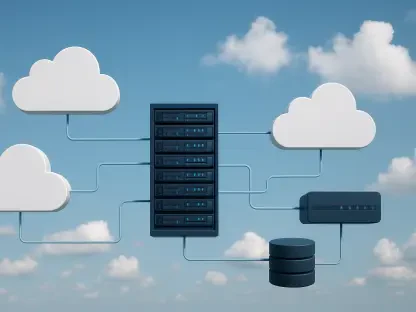
The consensus among software engineering experts is shifting toward the idea that 100% availability is no longer a realistic expectation for any single cloud provider. Instead of assuming that the underlying infrastructure will always be functional, modern engineering teams are being trained to build “fault-tolerant” systems that can survive a total regional failure without human intervention. This often involves running active workloads in two or more different parts of the country simultaneously, so that if one region goes dark, traffic can be instantly rerouted to the remaining operational hubs. While this approach increases the complexity and cost of managing an application, the July outage demonstrated that the alternative—a total business shutdown—is far more expensive in the long run. The conversation has moved from “how do we prevent outages” to “how do we ensure our business continues despite them.”
Another significant trend following the July event is the widespread adoption of automated health monitoring and intelligent failover systems. During the crisis, many companies wasted precious minutes trying to determine whether the problem was caused by their own code or by the cloud provider. By utilizing advanced monitoring tools that integrate directly with the provider’s health APIs, companies can now trigger automated backup plans the moment a service deviation is detected. These systems can spin up new instances in unaffected regions, update DNS records, and notify stakeholders in real-time, often resolving the issue before users even notice a problem. This shift toward automation is essential for managing the scale and speed of the current digital environment, where manual intervention is too slow to prevent significant damage. As these tools become more sophisticated, the focus is moving toward “self-healing” architectures that can proactively adapt to changing infrastructure conditions.
Regulatory Evolution: A New Era of Oversight
The July outage functioned as a catalyst for a fundamental restructuring of how enterprises approached infrastructure resilience and vendor transparency. Leaders began shifting their focus toward distributed multi-cloud architectures that prioritized survival over simple cost-efficiency, effectively ending the era of blind trust in single-region stability. This shift necessitated a new standard for automated recovery protocols and stricter internal auditing of third-party dependencies to ensure business continuity across the board. Organizations moved toward implementing rigorous “chaos engineering” tests, where they intentionally simulated regional failures to verify that their systems could gracefully handle a real-world blackout. These proactive measures transformed reliability from a theoretical goal into a measurable business metric, allowing companies to defend their digital operations against the inherent unpredictability of hyper-scale cloud environments.
Ultimately, the industry moved toward a more realistic engineering philosophy that treated downtime not as a rare anomaly, but as a predictable variable that required constant mitigation and proactive defense. Regulators in both the United States and Europe responded by introducing new frameworks that treated major cloud providers as systemic infrastructure, similar to power grids or banking networks. This led to mandatory transparency requirements, where providers were forced to share detailed technical post-mortems and meet minimum redundancy standards for critical services. For businesses, the actionable next step became clear: the diversification of infrastructure was no longer a luxury but a fundamental requirement for legal and financial compliance. The lessons of July 2026 became the blueprint for a more robust digital world, where the focus remained on building resilient systems that could withstand the inevitable failures of a complex, global network.