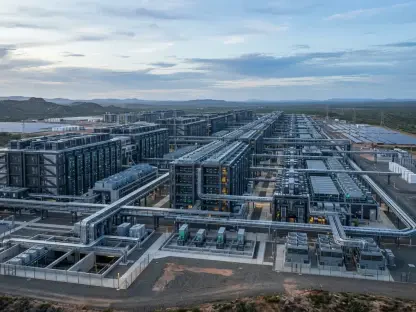

Marketplace models like Vast.ai are driving down costs for budget-conscious researchers by aggregating excess capacity from independent data centers. This decentralized approach to computing resources has fundamentally altered the accessibility of high-performance hardware, allowing smaller laboratories and independent developers to compete with well-funded corporate entities. As the demand for graphical processing units has moved beyond traditional rendering into the core of enterprise and research operations, the industry has witnessed a transition where specialized hardware is no longer a luxury but a requirement for modern digital services. This global shift reflects a broader trend where compute density and networking speed define the competitive edge of every organization engaged in machine learning. The proliferation of generative AI and massive-scale language models has catalyzed a transformation in how infrastructure is procured, deployed, and managed across the entire technological landscape.
The current environment necessitates a nuanced understanding of how different providers handle high-performance workloads, moving away from a generic “one-size-fits-all” mentality toward a highly specialized selection process. This involves analyzing not only the raw power of the silicon itself but also the sophisticated software layers and high-speed interconnects that allow these units to function as a cohesive whole. From massive hyperscalers like Amazon Web Services to agile, AI-native platforms like RunPod, each provider in the 2026 market offers a distinct value proposition tailored to specific phases of the development lifecycle. Organizations are now forced to navigate a complex landscape where the balance between control, cost, and technical complexity determines the ultimate success of their artificial intelligence initiatives. This analysis provides a deep exploration of the top ten providers, focusing on the hardware availability and strategic deployment models that define the current state of the industry.
Specialized and High-Value Providers
Bridging the Gap with Hostinger: A New Standard for Accessibility
Hostinger occupies a unique niche by bridging the gap between basic virtual private server hosting and high-end AI clouds, providing a necessary middle ground for the modern developer. It is identified as the best option for users who require flexible infrastructure without the overwhelming complexity of a hyperscaler dashboard, which can often be a barrier to entry for smaller teams. This accessibility makes it a prime choice for growing startups and mid-sized research labs that need to move quickly from a conceptual stage to a functional prototype. The platform’s philosophy centers on removing friction, allowing engineers to focus on their models rather than the underlying management of the cloud environment. By offering a streamlined interface that remains powerful enough for professional use, the provider has successfully democratized access to the kind of compute power that was previously reserved for major tech corporations.
The hardware selection at Hostinger is meticulously curated for performance and variety, ensuring that users can scale their resources as their project requirements grow in complexity. The entry-point for many developers is the NVIDIA RTX 4090, a robust consumer-grade card that provides excellent value for small-scale training and inference. However, for more demanding workloads, the platform offers the RTX PRO 6000 with 96GB of VRAM, the L40S, and the high-tier A100 and B200 Blackwell models. This range of options allows a team to start small and upgrade their hardware without migrating to a new provider. The user experience is further enhanced by a “root access” philosophy, which grants developers full control over the server environment, complemented by preconfigured AI stacks that include necessary drivers and containers to reduce the time to compute.
Economic efficiency is a cornerstone of this offering, revolving around a per-minute billing model based on hourly credits that ensures users only pay for what they use. A significant advantage of this approach is the total elimination of egress charges, which are often the most unpredictable part of a cloud computing budget. This makes it particularly ideal for data-heavy projects like high-resolution video rendering or the distribution of massive model weights, where moving large files can often lead to hidden costs. By providing a transparent and predictable pricing structure, the platform allows for better financial planning and resource allocation. This level of transparency has become a major selling point in 2026, as enterprises look to optimize their operational expenditures while maintaining high performance across their AI research and development pipelines.
Versatility through RunPod and Vast.ai: Marketplace Innovation
RunPod has established itself as a developer favorite due to its dual-deployment model, which caters to both persistent development needs and bursty inference requirements. Its “Pod” model provides persistent environments where developers have granular control over containers and storage, essentially offering a home for ongoing projects that require constant availability. With over 30 GPU models distributed across 31 global regions, it offers one of the most diverse hardware catalogs in the industry, ensuring that proximity to data centers can be optimized for latency. The platform also offers a serverless model that allows for API-based workloads to scale with demand, a critical feature for companies that run inference services without wanting to pay for idle GPU time. This second-by-second billing provides a high level of cost precision that is essential for maintaining profitability in a competitive market.
Vast.ai operates on a fundamentally different logic, functioning as a marketplace that aggregates capacity from various independent data centers across the globe. This peer-to-peer model offers the lowest theoretical prices in the industry, making it a go-to resource for budget-conscious researchers and academic institutions. While the marketplace model introduces some variability in host reliability and pricing based on real-time demand, it provides an unparalleled level of flexibility for those who can tolerate occasional interruptions. To further reduce costs, the platform offers interruptible instances, which are perfect for fault-tolerant batch processing or large-scale data scraping tasks. With more than 68 different GPU types available at any given time, it is the premier destination for finding older hardware for budget-friendly experimentation or the latest high-end units for intensive training cycles.
The convergence of these two platforms represents a significant trend in the democratization of compute power, where the user can choose between the structured stability of RunPod or the aggressive cost-optimization of Vast.ai. Both providers have invested heavily in simplifying the user interface, making it easier for non-specialists to deploy complex containerized workloads with just a few clicks. This shift has led to a more vibrant ecosystem where innovation is not limited by the size of a company’s infrastructure budget. As organizations continue to iterate on their machine learning strategies, the ability to flip between persistent pods and serverless APIs, or to hunt for the best marketplace deals, has become a core competency for modern devops teams. This versatility ensures that the infrastructure can adapt to the shifting needs of the project rather than the other way around.
Scaling with Lambda and CoreWeave: High-Performance Specialists
Lambda remains a cornerstone for the machine learning research community, primarily due to its specialized software advantage and deep roots in the academic world. Every instance comes with a pre-installed environment known as the “Lambda Stack,” which features optimized versions of CUDA, PyTorch, and TensorFlow, ensuring that researchers can start training immediately. This focus on “ready-to-train” infrastructure makes it a top choice for those who do not want to spend hours troubleshooting dependency conflicts or driver issues. The platform is designed for seamless transitions, supporting 1-click clusters that can scale from a single GPU to thousands of nodes. Their pricing is famously transparent, utilizing a per-minute billing system with absolutely no egress fees, making it a reliable partner for large-scale distributed training projects.
CoreWeave has moved away from general-purpose cloud computing to focus entirely on large-scale AI infrastructure, catering to the most demanding enterprise clients. Their node-centric design prioritizes multi-GPU configurations, such as 8x #00 HGX nodes, which are the industry standard for training the largest frontier models. Networking excellence is a hallmark of the CoreWeave experience, as they utilize NVIDIA Quantum-2 InfiniBand networking to facilitate zero-latency communication between GPUs. This is an essential requirement for “tightly coupled” workloads where GPUs must constantly exchange data to maintain high utilization rates. With their dedicated Kubernetes service, the platform is built for teams that manage their workloads through professional container orchestration at scale, providing a level of reliability and performance that is difficult to replicate in a general-purpose cloud.
The strategic importance of these specialized providers cannot be overstated, as they provide the heavy-duty machinery required for the next generation of AI breakthroughs. While the hyperscalers offer a broad range of services, Lambda and CoreWeave offer the depth and specialization that high-end research requires. Their focus on high-speed interconnects and specialized software stacks means that a model trained on their infrastructure will often complete faster and more efficiently than on a generic cloud provider. This performance gap is a critical factor for organizations that are racing against time to release new models. By providing a dedicated and optimized environment for AI, these companies have carved out a significant portion of the enterprise market, proving that specialization is a winning strategy in the high-stakes world of modern cloud computing.
Serverless and AI-Native Newcomers
Innovations in Code and Scaling: The Rise of Modal and Nebius
Modal represents a significant shift in how developers interact with GPU hardware, moving away from the traditional model of managing servers or virtual machines. Instead of provisioning an instance and then SSHing into it to set up an environment, developers define their requirements directly in Python code. This “infrastructure as code” approach streamlines the workflow, allowing developers to focus entirely on their logic and data rather than the underlying DevOps challenges. This paradigm is particularly effective for teams that need to run irregular or bursty workloads, such as daily data processing or on-demand model inference. By abstracting the hardware layer entirely, the platform enables a more agile development process where new ideas can be tested and deployed to production in a fraction of the time typically required.
One of the primary innovations offered by the Modal platform is the ability to scale down to zero instantly, which is a game-changer for cost management in AI. This means that users are only billed for the exact number of seconds that their code is actually executing on the GPU hardware, eliminating the “idle spend” that often plagues traditional cloud deployments. To mitigate the delay associated with starting a new model—known as the cold start problem—the platform uses a proprietary optimized filesystem and memory snapshots. This technical sophistication ensures that even when a model is scaling up from zero, it can be ready to serve requests in a matter of seconds. This efficiency makes it an attractive option for startups that need high-performance inference capabilities but do not have the volume to justify a dedicated 24/7 instance.
Nebius is another AI-centric cloud that has gained significant traction by emphasizing flexibility in scaling, particularly within the European and American enterprise markets. It is among the first providers to offer substantial access to the NVIDIA Blackwell architecture, positioning itself as a leader in the next generation of model training. Their infrastructure is built from the ground up to support the highest-end enterprise needs, focusing on high-speed connectivity and data sovereignty. By offering preemptible GPUs at nearly half the price of on-demand units, they provide a cost-effective way for organizations to handle massive batch-processing workloads without breaking the bank. Like other high-end providers, they utilize InfiniBand networking and managed Kubernetes, ensuring a professional-grade environment for everything from small experiments to massive clusters.
Bridging the Gap: Integrating Serverless Logic with Enterprise Needs
The emergence of these newcomers highlights a growing demand for cloud services that are as intelligent as the models they host. The ability for a platform like Modal to interpret Python code and automatically provision the necessary GPU resources represents a level of automation that was previously unattainable. This transition is forcing established players to rethink their service offerings, as developers increasingly prioritize ease of use and cost-to-performance ratios. The “serverless Python” model is not just a convenience; it is a fundamental shift in the economics of AI development. It allows for a more granular approach to resource allocation, where every dollar spent is directly tied to a specific computation or inference request, providing a level of financial clarity that is highly valued by modern stakeholders.
Nebius further complements this trend by providing the industrial-strength hardware necessary for those serverless functions to scale into massive production environments. Their focus on the NVIDIA Blackwell chips shows a commitment to staying at the absolute cutting edge of hardware performance. This is particularly important for European companies that require localized data processing and compliance with regional regulations without sacrificing access to the world’s most powerful chips. By combining the flexibility of preemptible instances with the power of high-speed interconnects, they have created a platform that can support the entire lifecycle of an AI project. This holistic approach is a hallmark of the new wave of AI-native clouds, which are designed to be as dynamic and scalable as the artificial intelligence ecosystems they support.
Ultimately, the success of these newcomers is built on their ability to solve specific pain points that have long been ignored by traditional cloud providers. Whether it is the cold start problem, the complexity of Kubernetes management, or the high cost of idle resources, these platforms have developed technical solutions that provide immediate value to the developer community. As we move further into 2026, the distinction between a “cloud provider” and a “development platform” is becoming increasingly blurred. The goal is no longer just to provide access to a GPU, but to provide a complete, integrated environment where the transition from code to compute is as seamless as possible. This evolution is driving the industry toward a future where infrastructure is truly invisible, allowing human creativity to be the only limit on AI innovation.
The Hyperscaler Ecosystem
Integrating with the Big Three: Ecosystem Lock-in and Stability
The “Big Three”—Amazon Web Services, Google Cloud, and Microsoft Azure—continue to dominate a massive portion of the market by integrating GPU compute into their expansive existing ecosystems. Their greatest strength is not necessarily their pricing, but the deep integration they offer with other enterprise services. If an organization’s data is already stored in proprietary solutions like Amazon S3 or Google Cloud Storage, running GPUs in the same environment significantly reduces latency and data transfer costs. This ecosystem lock-in is a powerful motivator for large corporations that have already invested millions into a specific cloud provider’s infrastructure. The ability to manage security, billing, and resource allocation through a single, unified interface provides a level of operational consistency that is difficult for specialized providers to match at a global scale.
However, these hyperscalers often require users to navigate an incredibly complex array of virtual machine families and technical configurations. To ensure the availability of the highest-end GPUs, such as the #00 or the newer B200, they often require “Capacity Blocks” or multi-year commitments. This makes them less flexible for short-term projects or startups that need to pivot quickly based on new developments. Despite these hurdles, they remain the preferred choice for massive enterprise operations that prioritize stability and global reach over raw hourly pricing. For a Fortune 500 company, the risk of a regional outage or a security breach far outweighs the benefits of a cheaper GPU instance elsewhere. This focus on reliability and compliance has allowed the hyperscalers to maintain their dominance even as more agile competitors enter the fray.
Google Cloud is often the preferred choice for teams that are already deeply embedded in the Vertex AI platform or those who utilize Google’s extensive suite of data analytics tools. Their G2 instances, powered by L4 GPUs, are particularly noted for being cost-effective for media processing and real-time inference tasks. They provide a range of NVIDIA accelerators that integrate seamlessly with Google’s managed AI services, allowing for a more automated approach to model deployment and monitoring. The integration between their compute resources and their data warehousing solutions like BigQuery creates a powerful pipeline for organizations that need to process petabytes of data to train their models. This “data-first” approach to AI infrastructure has made Google a leader in the space for companies that rely on massive datasets for their competitive advantage.
Global Scale and High-End Training: AWS and Microsoft Azure
AWS provides what is arguably the most robust and geographically diverse global infrastructure in the world, allowing enterprises to reserve #00 or B200 clusters across dozens of regions. With the introduction of specialized ultra-servers, they have demonstrated the ability to connect dozens of Blackwell GPUs in a single high-speed fabric using their proprietary EFA networking technology. This capability caters specifically to the world’s largest and most complex AI models, which require massive amounts of distributed compute power to train within a reasonable timeframe. Their “Capacity Blocks” feature has been a significant innovation, allowing users to reserve high-end GPUs for specific time windows, ensuring that critical training runs are not delayed by resource shortages. This level of predictability is essential for large-scale engineering teams working on tight deadlines.
Microsoft Azure has carved out a unique position as the enterprise standard, largely due to its high-profile relationship with NVIDIA and major AI research labs. Their ND-series virtual machines are specifically designed for the heaviest distributed training tasks, utilizing the full suite of NVIDIA networking technologies, including InfiniBand and NVLink. This deep hardware-level integration ensures that Azure customers can squeeze every last bit of performance out of their allocated GPUs. Furthermore, their integration with the Microsoft 365 and Dynamics 365 ecosystems provides a direct path for enterprises to integrate AI into their existing business processes. For many organizations, Azure is the default choice because it aligns with their existing IT strategies and provides a clear roadmap for scaling AI from a research project to a production-ready business tool.
The competition between these three giants has led to a rapid cycle of hardware updates and software improvements, benefiting the entire industry. While they may not always be the cheapest option, their ability to provide massive scale and enterprise-grade security is unparalleled. As we move through 2026, the hyperscalers are increasingly focusing on specialized “AI-as-a-Service” offerings, where the underlying hardware is entirely abstracted away from the user. This allows business analysts and product managers to leverage powerful AI models without ever needing to know what a GPU is or how it is configured. By moving up the value chain, the Big Three are ensuring that they remain central to the AI revolution, providing the foundational infrastructure upon which the modern digital economy is built.
Technical Synthesis and Hardware Comparison
Categorizing the 2026 Hardware Landscape: From Workhorses to Next-Gen
A critical finding in the current landscape is that the best provider is often determined by the specific GPU model required for a given workload. In 2026, the hardware market has bifurcated into three distinct categories, each serving a different purpose in the AI development cycle. The first category includes “the workhorses,” such as the NVIDIA RTX 4090 and the L4, which are primarily used for medium-scale inference and initial development. These cards offer a fantastic balance of performance and price, making them ideal for tasks like image generation or running smaller language models for internal testing. Because they are widely available and relatively inexpensive to host, they have become the standard for individual developers and small teams who are iterating on new ideas before committing to a full-scale training run.
The second category consists of “the training standards,” which include the A100, #00, and ##00 series. These chips are the backbone of the modern AI industry, used for large-scale training and memory-intensive inference tasks. They are characterized by their high VRAM capacity and their support for advanced networking technologies like NVLink. Providers such as Lambda and CoreWeave excel in this category by providing the specialized networking environments and pre-installed software stacks needed to run these chips at their maximum potential. For an organization looking to fine-tune a state-of-the-art model or run high-throughput inference for a popular application, these chips are the non-negotiable standard. The availability of these units often dictates which cloud provider a company chooses for their primary development environment.
The third and most advanced category is “the next-gen” Blackwell architecture, represented by the B200 and B300 units. These chips are designed specifically for frontier model training and real-time reasoning at a scale that was previously impossible. They offer massive improvements in compute density and memory bandwidth, allowing for the training of models with trillions of parameters. Currently, access to these units is a primary differentiator for providers like Hostinger, Nebius, and the major hyperscalers, who have secured the earliest allocations from NVIDIA. For companies working at the absolute cutting edge of artificial intelligence, having access to Blackwell clusters is a competitive necessity. These units are the engines driving the next generation of breakthroughs, from more capable autonomous agents to more sophisticated scientific simulations.
Strategic Hardware Selection: Understanding Memory and Interconnects
Beyond the raw number of floating-point operations per second, the true value of a GPU in 2026 is often found in its memory capacity and its ability to communicate with other chips. The VRAM, or video random access memory, determines how large a model can be loaded onto a single card. This has become a critical bottleneck as model sizes continue to grow. A provider that offers GPUs with 80GB or 141GB of VRAM allows for much more efficient training and inference than one limited to 24GB. This is why the ##00 and B200 have become so highly sought after; they allow researchers to work with larger models without having to resort to complex and slow model-sharding techniques. Understanding these memory requirements is the first step in any successful infrastructure strategy, as it directly impacts both the speed and the cost of the project.
Furthermore, the role of high-speed interconnects like NVLink and InfiniBand cannot be overstated in the context of multi-node training. When a model is too large for a single GPU, it must be spread across multiple units, which then need to communicate at incredibly high speeds to stay synchronized. Providers that have invested in dedicated networking fabric, such as CoreWeave and AWS, offer a significant performance advantage for these distributed workloads. Without this high-speed communication, the GPUs spend more time waiting for data than they do performing calculations, leading to wasted resources and inflated costs. This technical nuance is what separates a generic cloud provider from a true AI-native infrastructure partner. For developers, the goal is to achieve the highest possible “scaling efficiency,” ensuring that adding more GPUs actually leads to a linear increase in performance.
This hardware comparison demonstrates that the “best” GPU is entirely dependent on the specific use case. A developer working on a simple image-generation API might find the best value in a cluster of RTX 4090s from Hostinger, while a lab training a new foundational model will need a massive Blackwell cluster from Azure or AWS. The industry has reached a level of maturity where there is a clear hierarchy of hardware, and savvy organizations are learning to match their workloads to the appropriate tier of compute. This strategic alignment is the key to managing the high costs of AI development while still maintaining the performance needed to compete in a rapidly evolving market. As hardware continues to advance, the ability to quickly evaluate and adopt new architectures will remain a vital skill for any team working in the field of artificial intelligence.
Strategic Decision-Making Framework
Evaluating the Five Key Pillars: VRAM and True Minimum Cost
To choose the right provider in this crowded market, organizations must evaluate their options across five key pillars, starting with the non-negotiable requirement of VRAM. This is the fundamental constraint of any AI project; if a model requires 80GB of memory to load, an inexpensive consumer-grade GPU with only 24GB is functionally useless, regardless of how low its hourly rate might be. Developers must accurately calculate the memory footprint of their models, including the overhead for gradients and optimizer states during training. This initial assessment narrow down the list of potential providers to only those who offer the specific hardware tiers capable of supporting the workload. Failing to account for memory requirements early in the process often leads to costly migrations or delayed project timelines when the chosen hardware proves insufficient for the task.
The second pillar is the “true minimum cost,” which requires looking far beyond the headline hourly rate of a single GPU. Users must calculate the total cost of ownership, which includes the price of the associated CPU, system RAM, and persistent storage required to keep the GPU fed with data. Many providers offer a low GPU price but then charge significant premiums for the high-speed NVMe storage needed to prevent data bottlenecks. Crucially, organizations must account for egress fees, which are the costs associated with moving data out of the provider’s cloud. For projects involving large datasets or the frequent distribution of model weights, these hidden fees can quickly exceed the cost of the compute itself. Providers like Hostinger and Lambda, which offer “no egress fee” policies, provide a level of financial predictability that is highly attractive for data-intensive operations.
This comprehensive approach to budgeting allows for a much more realistic comparison between different cloud platforms. It is not uncommon for a “more expensive” provider to actually be the cheaper option once all the auxiliary costs and performance efficiencies are factored in. For instance, a provider with faster interconnects might allow a training run to complete in half the time, effectively halving the total cost despite having a higher hourly rate. Organizations must develop sophisticated financial models that account for these variables, treating AI infrastructure as a complex system rather than a simple commodity. By focusing on the total cost of results rather than the cost of compute hours, teams can make more informed decisions that align with their long-term financial and technical goals.
Billing Granularity and Management Level: Finding the Right Balance
Billing granularity serves as the third pillar, and it has a profound impact on how teams approach experimentation and deployment. Per-second billing, popularized by platforms like RunPod and Modal, is the ideal choice for API-based inference where traffic can be highly unpredictable. This model ensures that the organization is not paying for idle capacity during quiet periods, allowing for a much more efficient use of capital. On the other hand, per-minute billing is often the best fit for the development and experimentation phase, where engineers might be frequently starting and stopping instances as they debug code. For long-term, stable training projects that are expected to run for weeks or months, hourly or reserved pricing remains the most stable and cost-effective choice, providing a guaranteed resource at a discounted rate.
The fourth pillar is the level of management and abstraction required by the engineering team. This ranges from full root and SSH access, which is necessary for teams that need to install custom kernel modules or specialized software layers, to serverless APIs where the hardware is entirely abstracted away. Many mid-sized organizations are finding their sweet spot with managed Kubernetes services, which allow for professional-grade orchestration across large clusters without the overhead of managing the underlying control plane. Choosing a management level that matches the team’s internal expertise is critical; an underskilled team will struggle with the complexity of a bare-metal environment, while an overqualified team might find a highly abstracted serverless platform to be too restrictive for their specific needs.
Finally, the scaling path must be a primary consideration from the very beginning of a project. A workload that starts on a single GPU today may eventually require a massive multi-node cluster as the user base grows or the model complexity increases. Choosing a provider that allows for a “path of least resistance” from a simple virtual machine to a high-speed InfiniBand cluster prevents the need for a painful and time-consuming migration later. This forward-looking approach ensures that the infrastructure can grow alongside the project, providing a stable foundation for long-term success. By evaluating providers through the lens of these five pillars, organizations can navigate the complexities of the 2026 GPU market with confidence, ensuring that they have the right resources at the right price to achieve their AI ambitions.
Overarching Trends and Industry Consensus
The Future of GPU Cloud Computing: Divergence and Specialization
The synthesis of these ten leading providers reveals a clear and undeniable divergence in the 2026 market, signaling the end of the “one-size-fits-all” era for cloud computing. The industry has split into distinct segments that focus on specific value propositions: cheap and accessible compute for the masses, highly optimized developer experiences for agile teams, and massive industrial-scale infrastructure for frontier research. This segmentation is a sign of a maturing ecosystem where users are becoming more sophisticated in how they consume resources. Organizations no longer simply look for “a cloud”; they look for a partner that understands the specific technical and financial constraints of their particular niche. This specialized approach has led to a higher level of efficiency across the board, as providers compete to offer the best possible environment for their target audience.
The emergence of NVIDIA’s Blackwell architecture as the new industry standard is perhaps the most significant hardware trend of the current year. Every major provider is racing to offer these units, confirming that the global appetite for more VRAM and higher compute density shows no signs of slowing down. This architecture is not just an incremental improvement; it represents a fundamental shift in what is possible in real-time AI reasoning and massive-scale model training. The widespread adoption of Blackwell is the engine driving the next generation of AI breakthroughs, from truly autonomous systems to personalized medicine. As these chips become more widely available, we can expect to see a surge in innovation as researchers are finally able to run models that were previously limited by the hardware of the past.
For inference workloads, the market is moving rapidly toward serverless models that eliminate the financial waste of “idle spend.” This shift is forcing traditional cloud providers to rethink their entire billing and deployment strategies, as customers increasingly refuse to pay for GPUs that are not actively processing data. The ability to scale to zero and then back up again in a matter of seconds has become a requirement for any modern AI-native platform. This trend is not just about saving money; it is about enabling a new class of applications that were previously too expensive to run. By lowering the barrier to entry for high-performance inference, serverless GPU models are democratizing the use of sophisticated AI across every sector of the economy, from small local businesses to global conglomerates.
Transparent Pricing and the Path Forward for Enterprise AI
Transparent pricing has emerged as a major competitive edge in 2026, with specialized providers winning significant market share by offering all-inclusive rates and eliminating the hidden fees that have long been a hallmark of the industry. This transparency directly challenges the opaque and often confusing billing structures of the traditional cloud hyperscalers. When an organization can predict its monthly spend with 100% accuracy, it can move much faster and take more risks in its development process. This shift toward financial clarity is particularly important for startups and research labs that operate on fixed budgets. As the market continues to evolve, the providers that offer the most straightforward and predictable pricing will likely continue to attract the most innovative and fast-moving teams.
The observations made throughout this analysis showed that the industry successfully navigated the initial hardware shortages and transitioned into a period of sustained, strategic growth. Developers realized that while raw power was important, the software environment and networking fabric were equally critical to the success of their projects. Organizations found that by carefully selecting their infrastructure partners based on specific project needs—rather than just following the biggest name—they could achieve better results at a lower cost. The diverse range of providers available today ensures that no project is too small or too large to find its ideal home in the cloud. This healthy competition has fostered an environment where continuous innovation is the only way to survive, ensuring that the technology will continue to advance at a breakneck pace.
Looking ahead, the next logical step for the industry involves a deeper integration of AI directly into the fabric of the cloud itself. We have already seen the beginnings of this with “infrastructure as code” platforms like Modal, and this trend will only accelerate. The future will likely see self-optimizing clouds that can automatically move workloads between different GPU types and regions to find the best balance of cost and performance in real-time. Organizations that remained agile and avoided deep technical lock-in with any single provider were the ones that most effectively capitalized on these shifting trends. As we concluded our review of the current landscape, it was clear that the successful AI initiatives of the future will be those that treat their infrastructure not as a utility, but as a strategic asset to be managed with precision and foresight.