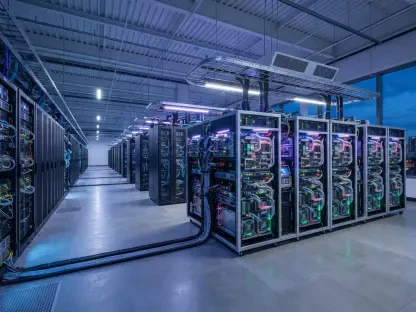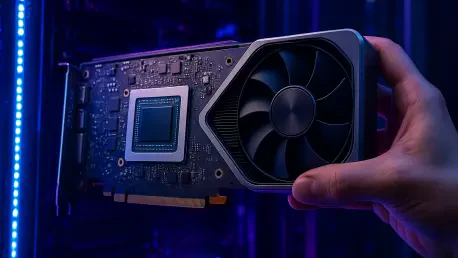

Modern developers are increasingly prioritizing providers that offer pre-configured software stacks including PyTorch, CUDA, and Docker to reduce infrastructure friction. This shift marks a significant departure from previous years when setting up an environment for artificial intelligence was a labor-intensive process requiring deep knowledge of driver compatibility and kernel configurations. As of 2026, the demand for high-performance graphics processing units has reached a fever pitch, driven by the proliferation of increasingly complex generative models and autonomous systems. Organizations no longer view cloud compute as a mere utility but as a strategic asset that determines their speed to market. This evolution has fostered a specialized ecosystem where hardware availability, memory bandwidth, and interconnect speeds have become the primary benchmarks for success. Consequently, the selection of a cloud provider now hinges on a platform’s ability to offer a seamless transition from local development to massive-scale production without the common bottlenecks of the past.
The rapid expansion of artificial intelligence and machine learning has fundamentally shifted the hardware requirements for modern software development. As models grow in complexity—from simple neural networks to massive large language models—the need for specialized compute power has moved from local workstations to the cloud. This evolution has created a vibrant ecosystem of providers catering to various technical needs, ranging from cost-sensitive startups to multi-national corporations. The current landscape is defined by the transition from the Hopper architecture to the newer Blackwell architecture, which offers unprecedented levels of video RAM and processing efficiency. For developers, this means that the choice of a provider is no longer just about who has the cheapest hourly rate, but about who can provide the specific memory architecture required to keep their models running efficiently. With the stakes for innovation higher than ever, understanding the nuances of these platforms is essential for any technical leader in the current AI-driven economy.
Leading Specialized GPU Providers
The current market for specialized GPU compute is characterized by a high degree of competition between boutique providers that focus exclusively on machine learning and general-purpose hosting companies that have pivoted to support high-performance computing. These entities have carved out a significant niche by offering lower latency, better support for AI-specific containers, and more flexible billing models than the traditional hyperscale giants. By focusing on the developer experience, these specialized providers have reduced the time required to go from code to execution, often providing one-click deployments for popular frameworks. This agility is particularly valuable for startups that need to iterate rapidly without being bogged down by the administrative overhead of complex cloud management systems. Moreover, these providers often maintain closer relationships with hardware manufacturers, ensuring they are among the first to offer the latest silicon, such as the NVIDIA B200 and ##00 systems, to their client base.
The strategic importance of these specialized providers lies in their ability to offer “bare metal” or near-bare-metal performance with the convenience of a managed service. This is a critical distinction for researchers who need to squeeze every bit of performance out of their hardware to meet tight training deadlines. As the industry moves into late 2026, the focus has shifted toward reducing “egress friction”—the costs and technical challenges associated with moving large datasets in and out of the cloud. Leading providers have responded by offering massive data pipes and eliminating the hidden fees that historically made data-heavy AI projects prohibitively expensive. By prioritizing transparency and technical depth, these specialized entities have fundamentally changed the expectations of the machine learning community, forcing the entire industry to rethink how compute resources are packaged and delivered to the end-user.
Hostinger: Simplified Infrastructure with Direct Control
Hostinger has positioned itself as an ideal solution for those who require the autonomy of a dedicated server without the labyrinthine complexity of hyperscale clouds. It bridges the gap between basic virtual private server hosting and high-end AI research by offering a streamlined interface that appeals to both individual developers and growing technical teams. By providing a clean entry point into the world of high-end GPU compute, it has successfully simplified the deployment process for complex AI applications. This approach allows users to bypass the traditional hurdles of infrastructure management, focusing instead on the development of their models. The platform’s emphasis on simplicity does not come at the expense of power, as it provides a robust environment where developers can exercise full control over their operating system and software stack.
The hardware selection features a spectrum from the RTX 4090 for $0.38 per hour to the high-end B200 for $4.50 per hour. This range allows developers to scale their hardware as their project requirements grow from simple scripts to complex models that require hundreds of gigabytes of video RAM. The inclusion of consumer-grade cards like the RTX 4090 provides a cost-effective entry point for experimentation and smaller-scale inference tasks, which is vital for the early stages of product development. Meanwhile, the availability of Blackwell-class hardware ensures that the platform can support the most demanding workloads in the industry. This vertical scalability is a key advantage for teams that want to maintain a single provider throughout the entire lifecycle of their project, from the initial proof-of-concept to full-scale enterprise deployment.
Its unique selling proposition is the provision of full root, terminal, and SSH access, ensuring that developers can configure their environments exactly as needed. To speed up deployment, it offers preconfigured AI applications that come with necessary drivers and dependencies, significantly reducing the “time to first token” for new projects. This combination of deep technical access and high-level convenience is rare in the current market, where many providers force users into restrictive managed environments. Furthermore, the economic model utilizes billing per minute via an hourly credit system, which provides a high degree of transparency. Crucially, the elimination of egress charges addresses one of the most significant pain points in the industry, allowing for the unhindered movement of large model weights and training datasets across the network.
RunPod: The Hybrid Path for Startups
RunPod is characterized by its versatility, offering two distinct paths: persistent Pods and on-demand serverless scaling. This flexibility makes it a favorite among developers who need to switch between development and production modes frequently without redesigning their entire architecture. The persistent Pods function much like traditional virtual machines, offering a stable environment for long-running training jobs or persistent development servers. In contrast, the serverless offering allows for massive parallelization of inference tasks, scaling up or down based on real-time demand. This hybrid approach ensures that companies can optimize their costs by only using high-end resources when they are actually needed, while still maintaining a stable base for their research and development activities.
The platform boasts a massive catalog of over 30 GPU models, including high-end accelerators like the ##00 and B300, which are essential for cutting-edge research. This variety ensures that users can find the exact balance of performance and price for their specific tasks, whether they are performing simple image generation or training a massive multi-modal model. By maintaining such a diverse inventory, the provider caters to a broad spectrum of the AI community, from hobbyists using older-generation cards to enterprise researchers who demand the latest silicon. This breadth of choice is coupled with an intuitive interface that makes it easy to compare the performance metrics and costs of different hardware configurations, enabling more informed decision-making for resource-constrained teams.
A key feature is the ability to develop and fine-tune on a persistent Pod and then seamlessly transition that model to a serverless endpoint. This creates a unified workflow that reduces the need for multiple vendors during the development lifecycle, minimizing the risk of compatibility issues when moving from research to production. Billing is calculated by the second, providing the high granularity that is necessary for cost-efficient batch processing and inference. While there are no ingress or egress fees, the platform does charge for storage while Pods are idle, which requires careful management of persistent volumes by the user. This model encourages efficient resource utilization and helps keep the overall costs of AI development manageable even as model sizes continue to increase throughout 2026 and beyond.
Vast.ai: The Marketplace Disruptor
Vast.ai functions as a clearinghouse for GPU capacity, connecting users to a global network of independent data centers and individual hosts. This marketplace model creates a highly competitive pricing environment for various GPU types, often driving costs down significantly below those of traditional cloud providers. By aggregating underutilized compute resources from around the world, the platform provides a unique service that democratizes access to high-performance hardware. This model is particularly effective for non-mission-critical tasks where cost is the primary consideration. The decentralized nature of the network also provides a level of geographic diversity that is difficult to find in centralized cloud offerings, which can be advantageous for certain types of distributed computing projects.
The service offers the widest variety of hardware, including consumer-grade RTX 3090s up to data-center-grade #00s. Because the hardware is crowdsourced, users can often find GPUs at a fraction of the cost of traditional cloud providers, sometimes saving as much as 80 percent on their compute bills. The primary unique selling proposition is these unbeatable price points, which allow researchers with limited budgets to perform experiments that would otherwise be financially impossible. Additionally, the platform offers “interruptible” instances which are even cheaper than standard rentals. While these carry higher risks of being shut down on short notice, they are perfectly suited for non-critical research, batch processing, and hobbyist projects where the primary goal is to maximize the amount of compute per dollar spent.
Pricing is variable and based on real-time demand across the network, reflecting a true market-driven economy for silicon. This makes it the best choice for cost-sensitive researchers who are willing to trade off uniform reliability for significant savings on compute time. The platform provides detailed telemetry for each host, allowing users to select machines based on their historical uptime, bandwidth, and even the specific geographic location of the server. This transparency helps mitigate some of the risks associated with renting hardware from independent hosts. For many in the academic community, this marketplace has become the go-to resource for large-scale simulations and fine-tuning projects that would be too expensive to run on premium enterprise clouds.
LambdPurpose-Built for Machine Learning
Lambda differentiates itself by being a specialized provider that focuses exclusively on machine learning workflows. Rather than offering general-purpose cloud services like web hosting or database management, it functions as a dedicated factory for AI training and development. This hyper-focus ensures that every aspect of the infrastructure, from the BIOS settings on the servers to the networking architecture of the data center, is optimized for maximum throughput in AI tasks. The company’s deep roots in the hardware side of the industry give it a unique advantage, as it also manufactures the workstations and servers used by many top AI labs. This creates a cohesive ecosystem where the software and hardware are designed to work together in perfect harmony.
The hardware focus is strictly on high-end NVIDIA accelerators available in configurations ranging from a single GPU to eight-GPU clusters. By excluding lower-tier consumer hardware, the provider maintains a premium fleet that is always ready for heavy-duty research. This focus on high-end configurations ensures that the underlying infrastructure is never a bottleneck for the sophisticated models being developed by its users. The “Lambda Stack” is a standout feature, providing a curated software environment that ensures compatibility across the entire machine learning lifecycle. This stack includes everything from drivers and libraries to popular frameworks, all of which are tested together to prevent the “dependency hell” that often plagues AI development. Their “1-Click Clusters” allow for rapid scaling to thousands of GPUs, making it possible to train foundation models with minimal setup time.
The platform uses straightforward per-minute billing with no egress fees, which is a breath of fresh air in an industry often characterized by complex and opaque pricing. Resource bundling means that CPU and RAM costs are included in the base price, simplifying the financial calculations for engineering teams and allowing them to focus on their technical challenges rather than accounting. This transparent approach has made it a favorite among research labs and corporate AI departments that require predictable budgets. By providing a professional, stable, and highly optimized environment, the platform has established itself as one of the most reliable options for serious machine learning projects. The strategic alignment with the needs of the ML community ensures that as hardware evolves toward the Blackwell generation, the platform will continue to be a leader in high-performance cloud compute.
High-Performance and Enterprise Solutions
In the realm of high-performance and enterprise solutions, the requirements for GPU cloud services shift from individual accessibility to massive scale and reliability. These providers focus on “dense” compute, where the ability to interconnect thousands of GPUs with minimal latency is the primary differentiator. For enterprise users, the cloud is not just a place to run a single instance, but a massive distributed engine capable of training the world’s most complex foundation models. This tier of the market is where the newest hardware architectures, such as the Blackwell and Hopper systems, are deployed in their most advanced configurations. High-speed networking technologies like InfiniBand and NVLink become the critical components here, as they allow multiple GPUs to function as a single, cohesive unit. This level of performance is essential for tasks like scientific simulation, climate modeling, and the creation of next-generation autonomous agents.
Beyond raw performance, enterprise solutions must also provide rigorous security, compliance, and support structures. For companies in regulated industries such as healthcare or finance, the choice of a GPU provider is heavily influenced by data residency requirements and adherence to standards like HIPAA or SOC2. These providers often offer dedicated clusters and private cloud environments that ensure sensitive data never leaves a controlled perimeter. Furthermore, the move toward 2027 and 2028 is expected to see a deeper integration of managed services that handle the entire AI lifecycle, from data ingestion and labeling to model deployment and monitoring. By offering a comprehensive suite of tools that work alongside the high-performance hardware, enterprise-focused providers allow large organizations to scale their AI initiatives without needing to build their own internal infrastructure teams from scratch.
CoreWeave: The Powerhouse for Distributed AI
CoreWeave caters to the top tier of the market, focusing on dense compute situations where a single GPU is insufficient for the task at hand. It is built specifically for large-scale operations that require massive parallel processing power, making it a cornerstone of the modern AI infrastructure landscape. The company was one of the first to recognize the potential of specialized cloud compute for artificial intelligence, and it has built a business model that prioritizes large-scale availability over general-purpose hosting. By focusing on the high-end needs of the market, it has become a primary partner for companies developing foundation models. The infrastructure is designed to handle the massive heat and power requirements of the latest data-center-grade GPUs, ensuring that users can run their workloads at peak performance for weeks or months at a time.
The hardware selection concentrates on HGX nodes containing multiple #00 or B200 GPUs linked by high-speed InfiniBand networking. This configuration is essential for training the world’s largest models, as it allows for the high-bandwidth, low-latency communication required for distributed training algorithms. Unlike other providers where networking might be an afterthought, this platform is engineered from the ground up for multi-node efficiency. The service prioritizes the interconnects that allow thousands of GPUs to work as a single unit, effectively providing a supercomputing experience in the cloud. This focus on the “fabric” of the data center is what sets it apart from more traditional VPS providers, as it addresses the primary bottleneck in large-scale machine learning: data movement between nodes.
Users are often required to rent entire 8-GPU nodes, which results in a significantly higher entry price compared to other providers. However, for large-scale users, the per-GPU value remains highly competitive and offers performance levels that smaller providers simply cannot match. This model is ideal for enterprise-level AI companies that have moved past the initial research phase and are now focused on training production-ready models. The platform’s ability to provide massive blocks of compute on short notice has made it an essential resource during periods of rapid growth in the industry. As the complexity of AI models continues to increase throughout 2026, the demand for this type of specialized, high-density compute is expected to grow, further solidifying the provider’s position as a leader in the enterprise space.
Modal: The Developer-First Serverless Experience
Modal represents a paradigm shift where infrastructure is defined entirely by Python code rather than dashboard clicks or complex configuration files. This approach appeals to software engineers who prefer to stay within their development environment and treat infrastructure as just another part of their codebase. By abstracting away the complexities of server management, the platform allows developers to focus on the logic of their applications. This “infrastructure as code” philosophy is particularly effective for AI agents, inference APIs, and batch-processing pipelines where the workload can be unpredictable. The platform handles all the heavy lifting of provisioning, scaling, and managing the lifecycle of the GPUs, allowing teams to move from idea to production in a fraction of the time required by traditional methods.
The hardware range spans from older T4s to the latest B300s, but the underlying physical machines are largely abstracted away from the user. A developer simply decorates a function with specific GPU requirements, and the platform handles the rest. This creates a serverless experience that is uniquely optimized for GPU-bound tasks, which have historically been difficult to run in traditional serverless environments due to long cold-start times and high resource requirements. The platform’s advanced container technology ensures that these “cold starts” are minimized, allowing for responsive scaling even for large models. This capability is vital for companies that need to handle fluctuating traffic without paying for the constant uptime of expensive GPU instances, effectively bringing the benefits of the serverless model to the high-end AI space.
The economic model features per-second billing with a “scale-to-zero” capability, which is perhaps its most significant financial advantage. While there are workspace fees for teams, the efficiency of only paying for active compute seconds often results in significant cost offsets compared to maintaining persistent servers. This model encourages developers to experiment and run small tests without worrying about leaving an expensive instance running overnight. Furthermore, the platform’s tight integration with the Python ecosystem means that it feels like a native extension of the developer’s local machine. As more companies move toward building production AI applications in late 2026, the developer-centric approach of this platform is likely to become the new standard for the industry.
The Hyperscalers: Google Cloud, AWS, and Azure
The traditional “Big Tech” providers represent the most established approach to cloud computing, offering levels of security, global reach, and service integration that are unmatched in the industry. For many large enterprises, these hyperscalers are the default choice because they already house the company’s other data and services. Google Cloud is particularly strong in the AI space, offering unique G2 and A3 instances that are deeply integrated with its managed AI services and Kubernetes engine. Its ability to provide a complete pipeline from data storage to model deployment is a major advantage for teams that want a one-stop-shop for their AI initiatives. Google’s custom TPU hardware also provides an alternative to the NVIDIA ecosystem for those who are heavily invested in the JAX or TensorFlow frameworks.
AWS remains the global leader in cloud capacity and offers innovative “Capacity Blocks” that allow users to reserve high-end #00s for specific windows of time. This feature is particularly useful for teams that have a predictable training schedule and want to ensure they have the resources they need without paying for a long-term reservation. AWS is also the top choice for massive architectures requiring low-latency networking across different instances, thanks to its proprietary Elastic Fabric Adapter technology. The sheer scale of the AWS ecosystem means that there is almost always a service available to solve any peripheral problem, from data encryption to edge deployment. For organizations that require global scale and 99.99% reliability, AWS remains a formidable competitor in the GPU space.
Microsoft Azure is heavily integrated with the Microsoft software stack and serves as the primary infrastructure provider for OpenAI, which gives it a unique position in the market. Its ND-series virtual machines are world-class for high-performance computing and are specifically designed for tightly coupled distributed training. Azure’s strength lies in its ability to support hybrid cloud environments, which is essential for many legacy enterprises that are not yet ready to move all their data to the public cloud. While these hyperscalers are rarely the cheapest options and often involve complex billing for CPU, RAM, and storage, their reliability and compliance certifications make them the only viable choice for many regulated industries. As we move through 2026, these giants are continuing to invest billions in new data centers to ensure they keep pace with the specialized providers.
Nebius: Bridging the Gap from VM to Cluster
Nebius is an emerging AI-focused cloud specializing in high-end GPU clusters located in Europe and the United States. It aims to provide a professional managed experience without the administrative overhead and complexity often associated with the hyperscalers. By focusing on the needs of AI labs and startups, it has developed a platform that is both powerful and flexible. It allows users to start with a single virtual machine for early development and then transition to a massive InfiniBand-connected cluster for large-scale training without needing to switch providers or rewrite their infrastructure code. This growth path is essential for startups that anticipate scaling rapidly as their models move from the research phase into the market.
The provider has a strong focus on the latest ##00 and Blackwell systems, ensuring that its users always have access to the most efficient silicon available. This focus on the cutting edge is combined with an economic model that features per-second billing, providing the granularity needed for modern development workflows. One of its most competitive features is the availability of “preemptible” instances at a significant discount. This makes the platform a strong competitor for researchers who need high-end hardware but have flexible timelines. By offering high-end data-center GPUs at lower prices for non-critical tasks, the platform has managed to capture a significant share of the academic and independent research market while still serving enterprise clients.
Nebius is strategically fit for AI labs that require cutting-edge hardware and professional support but want to avoid the vendor lock-in of the major tech giants. By providing a clear and easy path from individual virtual machines to large-scale clusters, it supports the entire growth trajectory of an AI startup. The company’s focus on the European market also provides a valuable option for organizations that need to comply with specific data sovereignty regulations while still accessing the latest NVIDIA hardware. As the global competition for AI leadership intensifies throughout 2026, the presence of such specialized, high-performance providers ensures that the industry remains dynamic and that innovation is not limited to a few giant corporations.
Technical and Economic Decision Factors
The decision-making process for GPU cloud procurement has become increasingly sophisticated, involving a deep understanding of the relationship between hardware specs and model performance. It is no longer sufficient to simply choose the “fastest” GPU; instead, technical leaders must perform a multi-dimensional analysis that considers memory bandwidth, interconnect speed, and the specific architecture of the neural network. For instance, models that rely heavily on large context windows require significantly more video RAM than those performing simple image classification. This has led to the development of a more nuanced hardware-matching strategy, where teams select specific GPU models for different stages of the development lifecycle. This “right-sizing” of compute resources is essential for maintaining financial viability in an era where training costs can easily reach into the millions of dollars.
Furthermore, the economic landscape of GPU clouds is shifting toward more transparent and granular models. As of 2026, the “hidden costs” of cloud computing, such as egress fees and storage premiums, are being brought into the light as developers demand more predictable pricing. This shift is driving innovation in how resources are packaged and sold. Some providers are moving toward a more holistic “resource bundling” approach, while others are offering unbundled, raw compute for those who want to build their own custom environments. Understanding these different economic models is just as important as understanding the technical specs, as a poorly chosen billing structure can lead to budget overruns that stall a project. In this high-stakes environment, the ability to accurately forecast compute needs and costs has become a core competency for any successful AI engineering team.
The VRAM Matrix for Task Matching
Selecting a provider is fundamentally a hardware-matching exercise based on the specific requirements of a model. Video RAM is the primary constraint in the modern AI workflow, as it determines the maximum size of the model and the data batches that can be processed at once. Consumer-grade 24GB cards, such as the RTX 4090, are currently the baseline for basic image generation, small model inference, and initial script development. These cards offer an excellent price-to-performance ratio for individual developers and small teams working on projects that do not require massive context windows. They are also widely available across many of the more affordable and peer-to-peer cloud platforms, making them a staple of the entry-level AI research community in 2026.
Medium-range cards with 40GB to 48GB of VRAM, like the L40S and the A100 40GB, represent the sweet spot for many commercial AI applications. These cards are ideal for fine-tuning medium-sized models and for high-throughput inference where multiple requests must be handled simultaneously. They offer enough memory to handle modern transformer architectures while remaining more affordable than the top-tier data-center accelerators. Many startups find that these cards provide the best balance for their production APIs, allowing them to serve customers efficiently without the extreme costs associated with the #00 or B200 systems. This tier of hardware is often the most heavily utilized in the cloud, as it meets the needs of the broadest segment of the market.
For memory-intensive large language model training and large-context inference involving 70B parameter models, 80GB to 141GB of VRAM is absolutely necessary. These requirements lead users toward the #00 and ##00 models, which are designed for the most demanding enterprise workloads. The absolute frontier of the market currently uses the B200 and B300 systems, which offer between 180GB and 288GB of VRAM. These specs are required for the largest frontier models and specialized scientific computing tasks that push the limits of current hardware. As we move deeper into 2026, the “VRAM floor” for state-of-the-art models continues to rise, making it essential for teams to choose providers that can offer a clear upgrade path as their models grow in size and complexity.
Understanding Hidden Costs and Storage
A common pitfall in GPU cloud procurement is the failure to account for costs beyond the hourly GPU rate. These “ancillary” expenses can often double or triple the total cost of a project if they are not managed carefully. Egress fees from hyperscalers like AWS and Google Cloud can become a massive expense, especially when moving large training datasets or high-resolution media files between different regions or out to a local facility. In contrast, many of the specialized providers have gained a competitive advantage by offering zero or very low egress fees, which makes them much more attractive for data-heavy projects. For teams working with terabytes of information, the “network tax” of traditional clouds is a critical factor that must be included in any cost-benefit analysis.
Persistent storage is another often-overlooked cost that can lead to substantial monthly bills. In many cloud environments, users continue to pay for storage even when the GPU is inactive and the instance is turned off. For projects that require keeping massive model weights or extensive datasets ready for quick deployment, these storage fees can accumulate rapidly. Some modern platforms have addressed this by offering “cold” storage options or by integrating more efficient data management tools that allow users to only pay for the storage they are actively using. Understanding how a provider handles data at rest—and how quickly that data can be loaded into the GPU’s memory—is essential for optimizing the overall efficiency and cost of an AI project in the current competitive environment.
There is also a significant difference between bundled and unbundled pricing models across the industry. While some providers include the cost of the CPU, RAM, and basic storage in the base GPU price, others charge for each of these resources separately. This requires a careful calculation of the “effective hourly rate” to make an accurate comparison between platforms. Furthermore, for users moving beyond a single machine, the cost of high-speed interconnects like NVLink and InfiniBand must be considered. These technologies are essential for ensuring that multiple GPUs can communicate without creating performance bottlenecks, but they often come with a premium price tag. As the market for AI compute continues to mature throughout 2026, the ability to navigate these complex pricing structures has become a vital skill for technical leaders.
Strategic Implementation: Navigating the Future of GPU Procurement
The selection of a GPU cloud provider was once a matter of simple hardware availability, but by 2026, it evolved into a multi-faceted strategic decision that defined the success of AI initiatives. As developers moved away from the trial-and-error phase of infrastructure setup, they began to demand more integrated and efficient workflows. The emergence of specialized providers like Hostinger, RunPod, and Lambda offered a clear alternative to the complexity of traditional hyperscalers, providing the root access and specialized stacks that research teams required. These entities successfully reduced the friction associated with moving from a single GPU script to a distributed training cluster, effectively accelerating the pace of innovation across the industry. This period marked the end of the “one-size-fits-all” approach to cloud compute, as organizations learned to match their specific model architectures with the most appropriate memory and interconnect configurations.
Looking ahead, the most successful organizations will be those that maintain a flexible, multi-cloud strategy for their AI workloads. By leveraging marketplace disruptors like Vast.ai for cost-effective experimentation, serverless platforms like Modal for efficient inference, and high-performance clusters from CoreWeave or Nebius for intensive training, companies can optimize both their performance and their bottom line. The key takeaway from the current landscape is the importance of understanding the “hidden” economic factors, such as egress fees and storage management, which can make or break a project’s financial viability. As hardware continues to advance through the Blackwell and subsequent generations, the focus will increasingly shift toward these holistic management strategies. Technical leaders are encouraged to continuously audit their compute usage and stay informed about emerging providers that can offer better alignment with their specific technical needs and data sovereignty requirements.