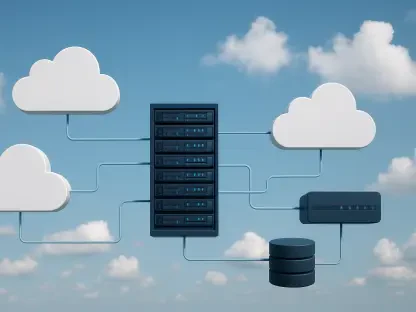

The contemporary digital infrastructure of global enterprises has reached a point where the processing of information is no longer a secondary administrative task but the very lifeblood of operational viability and market competitiveness. Within this landscape, the big data analytics sector is rapidly approaching a valuation of 1.17 trillion dollars as organizations transition from static storage models toward dynamic, reactive systems. This shift is particularly visible in industries such as high-frequency trading and personalized medicine, where the difference between a successful outcome and a critical failure is measured in milliseconds rather than hours. The era of batch processing, which once defined the limits of corporate intelligence, has effectively ended as the market demands instantaneous insights and real-time response capabilities. Consequently, enterprises are moving away from centralized, rigid legacy structures toward fluid, cloud-native architectures that facilitate the massive scale required to handle petabyte-level data streams every single day.
Economic Value and the Evolution of Professional Expertise
The financial realities of the current tech market demonstrate a stark divide between general IT knowledge and the highly specialized mastery required to navigate modern distributed systems. Data engineers and architects who possess verified expertise in cloud-native platforms like Databricks or Snowflake are now seeing compensation packages that significantly outpace traditional software development roles. In 2026, the premium for technical certification has reached a historic high, with specialized credentials often resulting in a salary increase of up to 40% over baseline roles. This economic incentive reflects the desperate need for human capital capable of managing the complexity of modern pipelines. Companies are no longer just hiring for general coding skills; they are seeking professionals who can architect resilient, cost-effective environments that minimize data latency. As a result, the investment in continuous education has become the primary driver of career longevity within the data industry today.
Beyond high-level architecture, the demand for fluency in real-time streaming tools like Apache Kafka and Confluent has redefined the entry-level expectations for junior engineers. Even roles previously considered foundational, such as SQL development and business intelligence visualization, have been elevated by the integration of automated analytics and predictive modeling. The current market values individuals who can bridge the gap between raw technical infrastructure and actionable business strategy, ensuring that information flow translates directly into revenue growth. This trend suggests that the most successful professionals are those who treat their skill sets as modular assets, constantly updating their knowledge of event-driven architectures to remain relevant. Organizations are increasingly looking toward a skills-first hiring model where demonstrated proficiency in specific toolsets, such as dbt for data transformation or BigQuery for massive-scale querying, takes precedence over traditional academic backgrounds or tenure in legacy roles.
Architectural Dominance: The Rise of the Data Lakehouse
The long-standing conflict between the cost-efficiency of data lakes and the rigorous performance standards of structured data warehouses has finally been resolved through the adoption of the lakehouse model. This architectural convergence utilizes open-source table formats like Apache Iceberg and Delta Lake to provide ACID transactions and metadata management directly on top of inexpensive cloud storage. By eliminating the need to maintain two separate systems for unstructured and structured data, enterprises have significantly reduced their operational overhead and minimized the risk of data silos. The lakehouse has effectively become the standard for modern data strategy, allowing for high-performance SQL querying alongside complex machine learning workloads within a single unified environment. This unification is critical because it enables better governance and security protocols across the entire data lifecycle, ensuring that compliance requirements are met without sacrificing the speed of discovery or the flexibility of exploratory data analysis.
In contrast to the rapid adoption of lakehouse architectures, legacy frameworks such as Hadoop have entered a final phase of sunsetting within the enterprise environment. While some larger organizations continue to maintain these clusters to support historical archives, they are rarely, if ever, chosen for new greenfield deployments or system modernizations. The shift toward cloud-native object storage has rendered the maintenance of complex on-premise hardware clusters both financially and technically unsustainable for the majority of businesses. Modern alternatives offer a far superior total cost of ownership by decoupling storage from compute, allowing companies to scale their resources independently based on real-time demand. This elasticity is a cornerstone of the 2026 data strategy, providing the agility needed to pivot during market fluctuations without being tethered to depreciating physical assets. The transition away from legacy systems has also simplified the talent search, as new graduates are increasingly trained in modern cloud ecosystems rather than antiquated distributed file systems.
Decentralized Intelligence and Autonomous Data Workflows
As organizational structures become increasingly complex, the centralized data monolith has given way to more flexible philosophies like Data Mesh and Data Fabric. Data Mesh treats information as a product, shifting ownership from a central IT department to domain-specific business units that understand the context of the data they produce. This decentralization empowers teams to build their own pipelines and analytics tools while adhering to a federated governance model that ensures interoperability and security. Meanwhile, the Data Fabric approach utilizes an intelligent metadata layer to weave together disparate sources across multi-cloud and hybrid environments, creating a seamless experience for the end-user. By combining these two strategies, leading enterprises are achieving a balance between localized agility and centralized oversight, preventing the fragmentation that often plagues large-scale digital transformations. This hybrid model allows for a more democratic access to information, ensuring that decision-makers at every level of the company can leverage data-driven insights without waiting for a central queue.
The automation of the data lifecycle has reached a new level of sophistication with the integration of artificial intelligence into the extract, transform, and load processes. Modern pipelines now feature self-healing capabilities, where AI-driven monitoring tools automatically detect and rectify schema drifts or ingestion failures without human intervention. This shift has fundamentally changed the role of the data engineer, moving the focus away from repetitive manual coding toward high-level system design and policy management. Automated data cleaning and anomaly detection have drastically improved the quality of the information being fed into machine learning models, reducing the garbage in, garbage out risk that once hindered predictive analytics. Furthermore, the exploration of quantum processing for specific optimization problems suggests a future where petabyte-scale datasets can be analyzed with even greater efficiency. While still in relatively early stages of commercial application, these autonomous technologies are already providing a significant competitive advantage to those who have successfully integrated them into their production workflows.
Strategic Integration: Minimizing Complexity for Maximum Impact
The sheer abundance of available technologies in the current market has led many organizations toward architecture bloat, where the complexity of the tech stack begins to outweigh its benefits. To combat this, the most successful enterprises are adopting a minimalist approach, focusing on building the leanest possible infrastructure that addresses their specific operational bottlenecks. This strategy involves prioritizing reliable ingestion pipelines and robust cloud warehousing before adding layers of advanced orchestration or experimental machine learning tooling. By focusing on the core components of the data lifecycle, collection, storage, and retrieval, companies can ensure a stable foundation that is capable of supporting more advanced features as they become necessary. This modular philosophy prevents the long-term technical debt associated with over-engineered systems and allows for a more sustainable growth trajectory. The emphasis is now on agility and the ability to swap individual components of the stack without disrupting the entire workflow, ensuring the architecture remains resilient against rapid technological shifts.
The transition toward a more integrated and autonomous data landscape successfully demonstrated that technical agility was the most reliable predictor of corporate resilience. Organizations that prioritized the migration to cloud-native platforms and the adoption of lakehouse architectures secured a significant advantage by reducing latency and improving data governance across the board. The strategic focus shifted from simply collecting information to treating data as a vital product, which empowered domain experts and reduced the burden on centralized IT departments. Professionals who invested in specialized certifications and mastered real-time streaming technologies found themselves at the forefront of this trillion-dollar economy, commanding higher salaries and leading critical innovation initiatives. By moving away from legacy on-premise systems and embracing modular, self-healing pipelines, the enterprise sector effectively future-proofed its operations against the increasing volume and velocity of the digital era. The next logical step for leadership involved refining these decentralized models and preparing for the broader commercial application of quantum-enhanced analytics.