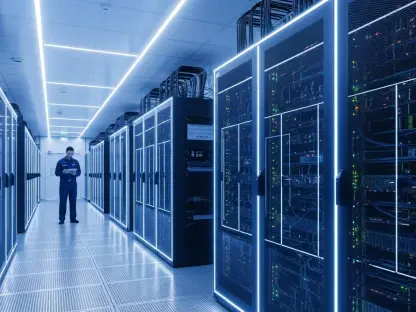

The relentless expansion of artificial intelligence is creating an unprecedented energy challenge for the technology sector, with data centers developing an insatiable and ever-growing appetite for electricity that is beginning to overwhelm regional power grids. This escalating demand has forced major operators to seek out dedicated, on-site power solutions capable of providing clean, reliable, and scalable energy around the clock. Small Modular Reactors (SMRs) have emerged as a leading contender in this search, promising a revolutionary approach to powering the digital infrastructure of tomorrow. However, while this advanced nuclear technology appears to be a perfect match for the industry’s needs on paper, its path to widespread adoption is paved with significant regulatory, financial, and public perception hurdles that must be overcome in the near future.
The Power Mismatch: Data Centers vs. The Grid
Why Traditional Energy Solutions Fall Short
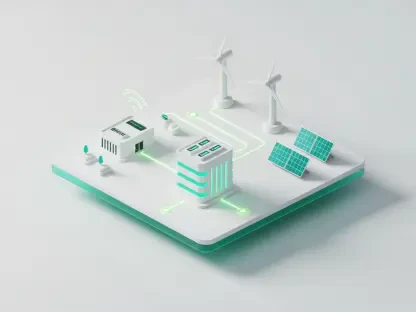
The fundamental conflict lies in the nature of modern data center power requirements versus the capabilities of existing energy infrastructure. These facilities, which form the backbone of the AI revolution, demand immense quantities of constant, uninterrupted, and carbon-free power—a profile that most conventional and renewable energy sources struggle to match. Renewable options like solar and wind, while environmentally friendly, are inherently intermittent; they only generate electricity when the sun shines or the wind blows. This makes them incapable of providing the 24/7 “baseload” power that data centers need to operate without the support of massive and prohibitively expensive battery storage systems. The land area required for solar or wind farms to produce an equivalent amount of power is also a significant drawback, making them impractical for many locations. This reliability gap has historically been filled by fossil fuels, but their carbon emissions are incompatible with the sustainability goals of the tech industry.
On the other end of the energy spectrum, traditional large-scale nuclear power plants, though capable of providing enormous amounts of clean baseload energy, are simply too slow and cumbersome for the fast-moving technology world. These colossal projects are notorious for their staggering costs, often running into the tens of billions of dollars, and are plagued by decade-long construction timelines that are completely out of sync with the rapid pace of AI development. One such undertaking was famously likened to “building a cathedral within a cathedral” due to its overwhelming complexity. Their operational inflexibility and the monumental scale of each project make them a poor fit for the dynamic and scalable power needs of individual data center campuses. Consequently, the industry is caught between intermittent renewables and inflexible mega-projects, creating a critical need for an alternative solution that can bridge this divide.
The SMR Proposition: Agile and Scalable
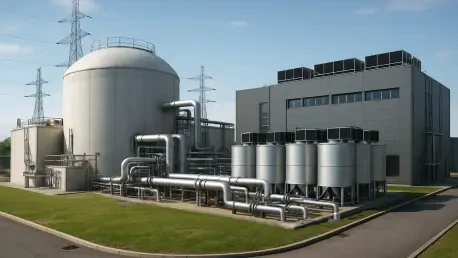
In stark contrast to their larger, more traditional counterparts, Small Modular Reactors offer a far more nimble, practical, and adaptable solution uniquely suited to the challenges faced by the data center industry. The core innovation of SMRs lies in their modular design, where primary components are manufactured in a controlled factory environment before being transported to a site for assembly. This standardized, production-line approach is expected to dramatically reduce construction timelines from a decade or more down to just a few years, allowing power generation to come online at a pace that aligns with the rapid deployment of new data centers. This speed is critical in an industry where technological advancements and capacity demands evolve on a quarterly basis, not a decadal one. By moving much of the complex fabrication off-site, SMRs also promise greater quality control and cost predictability, mitigating the risks of budget overruns and delays that have long plagued the nuclear sector.
Beyond the accelerated construction, the inherent design of SMRs provides unparalleled flexibility and scalability. Their smaller physical footprint allows them to be deployed in a much wider variety of locations, including on or near existing data center campuses, thereby reducing the need for extensive and vulnerable long-distance transmission lines. The modular nature of the technology also means that power capacity can be incrementally scaled up over time. An operator could start with a single module to meet initial demand and then add more reactors as the data center’s computational load grows, providing a “just-in-time” energy solution that traditional power plants cannot offer. Furthermore, a crucial advantage lies in the potential for a single, standardized SMR design to be approved once by regulators. This would create a streamlined licensing process for subsequent deployments across different sites, avoiding the costly and time-consuming bespoke approval cycle that has historically hindered nuclear energy development.
A Competitive Edge: Why SMRs Stand Out
The Unique Triple Advantage
Small Modular Reactors present a unique “triple advantage” that is exceptionally difficult for any other single energy source to replicate, making them a theoretically ideal power solution for the AI industry. This trio of benefits includes the ability to provide consistent baseload power, generate that power with a low-carbon footprint, and offer scalable capacity that can grow alongside demand. Baseload power is the cornerstone of data center operations, requiring a constant, unwavering supply of electricity 24 hours a day, 365 days a year—something SMRs are designed to deliver flawlessly. This reliability stands in sharp contrast to the intermittency of solar and wind power. Secondly, as a form of nuclear energy, SMRs produce virtually no greenhouse gas emissions during operation, aligning perfectly with the aggressive decarbonization goals of major technology companies. This clean energy profile is a critical differentiator from fossil fuel alternatives.
The third element, scalability, is what truly sets SMRs apart for the dynamic tech sector. When these advantages are considered together, the competitive edge of SMRs becomes clear. Natural gas plants, for instance, can provide reliable baseload power but are not a zero-carbon solution, even when paired with costly and complex carbon capture and storage (CCS) technology, and they rely on extensive pipeline infrastructure. Geothermal power is perhaps the closest competitor, offering stable and sustainable baseload energy, but its viability is strictly limited to specific geographic locations with accessible geothermal resources, rendering it a niche solution rather than a universally applicable one. SMRs, therefore, occupy a unique position by checking all three critical boxes—baseload, low-carbon, and scalable—without the geographic constraints of geothermal or the emissions profile of natural gas, offering a holistic solution tailored to the precise needs of modern hyperscale computing.
Long-Term Value and Efficiency
Beyond their immediate operational advantages, SMRs present a compelling long-term value proposition rooted in their remarkable efficiency and longevity. One of the most significant benefits is their exceptionally low land use per megawatt of power generated. Compared to the sprawling footprints required for solar and wind farms to produce an equivalent amount of energy, SMRs are incredibly compact, freeing up valuable land for other uses or allowing for deployment in areas where space is at a premium. This high power density makes them an ideal fit for co-location with data centers, which themselves are land-intensive facilities. This proximity can further enhance efficiency by enabling direct power connections, minimizing transmission losses and bolstering the resilience of the power supply by removing dependence on the broader public grid, which can be susceptible to weather-related outages or other disruptions.
Furthermore, SMRs are engineered for an incredibly long operational lifespan, typically projected to be between 60 and 80 years. This durability promises decades of stable, predictable power generation from a single initial investment, providing a hedge against the price volatility and supply chain uncertainties associated with fossil fuels. While the technology has yet to be deployed at a commercial scale, detailed economic modeling indicates that the levelized cost of energy (LCOE) from SMRs will be competitive with other baseload power sources once the manufacturing process matures and achieves economies of scale. Although these cost projections remain theoretical for now, the combination of a long operational life, low land use, and potential for energy price stability makes SMRs a financially sound and strategically attractive long-term investment for an industry planning its infrastructure needs for generations to come.
From Theory to Reality: The Path to Adoption
Navigating Regulatory and Social Hurdles
Despite their immense promise, the journey of SMRs from a compelling concept to a widespread reality is fraught with significant barriers, primarily rooted in the complex regulatory landscape and the challenge of gaining public acceptance. The regulatory framework for nuclear energy is, by necessity, incredibly stringent, and SMRs are no exception. Every new reactor design must undergo a long and rigorous approval process that can span several years and cost hundreds of millions of dollars. This is not a one-time hurdle; each specific site selection and license application for construction and operation must also navigate a complex web of local, state, and federal requirements. These varying and exacting standards can introduce substantial delays and uncertainty into project timelines, especially if any design modifications are required mid-process, which can force applicants back to the drawing board and further extend the approval period.
Parallel to these regulatory challenges is the crucial need to build public trust. Decades of public concern surrounding nuclear energy, focused on issues of safety, security, and the long-term disposal of radioactive waste, have not disappeared. For any SMR project to move forward, developers must engage in transparent and effective communication to address these legitimate concerns and secure a social license to operate from the surrounding community. Finally, even with regulatory and public approval, SMRs are subject to strict siting constraints. As nuclear reactors, they cannot be built just anywhere. Ideal locations must be geologically stable, safe from seismic activity, and compliant with regulations regarding proximity to population centers or critical infrastructure. This trifecta of regulatory complexity, the need for public confidence, and geographic limitations represents the most formidable obstacle to the rapid and widespread adoption of SMR technology.
The Decisive Decade: Big Tech Takes the Lead
The future trajectory of SMRs in the data center industry was found to be inextricably linked to the actions of “hyperscalers”—the handful of giant cloud and technology companies that dominate the digital landscape. With these corporations planning to invest hundreds of billions of dollars in new data center infrastructure over the coming years, the high initial development cost of SMRs was viewed as a manageable expense rather than a primary deterrent. Their immense capital reserves and, more importantly, their urgent and escalating need for massive amounts of clean power positioned them as the ideal pioneers to drive the technology forward. These tech giants had effectively become the crucial “test bench” for SMR viability, shouldering the financial risk and logistical challenges of deploying the first wave of commercial reactors. The success of these initial, industry-led projects was identified as the single most critical factor in the technology’s future.
Ultimately, the analysis revealed that the next five to ten years would be a decisive period for SMRs. The performance of the first-of-a-kind (FOAK) projects, such as the one planned to power data centers at the decommissioned Cottam power station, was determined to be paramount. These pioneering deployments had to demonstrate an ability to be completed on schedule and within budget to build confidence among investors, regulators, and the public. Success depended on a steadfast commitment to design standardization and shared learning across the industry to prevent each new project from becoming another costly, bespoke “one-off” endeavor. If the technology’s competitiveness and reliability were proven through these initial efforts, forecasts suggested a significant ramp-up in adoption could occur, with the potential for 10 to 30 gigawatts of SMR capacity to be installed by 2040, thereby offering a powerful and lasting solution to the AI industry’s power crisis.