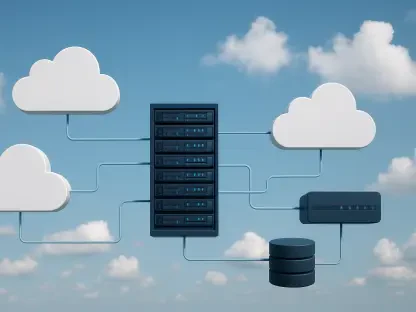

The once-unquestionable mandate to migrate every byte of corporate data to the public cloud has hit a formidable wall of economic and operational reality. For nearly a decade, the “cloud-first” doctrine was the North Star for Chief Information Officers, promising a world where physical servers were relics and scalability was a simple slider on a dashboard. However, as the initial excitement fades, a growing number of the world’s largest enterprises are discovering that the cloud is not a magical destination but a complex, and often expensive, utility. Recent data suggests that while the cloud remains essential, the blind rush to centralize has slowed significantly, replaced by a strategic pivot toward a more balanced, hybrid approach.
This shift marks a profound transition from idealistic migration to a pragmatic “post-cloud” era. The realization that total cloud centralization often leads to unforeseen dependencies and spiraling costs has fundamentally changed the conversation in boardrooms across the globe. Today, the focus is no longer on how quickly a company can move to the cloud, but on how intelligently it can distribute its resources between private data centers, regional providers, and hyperscale environments. This new paradigm is about regaining control in an increasingly volatile global landscape.
The End of the Cloud Honeymoon: When Unlimited Scaling Meets Reality
The previous decade was defined by a collective belief that the public cloud would solve every infrastructure woe, from maintenance overhead to sudden traffic spikes. Companies rushed to shutter their on-premises data centers, fearing that staying “local” meant being left behind in the digital race. This “cloud-first” mandate was often executed with more enthusiasm than strategy, leading to a decade of migration projects that prioritized speed over architectural efficiency. As these environments matured, the honeymoon period ended, replaced by the realization that “unlimited scaling” is only a benefit if one can afford the bill that comes with it.
Today, we are witnessing a transition toward a discerning “post-cloud” strategy. The narrative has shifted from a binary choice—cloud or no cloud—to a nuanced discussion about workload optimization. Major enterprises are now hitting the brakes on total centralization, recognizing that some applications are simply not built for the hyperscale environment. This cooling of enthusiasm is not a rejection of the technology itself, but a sign of organizational maturity. Leaders are now auditing their digital footprints with a critical eye, questioning whether the convenience of the cloud outweighs the loss of granular control over their most sensitive assets.
Why the Paradigm Shift Matters in a Volatile Economy
In the current global climate, digital infrastructure has transcended its role as a mere technical requirement to become a top-tier boardroom priority. The era of treating data storage as a background utility is over, as geopolitical shifts and economic instability force a reevaluation of where information lives. When a company’s entire operational capacity is tied to a single, foreign-owned hyperscaler, it faces a level of systemic risk that many boards are no longer willing to tolerate. The “cloud-by-default” era inadvertently created a landscape of extreme dependency, where a change in a provider’s terms or a shift in international trade policy could paralyze a business.
Connecting the dots between global politics and data storage is now a core part of corporate strategy. As trade tensions rise and data privacy laws become more fragmented, the logic of keeping critical workloads within specific jurisdictional boundaries becomes undeniable. This shift matters because it represents a move toward resilience and self-reliance. Enterprises are recognizing that a diversified infrastructure stack is the digital equivalent of a balanced investment portfolio; it protects the organization against localized failures and provides the flexibility to pivot when the economic or political winds change.
Unpacking the Catalysts of Change: Cost, Governance, and AI
The primary driver of the hybrid shift is the “Economic Mirage” of the cloud. While the entry costs are low, the hidden fees of hyperscale models—such as egress charges for moving data and regional transfer costs—have led to what many call “bill shock.” These expenses are often difficult to predict and even harder to manage once an organization is locked into a specific ecosystem. The dream of a pay-as-you-go utility has, for many, turned into a complex web of line items that defy traditional budgeting. This financial unpredictability has made the return to local hardware look increasingly attractive for stable, high-volume workloads.
Artificial Intelligence has added a new layer of complexity to this financial puzzle, often acting as an “AI Tax.” The massive data requirements for training machine learning models and the high-frequency processing required for inference can drive cloud costs to unsustainable levels. Furthermore, the problem of “cloud sprawl”—where departments spin up redundant environments without oversight—has led to massive inefficiencies. In response, the rise of FinOps has changed the way companies operate; they are moving away from retrospective auditing and toward proactive, cost-aware architectural design that prioritizes fiscal discipline from the very first line of code.
Insights from the Field: Sovereignty and Performance Realities
The “Digital Sovereignty” movement is gaining traction, particularly among healthcare and finance sectors that require localized jurisdictional control. Experts in these fields argue that relying on global platforms for sensitive data poses significant legal and ethical risks. If a provider is subject to the laws of a different country, the data owner may lose the ability to guarantee privacy or compliance. This has led to a surge in localized cloud environments where the physical hardware resides within the same borders as the users it serves, ensuring that data remains under the protection of local regulations.
Beyond governance, the speed of light remains a stubborn barrier to total centralization. In the manufacturing and “Physical AI” sectors, the latency involved in sending data to a distant server and waiting for a response is often too high for real-time operations. A robot on a factory floor or an autonomous delivery vehicle cannot wait for a round-trip to a data center five hundred miles away. This performance reality is driving a return to the edge, where intelligence is processed locally on-site. Geopolitical resilience also plays a role here, as companies seek to insulate their core operations from potential disruptions in international connectivity.
Strategies for Building a Deliberate Hybrid Ecosystem
Building a successful hybrid ecosystem requires a move away from platform loyalty and toward a Workload-Specific Placement Framework. This approach uses four pillars—cost, latency, compliance, and performance—to determine the optimal home for every application. For example, high-compliance financial records might stay in a private data center, while a public-facing web app remains in the cloud for global reach. This deliberate placement ensures that the infrastructure serves the business goals, rather than the business serving the limitations of a specific provider’s cloud model.
As enterprises master this transition, they are moving from a focus on the destination to a focus on orchestration. The goal is a dynamic, multi-directional environment where data and applications can flow seamlessly between private and public tiers. This involves implementing sovereign cloud solutions for sensitive regions and mastering the edge for localized intelligence. By maintaining high-level cloud connectivity for data aggregation while keeping critical processing local, organizations can achieve a level of agility that a single-platform approach could never provide. The future of enterprise IT was built on the premise of flexibility, and the hybrid model is the ultimate expression of that ideal.
In the pursuit of operational excellence, organizations successfully integrated regional cloud providers and private data centers into their existing technology stacks to mitigate the risks of centralization. They developed sophisticated internal governance models that empowered teams to use cloud resources while maintaining strict accountability for every dollar spent. By prioritizing business outcomes over platform loyalty, these enterprises moved toward a more resilient and cost-effective digital future. This strategic pivot allowed leadership to reclaim control over their data and infrastructure, ensuring that technology served as a robust foundation for growth rather than a source of unpredictable overhead. The move toward hybrid environments ultimately provided the balance of innovation and security required for the modern era.