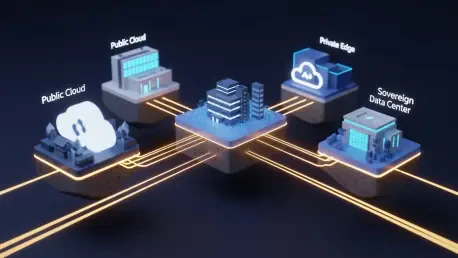

The era of blind, unchecked migration toward hyperscale environments has reached a definitive turning point as businesses prioritize functional utility over the allure of total outsourcing. For over a decade, the dominant narrative in enterprise technology was a relentless, one-way journey toward the cloud, fueled by promises of limitless scalability and the end of physical hardware management. Major providers like Amazon Web Services, Microsoft Azure, and Google Cloud successfully positioned themselves as the inevitable destination for all digital workloads. This movement was further accelerated by the sudden global shifts toward remote work and the explosive integration of artificial intelligence into core business operations. However, as the ecosystem matures, a more selective and disciplined “post-cloud” era is emerging. Organizations are pivoting away from viewing the cloud as a universal default, opting instead for a strategic framework where performance requirements, data residency mandates, and long-term financial sustainability dictate exactly where specific workloads should reside.
The Financial Realities of Modern Cloud Consumption
The transition toward a post-cloud strategy is primarily driven by the widening gap between the promised cost-savings of the cloud and the reality of monthly invoices that often exceed original projections. While the “pay-as-you-go” utility model was intended to convert heavy capital expenditures into manageable operating expenses, many enterprises now face what is known as “cloud bill shock.” These costs are rarely the result of basic computing or storage fees, which remain relatively predictable. Instead, they stem from secondary charges like data egress—the expensive process of moving information out of a provider’s network or between regions—alongside the persistence of idle environments and storage tiers that no longer align with the actual usage patterns of the business. IT leaders are finding that the ease of spinning up new instances has led to a lack of financial friction, resulting in a continuous drain on resources that often goes unnoticed until the end of the fiscal quarter.
The integration of artificial intelligence has further complicated this financial landscape by introducing workloads with highly volatile resource requirements. AI initiatives, particularly those involving large-scale model training and high-frequency inference, require immense GPU clusters and high-performance storage that can cause budgets to spiral out of control without warning. Many technology leaders are discovering that while the cloud offers the necessary flexibility for the experimental phases of an AI project, it may not be the most economically viable environment for long-term production at scale. Consequently, companies are re-evaluating their infrastructure to ensure that high-intensity AI workloads are positioned in environments where the total cost of ownership is transparent and manageable. This shift does not necessarily mean an abandonment of public cloud services, but rather a more calculated approach to determining which phases of the development lifecycle belong in a shared environment and which require dedicated, on-premises resources.
Overcoming Structural Inefficiencies and Governance Gaps
A significant portion of cloud-related waste is rooted in a lack of internal oversight and architectural discipline, a phenomenon frequently referred to as “cloud sprawl.” Because modern cloud platforms allow engineering teams to provision complex resources in seconds without rigorous procurement cycles, operational flexibility frequently morphs into unmanaged consumption. This is especially true for organizations that utilized a “lift and shift” migration strategy during the initial rush to modernize, moving legacy systems into the cloud without optimizing them for distributed environments. These businesses often end up paying a premium to run old, inefficient software on expensive virtual hardware, effectively carrying their historical technical debt into a much more costly ecosystem. The lack of native cloud design means these applications cannot take advantage of auto-scaling or serverless functions, leaving them as “always-on” expenses that provide very little ROI.
To address these systemic inefficiencies, modern enterprises are turning to FinOps, a specialized discipline that merges financial accountability with cloud engineering and procurement. By integrating cost considerations directly into the architectural design phase, organizations can prevent expenses from becoming an afterthought for the finance department to handle reactively. Mature FinOps practices allow businesses to align their technology spending with actual business value by creating a culture where developers are responsible for the financial impact of their code. This approach enables a more granular view of the infrastructure, allowing teams to identify and decommission “zombie” resources or move non-critical workloads to lower-cost spot instances. Ultimately, this governance shift ensures that every dollar spent on cloud resources contributes directly to innovation rather than disappearing into the cracks of fragmented departmental budgets and unmonitored subscriptions.
Digital Sovereignty: The New Compliance Standard
Beyond financial concerns, the shift toward post-cloud thinking is heavily influenced by the urgent need for digital sovereignty and data control. What was once a niche legal concern for compliance officers has become a critical strategic priority for boards of directors worldwide. In an increasingly unstable geopolitical climate, organizations are no longer comfortable relying solely on centralized, foreign-based hyperscalers that may be subject to shifting international laws or surveillance protocols. They are now scrutinizing who has access to their data and which specific legal jurisdictions govern their digital assets, leading to a surge in demand for localized and sovereign cloud solutions. This movement is not just about where the server sits, but about ensuring that the operational control of the infrastructure remains independent of any single external provider’s policy changes or regional outages.
This focus on control is most evident in highly regulated industries such as healthcare, financial services, and government-managed critical infrastructure. These sectors require absolute, verifiable guarantees regarding where data is stored and how it is protected from external legal reach or cross-border data transfer limitations. Regional cloud providers and specialized sovereign environments are filling this gap, offering the flexibility of modern cloud tools while maintaining strict adherence to local regulations and national security requirements. By diversifying their infrastructure providers, these organizations can protect themselves against jurisdictional conflicts and ensure operational resilience regardless of global political shifts. This diversification also mitigates the risk of vendor lock-in, providing the leverage necessary to negotiate better terms and ensuring that the organization’s digital future is not tethered to the roadmap of a single global corporation.
Moving Toward a Distributed and Intentional Architecture
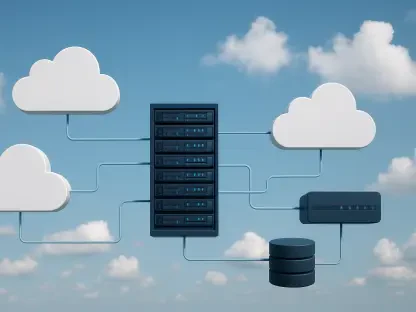
The arrival of the post-cloud era does not signal a mass exit from the public cloud, but rather the stabilization of the hybrid model as the definitive industry standard. Current industry data suggests that by 2028, the vast majority of organizations will operate across a sophisticated blend of public clouds, private data centers, and edge environments. This “cloud repatriation” trend—moving specific, predictable workloads back to private hardware—is a sign of a maturing market where technology leaders are no longer chasing a trend, but are instead making calculated decisions based on latency, security, and long-term total cost of ownership. The goal is to create a seamless fabric where data and applications can migrate between environments based on real-time business needs, rather than being trapped in a single provider’s walled garden.
The rise of “Physical AI” and autonomous systems in sectors like manufacturing and logistics is further accelerating this move toward a distributed infrastructure. These systems require real-time decision-making that cannot afford the inherent delay of sending data to a distant cloud server for processing. By utilizing edge computing, where heavy processing happens locally at the source of data generation, enterprises can achieve the sub-millisecond speeds necessary for high-stakes automation and industrial safety. This balanced approach represents the ultimate evolution of the enterprise technology stack: a deliberate, sophisticated architecture that utilizes the cloud as a powerful tool for elastic scaling and global reach, while maintaining a robust local presence for critical operations. Moving forward, the most successful enterprises will be those that view infrastructure as a strategic portfolio, balancing the speed of the public cloud with the security and cost-predictability of private and edge resources.