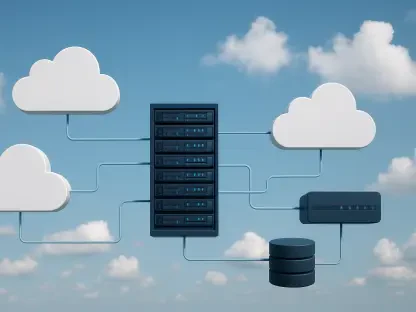

In the Apigee hybrid architecture, the control plane generates tool configurations from OpenAPI specs while the local cluster fetches that data through a secure sidecar. This integration represents a significant leap for enterprises that need to leverage generative artificial intelligence without sacrificing the strict security boundaries of their on-premises or private cloud environments. By implementing the Model Context Protocol, Apigee hybrid 1.17.0 allows existing application programming interfaces to be transformed into agentic tools that large language models can discover and invoke directly. This approach bypasses the need for manual coding of bespoke server implementations, as the platform handles the complex task of protocol translation and management. Large organizations operating in highly regulated industries often find that their runtime must remain within specific physical or virtual boundaries due to legal mandates or architectural gravity. The arrival of these capabilities ensures that such constraints no longer hinder the adoption of agent-based automation.
1. Design Strategy: The Local Data Plane Architecture
The deployment model utilized in this framework ensures that the core processing of agentic requests occurs within the customer-managed Kubernetes environment. Unlike fully managed cloud solutions, the hybrid approach maintains the operational logic locally while relying on the cloud-based control plane for administrative functions. This separation is crucial for businesses that manage massive datasets in colocation facilities or regional data centers where latency and data egress costs are primary concerns. The architecture allows the system to utilize existing OpenAPI 3.0.x specifications as the blueprint for tool generation, which effectively bridges the gap between traditional RESTful services and the emerging requirements of the Model Context Protocol. By running the data plane locally, organizations can provide AI agents with high-performance access to internal systems of record, ensuring that sensitive information is processed at the edge of the network where the actual business logic and backend services reside today.
A fundamental aspect of this localized architecture involves the automated transcoding between the JSON-RPC communication used by MCP and the standard HTTP requests expected by backend APIs. This translation layer eliminates the burden on development teams to refactor existing codebases specifically for AI integration. Instead, the system functions as an intelligent intermediary that understands the structure of the API and presents it to the agent as a suite of available tools. When an agent requests a list of operations, the local data plane provides a curated catalog based on the configurations pulled from the control plane. This ensures that the agent only interacts with authorized endpoints, while the actual execution of the tools/call method happens entirely within the cluster’s network. This design choice maintains high availability and low latency, as the traffic path does not require a round trip to the external cloud management layer during the request-response cycle, thereby optimizing the performance of automated agents.
2. Security Standards: Maintaining Sovereign Boundaries
Security remains a paramount concern for any enterprise deploying agentic capabilities, and the hybrid deployment model addresses this by ensuring that request traffic stays within the local infrastructure. No individual request or response data is transmitted to the external control plane at the time of execution, which aligns perfectly with strict data sovereignty and residency requirements. For organizations in the financial or healthcare sectors, this means that personally identifiable information or proprietary transaction data remains protected behind their existing firewalls and security perimeters. The system leverages a pull rather than push configuration model, where the local sidecar initiates secure connections to the cloud control plane to fetch the latest tool definitions. Because the control plane never initiates a connection into the private cluster, the network team does not need to open any inbound ports, significantly reducing the potential attack surface and simplifying the approval process for new security reviews.
Governance within this ecosystem is managed through the familiar concepts of API products and authorization policies already established in the platform. Administrators can define specific subsets of tools that a particular AI agent is permitted to see and use, effectively creating a granular permission layer. This tool-level control is enforced through standard authentication mechanisms such as OAuth 2.0 or OpenID Connect, alongside the verification of API keys. If an agent is not entitled to a specific operation within its assigned API product, that operation will be automatically omitted from the discovery response. This filtering mechanism prevents agents from attempting to access unauthorized functions, such as account deletion or administrative configuration, unless explicitly permitted. By inheriting the platform’s robust policy library, the agentic endpoints benefit from the same level of protection as any other high-value internal service, including quota enforcement and rate limiting, which prevents automated agents from overwhelming critical backend systems.
3. Traffic Management: Monitoring and Discovery Tools
Maintaining visibility into how AI agents interact with backend services is essential for long-term operational success, and this is achieved through integrated discovery and cataloging features. Once the proxies are deployed, they are automatically ingested into a centralized hub where they are categorized by their specific tool names and styles. This searchable catalog allows developers and architects to use natural language queries to identify which tools are active across the environment, moving away from fragmented documentation or manual spreadsheets. This centralized view provides a bridge between the technical implementation of the API and the functional requirements of the agent developers. Furthermore, by mapping every operation in an OpenAPI spec to a specific tool, the system ensures that the AI’s worldview is always synchronized with the actual state of the backend services, reducing the likelihood of errors or hallucinations caused by outdated or misconfigured endpoint information.
Analytics and performance monitoring have been enhanced to specifically isolate agentic traffic from traditional RESTful API calls, providing a clear picture of how AI is being utilized. Through specialized dashboards, operators can examine the ratio between tool discovery and tool execution, allowing them to understand whether agents are finding the tools they need or struggling with discovery overhead. The system breaks down performance metrics by individual tool names, enabling a deep dive into latency and error rates for specific AI-driven functions. This level of granularity is vital for identifying whether a performance bottleneck lies within the proxy’s management layer or the backend target itself. By having access to these insights, platform teams can make data-driven decisions about scaling resources or optimizing specific API endpoints that are under heavy load from automated agents. This ensures that the overall health of the infrastructure is maintained even as the volume of AI-driven interactions grows.
4. Configuration Flow: Activating the Protocol Services
To enable these advanced capabilities in a local environment, administrators must follow a specific sequence of updates to their existing cluster configuration. The process begins with modifying the local overrides file to set the core activation flag for the protocol server to a positive state. Following this, the first critical step is to perform a Helm upgrade for the operator chart, which is responsible for establishing the underlying resource schemas required for the new tool definitions. Attempting to proceed in a different order can lead to a successful upgrade message that fails to actually instantiate the necessary pods, making this sequence essential for a functional deployment. This initial phase ensures that the Kubernetes cluster is prepared to handle the new resource types and that the operator is equipped to manage the lifecycle of the sidecars and data plane components that will soon be deployed to support the agentic traffic within the production environment.
The second phase of the activation involves upgrading the organization chart to finalize the deployment of the necessary pods and configuring the proper authorization grants. This part of the process requires a one-time grant that allows the established identity within the cluster to reach out and connect to the cloud-based control plane. This connection is what facilitates the retrieval of tool configurations derived from the provided OpenAPI specifications. It is important to note that enabling this feature triggers a staged canary release of the runtime pods to ensure stability, so the operation should be scheduled within an approved maintenance window to minimize any potential impact on existing traffic. Once these steps are completed, the cluster’s identity, which typically reuses existing watchers, will have the necessary permissions to maintain a synchronized state between the global tool definitions and the local runtime, completing the setup required for agentic tool discovery.
5. Strategic Implementation: Tracing and Future Scaling
Tracing the path of an agentic call from the initial client request through the management layer and into the backend is a complex challenge that is addressed through standard observability protocols. The system supports the extraction of W3C trace context, which is often carried within the metadata of a call, and converts it into standard headers that downstream RESTful services can easily interpret. This capability allows for a unified view of the entire transaction across disparate systems without requiring massive code changes to existing backend microservices. By implementing distributed tracing through OpenTelemetry, organizations can visualize exactly where time is spent during a tool invocation, whether it is during the initial discovery phase or during the final execution at the target server. This end-to-end visibility is essential for troubleshooting issues in complex multi-cloud environments where multiple hops are often required to fulfill a single request from an intelligent agent.
In conclusion, the successful deployment of these features within a local cluster provided a clear path for organizations to bridge the gap between their legacy infrastructure and the modern requirements of artificial intelligence. By adhering to the standardized configuration steps and leveraging the built-in observability tools, teams effectively moved their API management strategy into a more automated and agent-friendly era. Moving forward, it was recommended that architects regularly audit their API product definitions to ensure that only necessary tools remained exposed to AI clients, thereby minimizing potential security risks. Additionally, the integration of distributed tracing proved to be a vital step for maintaining high service levels as the complexity of agentic workflows increased. Organizations that adopted these strategies early found themselves better positioned to scale their AI initiatives while maintaining the strict operational controls and sovereign data protections required by their global governance frameworks.