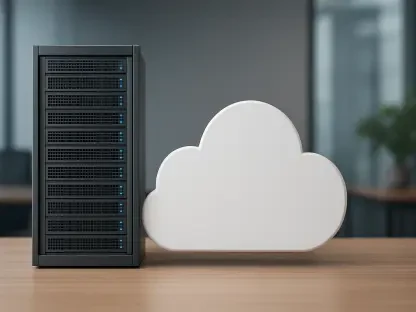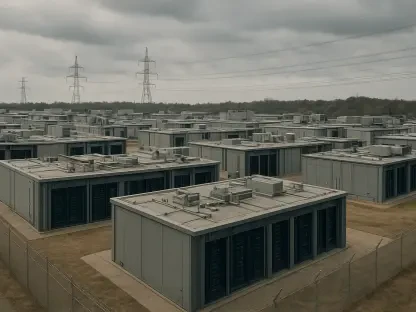

The traditional reliance on manual orchestration within hybrid cloud environments has reached a breaking point where operational complexity often outpaces the ability of human administrators to respond effectively to fluctuating digital demands. As enterprises scale their operations between 2026 and 2028, the shift toward intent-driven strategies has become the only viable method for maintaining architectural integrity across disparate platforms. Unlike legacy automation that focuses on rigid scripts, intent-driven systems prioritize the desired end-state, allowing the infrastructure to autonomously calculate the most efficient path to reach those goals. This evolution represents a move away from micro-managing individual virtual machines toward managing the overarching business intent. By defining parameters like cost and compliance at a high level, organizations can ensure their digital backbone adapts in real-time to changing market conditions without constant human intervention or oversight.
The Evolution of Cloud Management
From Manual Setup to Intent-Based Systems
The primary challenge for modern IT departments lies in the friction of managing fragmented cloud services that do not communicate natively across private and public domains. Intent-based systems address this by introducing a layer of abstraction that translates high-level business requirements into precise technical configurations across the entire stack. For instance, a financial institution might mandate that all customer data remain within specific geographic boundaries to satisfy sovereign data regulations; an intent-driven platform automatically configures the necessary routing and storage policies across AWS and on-premises hardware. This eliminates the risk of human error, which continues to be the primary driver of security vulnerabilities and downtime. By centralizing governance through these declarative intents, companies can maintain a consistent security posture while enjoying the flexibility of a truly distributed environment that scales according to demand across global regions.
Using Artificial Intelligence in Workflows
Integrating advanced machine learning models into the management plane allows hybrid cloud strategies to transition from reactive monitoring to proactive, self-healing operations. Between 2026 and 2029, the widespread adoption of generative AI for infrastructure management has enabled administrators to use natural language to define complex operational states. These intelligent systems continuously scan the environment for performance drifts or security anomalies, taking corrective action before an issue manifests for the end-user. For an e-commerce giant, this might mean the system identifies a predicted traffic surge and automatically scales capacity while optimizing back-end database queries. This predictive nature significantly reduces the cognitive load on site reliability engineers, who are then free to focus on strategic innovation. The result is an infrastructure that learns from historical data to improve its own performance and reliability over a long-term period.
Implementing Architectures in Practice
Automating Policy Across Distributed Clouds
Consistency is often the missing ingredient in hybrid cloud deployments, where various teams might apply different security standards to their respective cloud silos. Intent-driven architectures solve this by utilizing a unified policy engine that serves as the definitive source of truth for the organization’s entire digital estate. When a security update is required to defend against a new zero-day threat, the intent-driven system propagates the change across all edge locations and public cloud providers simultaneously. Consider a global manufacturing firm operating thousands of edge devices; the intent-driven model ensures that every single sensor follows the same updated security protocols without exception. This level of automated enforcement eliminates configuration drift and provides a robust audit trail, as every action is traceable back to the original business intent, facilitating much more efficient compliance reporting and robust security auditing and validation processes.
Bridging Goals and Technical Execution
Successful digital transformation requires a symbiotic relationship between executive leadership and the technical teams responsible for maintaining the cloud infrastructure. Intent-driven strategies facilitate this alignment by providing a shared language for discussing performance targets and resource allocation in terms of business outcomes. Instead of debating technical specifications like IOPS, stakeholders focus on customer experience metrics and transaction success rates. This alignment allows for much faster responses to competitive pressures, such as launching a new digital service that requires immediate global scale. By defining the business intent for high availability, the underlying technology stack automatically adjusts its footprint to meet those requirements. This ensures that the IT budget is invested in outcomes that drive revenue, transforming the infrastructure into a dynamic asset that supports rapid innovation and growth for the modern enterprise.
Strategic Pathways for Resilience
The transition toward intent-driven hybrid cloud models proved essential for organizations that sought to master the complexities of modern digital operations. Leaders who successfully navigated this shift focused on several critical actions that ensured their infrastructure remained both agile and secure. They began by auditing their existing automation portfolios to identify manual bottlenecks, replacing them with outcome-oriented policies that favored system autonomy. The technical teams prioritized the deployment of cross-platform observability tools, which provided the AI engines with the high-fidelity telemetry needed for intelligent decision-making. Furthermore, the governance models were rewritten to move away from static checklists toward continuous policy verification. These initiatives allowed businesses to significantly lower their operational expenditures while increasing the speed at which they delivered new value to their customers during 2026.