
The demand for high-performance, neutral storage layers is increasing as the video industry shifts toward hybrid and fully cloud-based production models. For years, production houses have grappled with the fragmented nature of modern media assets, often finding themselves trapped between specialized review platforms and generic cloud storage buckets. Managing high-resolution footage across Amazon S3, Microsoft SharePoint, and Google Drive frequently necessitates cumbersome manual downloads or complex data migrations that stall the creative momentum. This friction point often forces editors to prioritize administrative logistics over the actual art of storytelling, creating a bottleneck in high-stakes environments like live sports or rapid-response social media content. The current landscape requires a bridge that can span these diverse environments, providing a single source of truth that remains accessible regardless of the underlying infrastructure. By creating a unified access layer, organizations can treat global storage as a local drive, ensuring that every asset is immediately available to every member of the production team.
Breaking Down Digital Silos with LucidLink Connect
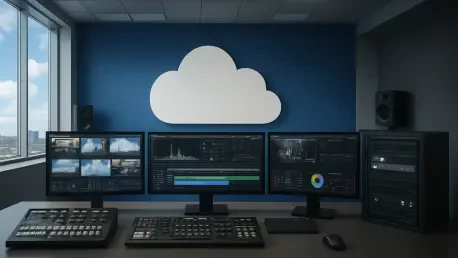
A major leap forward in this space involves the integration of the LucidLink Connect feature, which serves as a centralized gateway for Adobe Frame.io projects. This technology enables creative teams to tap into media stored in disparate environments—ranging from Dropbox to Google Drive—without moving a single byte of data from its original location. Instead of the traditional “upload and download” cycle, editors can stream assets directly into their non-linear editing systems. This approach effectively eliminates the redundant file duplication that often plagues large-scale projects, where multiple versions of the same B-roll might exist across different storage platforms. By maintaining data in place, media organizations reduce their egress costs and storage overhead significantly while gaining a comprehensive view of their entire library. The software creates a virtualized file system that behaves like high-speed local storage, allowing a colorist to work on raw files without any perceived latency or performance issues.
Beyond mere connectivity, this integration ensures that the metadata and organizational structures established within Frame.io remain synchronized with the broader production ecosystem. When a producer leaves feedback or marks a clip for approval within the Frame.io interface, those updates are instantly reflected across the LucidLink environment. This real-time synchronization is critical for teams working on tight deadlines, such as those producing episodic television or daily sports highlights. The ability to access B-roll, audio stems, and graphics libraries instantly means that finishing systems and visual effects platforms can pull from the same pool of assets as the primary edit. This unified approach mitigates the risk of using outdated assets or working from low-resolution proxies when high-quality masters are available elsewhere. Consequently, the production pipeline becomes more linear and predictable, as the technological barriers between capture, review, and final delivery are systematically dismantled through cloud-native streaming protocols.
Transforming the Creative Pipeline: From Camera to Timeline
The strategic focus of this partnership centers on a tool-agnostic, enterprise-grade access layer that respects the fluid nature of modern creative work. Industry leadership recognizes that contemporary editors do not live inside a single application; they transition constantly between Premiere Pro, After Effects, and various media asset management systems. By providing a neutral storage layer, LucidLink allows these professionals to maintain their existing cloud investments while gaining the benefits of a unified namespace. This philosophy contrasts sharply with the walled-garden approaches seen elsewhere in the software industry, where proprietary storage often limits cross-platform collaboration. The goal is to facilitate a seamless camera-to-timeline experience, where footage captured on set is reviewed in Frame.io and then immediately available for finishing or AI-driven logging services. This architecture supports the growing demand for remote production, where location no longer dictates the efficiency of the workflow.
To capitalize on these advancements, media enterprises evaluated their current storage sprawl and identified high-latency bottlenecks within their global operations. Decision-makers prioritized the implementation of streaming-based file systems over traditional cloud gateways to ensure that remote teams maintained peak productivity. They moved toward a model where specialized collaboration tools like Frame.io functioned as the primary interface for review while LucidLink handled the heavy lifting of data transport and access. Organizations that successfully adopted this hybrid architecture reported a significant reduction in project turnaround times and a decrease in technical support tickets related to file synchronization errors. Looking ahead, technical directors focused on integrating these unified workflows with emerging AI tools for automated tagging and metadata generation. By centralizing asset access, teams positioned themselves to scale their production capabilities without expanding their physical footprint.