
The transition from simple conversational interfaces to fully autonomous agentic systems has fundamentally altered how enterprises architect their digital presence within the cloud ecosystem. Rather than waiting for a human prompt to initiate a discrete task, these advanced agents now possess the inherent capability to observe environmental telemetry, evaluate complex multi-step objectives, and execute actions across disparate API layers with minimal supervision. This shift represents more than a mere incremental upgrade in software efficiency; it is a total reimagining of the cloud operating model where the underlying infrastructure serves as a playground for autonomous decision-making entities. Organizations that previously focused on basic automation are now deploying agentic swarms capable of self-healing, real-time workload migration, and predictive resource allocation. As cloud strategies evolve, the focus shifts from managing static instances to governing dynamic agent behaviors that operate at a scale far exceeding human cognitive limits. This paradigm ensures that the cloud remains a living organism that adapts instantly to market fluctuations and technical anomalies without the latency of traditional human intervention.
Integrating Autonomous Logic: How Agents Redefine Scalability
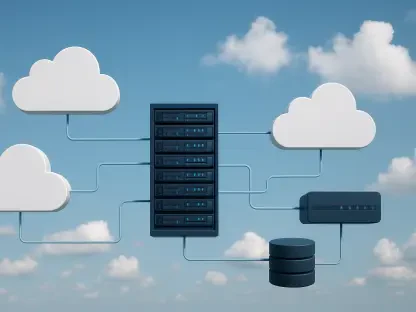
Integrating agentic AI into cloud environments requires a departure from traditional monolithic automation toward a decentralized mesh of intelligent nodes. Modern architectures leverage specialized platforms such as AWS Bedrock and Azure AI Studio to deploy agents that do not merely execute scripts but actually reason through the logic of a deployment. For instance, an agent monitoring a Kubernetes cluster might detect an unusual latency spike in a microservice and, instead of simply restarting the pod, analyze the traffic patterns and automatically provision additional compute capacity or adjust the load balancer configurations. This level of sophistication is made possible by the deep integration of vector databases like Pinecone and Weaviate, which provide the agents with the contextual memory necessary to learn from past infrastructure events. As these systems become more prevalent, the cloud management layer becomes increasingly abstract, allowing developers to define high-level business intents while leaving the granular technical execution to the autonomous agents that inhabit the environment.
As the reliance on these autonomous entities grows, the challenge of maintaining robust governance and security within a dynamic cloud perimeter becomes paramount. Organizations are moving toward a model of “Agentic Guardrails,” where every autonomous action is scrutinized by a secondary, oversight-oriented AI that validates compliance with corporate policies and security standards. This dual-agent architecture prevents the “hallucination” of infrastructure changes that could lead to data exposure or service outages. Furthermore, the concept of identity and access management is being redefined, as agents now require their own non-human identities with permissions that fluctuate based on the specific task they are performing. Security teams are implementing sophisticated observability tools that track the “chain of thought” behind an agent’s decision, providing a transparent audit trail for regulators and internal auditors. By grounding these agents in secure, private data silos and strictly controlling their interaction with public APIs, enterprises can harness the power of agentic AI without compromising the integrity of their underlying cloud assets.
Financial and Operational Evolution: The Rise of Agentic FinOps
The economic implications of agentic AI within the cloud strategy are profound, particularly as FinOps matures into an automated, real-time discipline. Instead of monthly cloud bill reviews, agents now participate in live spot-instance auctions and perform continuous right-sizing of virtual machines across multi-cloud environments like Google Cloud and Oracle Cloud Infrastructure. These autonomous financial agents are programmed to balance the competing priorities of performance and cost, making micro-adjustments that aggregate into significant annual savings for large-scale enterprises. Moreover, the shift toward agentic AI is driving a transition from consumption-based pricing models to value-based outcomes, where the primary metric of success is the completion of a complex objective rather than the number of hours a server was operational. This evolution necessitates a more granular approach to cloud cost management, where organizations utilize AI-driven forecasting to predict spikes in demand and empower agents to pre-emptively secure the most cost-effective resources before the market experiences a surge in pricing.
The successful integration of agentic AI into the modern cloud strategy demanded a comprehensive reevaluation of how organizations approached digital infrastructure from 2026 to 2028. Engineering departments prioritized the creation of “agent-ready” documentation and standardized API schemas, which allowed autonomous systems to interact seamlessly with legacy backend services. Leadership teams invested heavily in training their workforce to oversee these agents, shifting the internal focus from manual troubleshooting to high-level strategic orchestration. Security frameworks were updated to include specialized response plans for autonomous misconfigurations, ensuring that the speed of AI did not outpace the organization’s ability to maintain control. Furthermore, the adoption of centralized agent registries enabled teams to share and reuse high-performing models across different business units. Ultimately, the move toward an agent-centric cloud model proved that the key to competitive advantage lay in the ability to marry human ingenuity with the data-driven execution of autonomous artificial intelligence systems.