
Global enterprise IT departments are rapidly abandoning the traditional direct-to-hyperscaler procurement model in favor of integrated cloud aggregation frameworks that prioritize governance over raw capacity. This monumental shift occurs as global cloud spending surpasses the $100 billion threshold, forcing a realization that simply renting virtual machines is no longer a competitive advantage for modern firms. Instead, the strategic differentiator has moved toward the orchestration layer, where specialized aggregators streamline the friction between multiple providers like AWS, Azure, and Google Cloud. This movement reflects a broader maturation of the industry, where the focus has transitioned from mere migration to the active management of complex, distributed environments. Organizations are finding that without a cohesive middle layer, the benefits of the cloud are often offset by runaway costs and architectural silos. Consequently, the role of the hybrid orchestrator has become the cornerstone of digital resilience in the current landscape.
Evolution of Enterprise Infrastructure
Moving Beyond Raw Compute Utility
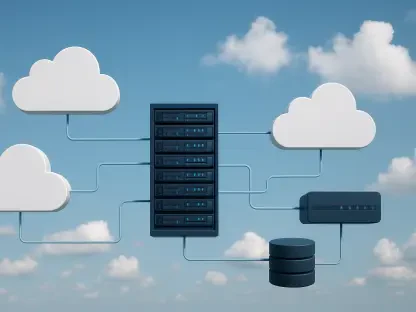
As of early 2026, raw compute power is widely treated as a basic utility, similar to electricity or water, rather than a specialized technological asset that provides inherent value. This commoditization means that enterprises no longer gain an edge by simply having the largest server footprint; the real value lies in how those resources are unified and governed across diverse regions. Cloud aggregators have stepped into this void, serving as essential mediators that manage the technical overhead of multi-cloud environments while ensuring that performance remains consistent. By decoupling the service from the specific provider, these aggregators allow for greater flexibility, enabling businesses to move workloads based on performance metrics rather than vendor loyalty. This trend is particularly evident in the rise of specialized dashboards that consolidate telemetry data from disparate sources, providing a level of visibility that was previously impossible when managing each cloud provider in a vacuum.
The reliance on direct relationships with major hyperscalers often created rigid silos that hindered agility and trapped data within proprietary ecosystems. Modern enterprises are now prioritizing portability through the adoption of Infrastructure as Code and containerization, which are facilitated by aggregation platforms. These platforms act as a translation layer, allowing engineers to deploy resources across multiple clouds using a single, unified set of commands and security policies. This standardized approach reduces the specialized training required for different cloud environments, effectively lowering the barrier to entry for complex multi-cloud strategies. Furthermore, this model mitigates the risks associated with vendor lock-in, providing organizations with a credible exit strategy or the ability to shift providers if pricing or service levels fluctuate. The aggregator model has thus become a defensive necessity, protecting organizations from the vulnerabilities inherent in being tethered to a single infrastructure giant while maximizing operational uptime.
Closing the Generative AI Value Gap
While the initial excitement surrounding generative AI focused on experimental pilots, the current challenge involves scaling these applications into full-scale production environments. This transition requires more than just access to large language models; it demands specialized GPU resources and highly integrated data architectures that can handle massive throughput without compromising latency. Aggregators play a pivotal role here by sourcing and allocating these high-demand hardware resources across various providers, ensuring that AI workloads have the necessary horsepower to function at scale. Without this centralized management, many AI projects stall at the prototype stage due to the prohibitive complexity of managing the underlying data pipelines and compute clusters. By providing pre-integrated stacks, aggregators enable developers to focus on fine-tuning models rather than troubleshooting the plumbing of the cloud. This acceleration is crucial for companies looking to monetize AI-driven insights before their competitors can navigate the same technical hurdles.
High-performance computing for AI also necessitates a sophisticated approach to data residence and latency, as moving massive datasets between clouds can incur significant costs and performance lags. Cloud aggregation frameworks address this by positioning compute resources as close to the data source as possible, often utilizing edge nodes or regional hubs to minimize travel distance. This spatial optimization is a key feature of the modern hybrid orchestrator, which dynamically routes traffic based on real-time network conditions and cost-efficiency. Additionally, these platforms provide the governance tools needed to ensure that the data used for training AI models remains secure and compliant with internal privacy standards. As AI continues to permeate every aspect of business operations, the ability to manage these resources through a single pane of glass becomes a prerequisite for success. The maturity of the aggregation layer ensures that AI is not just a peripheral experiment but a core component of the enterprise infrastructure, fully supported by robust and scalable management systems.
Strategic Governance and Compliance
Implementing Advanced Financial Transparency
One of the most persistent challenges in multi-cloud management has been the lack of financial transparency, as disparate billing cycles and varying pricing models make it difficult to track total expenditure. The introduction of centralized FinOps dashboards within aggregation platforms has solved this problem by providing a unified view of global consumption in real-time. These tools offer granular insights into where every dollar is spent, identifying underutilized resources and suggesting optimizations that can lead to significant cost savings. For instance, an aggregator might highlight that a development environment in one cloud is costing double what it would in another, prompting an automated migration to a more cost-effective region. This level of oversight prevents the “bill shock” that often occurs when individual departments spin up resources without centralized coordination. By bringing financial discipline to the cloud, organizations can reinvest those savings into innovation, turning what was once a black box of expenses into a highly efficient and transparent operational engine.
Beyond simple cost tracking, modern aggregation models facilitate proactive financial governance through automated policy enforcement and budget alerts. These systems allow finance teams to set strict limits on resource consumption, ensuring that projects do not exceed their allocated budgets without explicit approval from stakeholders. This is particularly vital in the current environment where the demand for compute resources can spike unpredictably due to seasonal traffic or the launch of new digital services. Aggregators also negotiate bulk pricing and reserved instances across multiple providers, passing those savings on to the enterprise and providing a buffer against market volatility. This strategic approach to cloud economics moves the conversation away from mere accounting and toward value-based management, where every cloud investment is weighed against its specific business outcome. The result is a more disciplined and predictable financial landscape, where IT spending is directly aligned with organizational goals and market demands, fostering a culture of accountability across the entire enterprise.
Ensuring Compliance and Sovereign Security
In an era of increasing regulatory scrutiny, maintaining compliance with global data protection laws like GDPR and HIPAA has become a complex task for multinational corporations. Cloud aggregators simplify this by offering sovereign-ready security frameworks that are built into the orchestration layer, ensuring that data residence requirements are met automatically. These frameworks utilize zero-trust architectures to verify every identity and device attempting to access the network, regardless of whether they are located on-premise or in a public cloud. This “security-first” approach means that compliance is not an afterthought but a foundational element of the infrastructure, reducing the risk of data breaches and legal penalties. By automating the application of security patches and policy updates across all cloud environments, aggregators ensure that the entire organization maintains a high security posture without manual intervention. This centralized control is essential for managing the sheer scale of modern digital operations, where manual oversight of thousands of individual assets would be both impossible and prone to human error.
The transition toward cloud aggregation represented a fundamental realignment of how digital assets were managed and secured in a hyper-connected world. Organizations that successfully integrated these orchestrators moved beyond the limitations of single-provider strategies and embraced a more resilient, governed, and cost-effective operational model. To maintain this momentum, stakeholders prioritized the continuous refinement of their Infrastructure as Code blueprints and established clear data governance protocols that accounted for both local regulations and global performance needs. IT leaders also invested in training their teams to operate within these unified platforms, shifting their focus from low-level troubleshooting to high-level strategic alignment. By treating cloud resources as a cohesive whole rather than a fragmented collection of services, these businesses built a foundation that was capable of supporting the next generation of data-intensive applications. Ultimately, the adoption of the aggregation model provided the necessary clarity and control to navigate the complexities of modern computing with confidence and foresight.