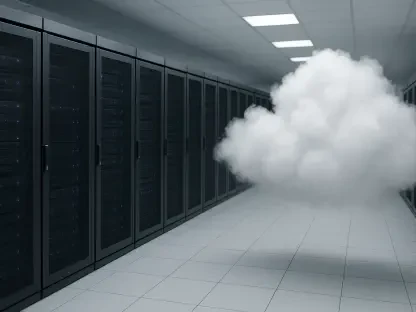

The increasingly volatile nature of global atmospheric patterns has forced meteorological agencies to seek computational resources that can process petabytes of environmental data in real-time. By moving its primary artificial intelligence workloads to Google Cloud, the National Oceanic and Atmospheric Administration (NOAA) is fundamentally altering how researchers analyze satellite imagery and sensor readings. This transition marks a significant departure from localized supercomputing clusters toward a more scalable, distributed model that leverages specialized hardware like Tensor Processing Units. These chips are specifically designed to accelerate the training of neural networks, allowing for the rapid identification of micro-scale weather events that often precede catastrophic storms. Instead of waiting hours for a batch process to complete on legacy hardware, scientists can now iterate on predictive models with unprecedented fluidity. This shift is not merely about storage; it represents a comprehensive overhaul of the analytical framework used to safeguard lives and infrastructure.
Advancing Predictive Accuracy: Neural Architecture
Central to this technological migration is the integration of Vertex AI, which provides a unified platform for deploying machine learning models across diverse datasets ranging from ocean temperatures to stratospheric wind speeds. The agency is currently utilizing these tools to refine its Global Forecast System, which has historically faced challenges when dealing with high-resolution localized data. By applying deep learning algorithms to the vast archives of historical weather data stored in BigQuery, NOAA can identify subtle correlations that human analysts might overlook. These patterns are essential for predicting sudden-onset phenomena such as flash floods or rapid intensification in tropical cyclones. The scalability of the cloud environment ensures that during peak weather events, computational power can be ramped up instantly to handle the influx of satellite transmissions. This ensures that the time between data ingestion and public warning is minimized, providing emergency responders with critical windows of preparation.
Beyond immediate forecasting, the move to a cloud-native ecosystem fosters a more collaborative environment for the broader scientific community through the Big Data Program. By hosting massive planetary datasets on Google Cloud, NOAA enables university researchers and private sector innovators to access information without the need for expensive local storage. This democratization of data accelerates the development of specialized weather applications, such as those used in precision agriculture or renewable energy management. For example, wind farm operators can now utilize NOAA’s high-fidelity models to optimize turbine output based on hyper-local wind shear predictions. Furthermore, the use of automated pipelines for data cleaning and normalization reduces the manual labor typically required to prepare environmental sets for analysis. As a result, the agency’s internal experts can devote more time to high-level interpretive tasks rather than performing redundant and time-consuming data management duties.
Operational Resilience: Infrastructure Scalability
The transition to Google’s infrastructure also addresses the physical limitations and maintenance costs associated with maintaining massive on-premise data centers. Traditional supercomputers require specialized cooling systems and constant hardware cycles, whereas a cloud-based approach allows NOAA to tap into the most advanced hardware available from 2026 to 2028 without significant capital expenditure. Specifically, the use of Google’s custom AI accelerators allows for the processing of satellite data at speeds that were theoretically impossible just a few years ago. These accelerators are particularly adept at handling the complex matrix multiplications required for multi-modal weather models that combine visual satellite data with numeric sensor inputs. Moreover, the distributed nature of the cloud provides an inherent layer of redundancy, ensuring that forecasting operations remain uninterrupted even if a specific physical location experiences a technical failure or power outage. This level of reliability is critical during seasons of peak atmospheric activity.
The strategic decision to migrate these critical functions to a cloud-based artificial intelligence framework established a new benchmark for governmental technological adoption. Leaders in public sector logistics observed how the integration of real-time telemetry with scalable computing resources solved the long-standing bottleneck of data latency. This successful implementation suggested that organizations needed to prioritize the modernization of their data architectures to ensure they accommodated the next generation of generative AI tools. It was determined that this process involved not only selecting the right cloud provider but also investing in workforce development to bridge the gap between traditional meteorology and data science. Future-oriented initiatives centered on the implementation of edge computing nodes to process initial data points closer to the source, which further reduced the time required for severe weather alerts. By adopting a modular infrastructure, agencies ensured they were prepared for the increasing complexity of monitoring the global environment.