
Security practitioners are finding that simply detecting a vulnerability is insufficient when ninety-eight percent of images remain misconfigured in production. This systemic failure has forced a radical transformation in the way major technology providers approach defensive infrastructure, leading to a significant pivot in the 2026 cybersecurity roadmap. Microsoft has responded by aggressively extending its Defender for Cloud suite beyond the boundaries of Azure, encroaching upon territories once considered the exclusive domain of Amazon Web Services and Google Cloud Platform. This strategic expansion is not merely an incremental update but a complete overhaul designed to position Microsoft as the central governing authority for enterprise security across all environments. By evolving into a comprehensive Cloud-Native Application Protection Platform, the company aims to seize the primary “security console seat” within the modern organization. The goal is to provide a single, unified pane of glass that can illuminate the dark corners of multi-cloud architectures, where fragmented visibility has long allowed threats to flourish undetected. As businesses grapple with the sheer complexity of maintaining thousands of ephemeral containers and serverless functions, the demand for a centralized oversight mechanism has never been higher. Microsoft is banking on the idea that an integrated ecosystem can provide the consistency and automation needed to overcome the persistent administrative failures that continue to plague even the most sophisticated digital operations.
The Evolving Landscape of Multi-Cloud Vulnerability
The Persistent Challenge: Container Misconfiguration and Risk
The state of container security in 2026 remains a primary concern for chief information security officers who must manage increasingly complex distributed systems. Recent industry data reveals that nearly eighty-nine percent of organizations utilizing Kubernetes or containerized workflows have reported at least one significant security incident within the last twelve months. This statistic underscores a persistent crisis that existing security measures have failed to fully mitigate as businesses scale their cloud footprints at an unprecedented rate. The core of the issue lies in the fact that while containerization technology has matured, the administrative processes required to secure it have often lagged behind. Most organizations find that the speed of deployment frequently takes precedence over the rigorous auditing of configurations, leading to a landscape where vulnerable environments are the rule rather than the exception. This discrepancy creates a massive attack surface that adversaries are eager to exploit, often using automated tools to find the smallest oversight in a deployment script or a container manifest.
Research indicates that the vast majority of these incidents do not stem from exotic or sophisticated cyberattacks but from fundamental administrative failures that could have been prevented with better oversight. Misconfigurations now account for nearly half of all security breaches, and a staggering percentage of scanned container images continue to harbor critical vulnerabilities that have been public for months. This environment has led to a phenomenon known as “vulnerability fatigue,” where DevSecOps teams are overwhelmed by the sheer volume of alerts generated by traditional scanning tools. In June 2026 alone, over seven thousand four hundred new vulnerabilities were published, making it virtually impossible for human operators to manually verify and patch every flaw across multiple cloud providers. The persistence of basic issues, such as insecure default settings or excessive permissions, demonstrates that detection alone is no longer enough. Instead, the industry is shifting toward a model that prioritizes the context of a vulnerability, looking at how a specific misconfiguration might be leveraged within the broader architecture of a specific cloud environment.
Strategic Integration: Bridging the Gap in Administrative Visibility
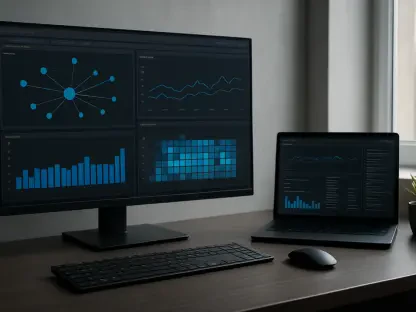
The manual correlation of security data across different cloud providers has become an impossible task for the average enterprise in 2026. When a security team has to jump between the Amazon Web Services console, the Google Cloud dashboard, and the Azure portal to understand their risk posture, critical context is inevitably lost. Microsoft’s intervention in this space aims to automate the correlation process through a unified attack-path graph that visualizes how various vulnerabilities and misconfigurations interconnect across platforms. This tool allows security analysts to see how a seemingly minor flaw in a Google Cloud Storage bucket could potentially be used as a stepping stone to compromise a mission-critical database running on Amazon EC2. By providing this centralized view, the platform attempts to turn a chaotic sea of isolated alerts into a manageable and actionable security roadmap. The ability to visualize these lateral movement paths is essential for understanding the true “blast radius” of a potential compromise, moving beyond simple checklists to a more dynamic understanding of environmental risk.
Building on this foundation of visibility, the move toward a single pane of glass is as much about operational efficiency as it is about technical defense. In a world where specialized security talent is both expensive and scarce, the ability to train a team on a single platform that covers the entire multi-cloud estate is a significant competitive advantage. Organizations are increasingly looking for ways to streamline their operations by reducing the number of disparate tools that require maintenance and integration. This trend toward consolidation is driving a shift where the platform that can provide the most comprehensive and intuitive overview of the entire digital estate becomes the de facto standard for the enterprise. Microsoft is leveraging its deep roots in identity management and office productivity to make its security offerings feel like a natural extension of the existing workflow. By integrating security insights directly into the tools that developers and administrators use every day, the platform reduces the friction associated with remediation, making it more likely that critical fixes will actually be implemented in a timely manner.
Expanding the Technical Horizon: Kubernetes and Serverless Security
Part 1: Enhancing Visibility Across Amazon EKS and Google GKE
A major pillar of the current update cycle involves the extension of deep Kubernetes node visibility to rival cloud platforms, specifically targeting Amazon EKS and Google GKE. Historically, deep operating system-level scanning was often restricted to a provider’s native services, leaving organizations with a blind spot when they operated in a multi-cloud configuration. As of the third quarter of 2026, Microsoft has introduced preview capabilities that allow for the comprehensive assessment of worker nodes on these competing platforms. This is a critical distinction because while many security tools focus on scanning the container images themselves, they often overlook the underlying virtual machines that function as the hosts for those containers. By identifying flaws in the host operating system or the installed software packages on these worker nodes, the system can provide a much more thorough defense against sophisticated attacks that seek to escape the container boundary and compromise the underlying infrastructure.
This new capability utilizes an agentless scanning model, which has quickly become the preferred approach for modern cloud security. Agentless scanning provides high visibility into the state of the infrastructure without the performance overhead or management complexity typically associated with installing and maintaining software agents across a massive, multi-cloud fleet. For a security team managing thousands of nodes across different continents and providers, the ability to gain deep insights without touching the production workload is invaluable. When the system identifies a vulnerability on an Amazon EKS node, it doesn’t just alert the user; it provides specific remediation paths, such as recommending an upgrade to a newer node image or a specific Kubernetes version. This level of granular, actionable advice is designed to bridge the gap between IT operations and security teams, ensuring that the people responsible for maintaining the nodes have the information they need to keep them secure without having to become experts in every nuance of cloud security.
Part 2: Securing the Invisible Layer of Serverless Containers
Serverless environments like AWS Fargate and Azure Container Apps have historically acted as “black boxes” for many security teams because of their ephemeral nature. These containers are often designed to spin up, execute a specific task, and then disappear within seconds or minutes, making it incredibly difficult for traditional, periodic scanners to capture their state. This has created a significant blind spot in the defense strategy of many organizations that have embraced serverless architectures for their scalability and cost-efficiency. Microsoft has addressed this challenge by treating serverless tasks as first-class inventory items that are continuously monitored throughout their brief lifecycle. By integrating this “serverless posture management” into the broader security suite, the platform ensures that these transient resources are held to the same rigorous security standards as long-running virtual machines or dedicated database clusters, preventing them from becoming an easy entry point for attackers.
This approach to serverless security goes beyond simple vulnerability scanning by identifying insecure dependencies and identity-based risks within the ephemeral functions themselves. The system is designed to map how a serverless task might be exploited as part of a larger attack chain, providing context that is often missing from more basic security tools. For example, it can identify if a Fargate task has been granted overly broad permissions to an S3 bucket or if it is running an outdated library that is susceptible to a known exploit. By analyzing the relationship between the container’s identity and the resources it can access, the platform provides a holistic view of the risk that includes both the code and its environment. This ensures that even the most fleeting cloud resources are fully integrated into the broader security narrative, allowing organizations to embrace the benefits of serverless computing without sacrificing their defensive posture or leaving themselves vulnerable to “invisible” threats.
The Competitive Struggle for Cloud Dominance
Part 3: Rivalry Among Hyperscalers and Third-Party Consolidation
The expansion of Defender for Cloud is a direct challenge to the native security tools of Amazon and Google, as well as established third-party specialists who have long dominated the multi-cloud security market. While Amazon Web Services and Google Cloud have significantly enhanced their own security hubs and malicious activity detectors, Microsoft currently holds a temporary edge in providing deep, cross-platform node-level vulnerability assessment. The battle for the “security console seat” is no longer just about which provider has the most powerful or cost-effective infrastructure; it is about who can provide the most comprehensive and intuitive oversight of the entire modern enterprise. This shift in focus reflects a mature cloud market where the primary concern of customers has moved from initial migration to the long-term management and securing of their complex, heterogeneous environments.
Third-party vendors like Wiz and Palo Alto Networks have built their businesses on the “one console for every cloud” philosophy, but Microsoft is now leveraging its massive existing ecosystem to make these specialized tools feel increasingly redundant. By bundling cross-cloud container security into existing enterprise licensing agreements, Microsoft is applying significant financial pressure to procurement teams who are under orders to reduce “tool sprawl” and simplify their vendor relationships. The strategy is to provide a “good enough” unified solution that integrates seamlessly with identity management via Entra ID and office productivity suites. For many organizations, the convenience of having their security insights integrated into their existing Microsoft workflow outweighs the specialized features of a niche third-party provider. This consolidation trend is forcing independent vendors to innovate even faster to justify their place in the security stack, while Microsoft continues to use its scale to commoditize features that were once considered premium.
Part 4: Key Trends Influencing the Future of Cloud Defense
Several overarching trends are shaping the 2026 security landscape, most notably the total convergence of cloud security posture management and runtime protection into a single, unified discipline. The industry has moved away from the model where one team managed configurations and another handled active threats; instead, the modern approach synthesizes identity, configuration, and vulnerability data into a single, continuous risk management story. This shift reflects a deeper understanding that security is not a point-in-time check but a lifecycle-long process that must be integrated into every stage of the application development process. By providing a platform that understands the entire lifecycle—from the first line of code in a repository to the final execution of a serverless function—providers like Microsoft are attempting to create a “closed-loop” security system that can detect and prevent threats with minimal human intervention.
Furthermore, there is a clear and undeniable industry consensus moving toward agentless security models as the standard for multi-cloud environments. The logistical nightmare of maintaining thousands of agents across different operating systems and cloud providers has proven to be an insurmountable hurdle for many organizations, leading to gaps in coverage and performance issues. Financial considerations are also playing an increasingly large role in these technical decisions, as organizations prioritize vendors that can offer broad coverage across all clouds under a single, predictable licensing agreement. To remain a leader in this competitive environment, a security product must now treat a rival provider’s cloud assets with the same level of depth, urgency, and technical sophistication as its own native services. This move toward “provider-agnostic” security is a defining characteristic of the 2026 market, signaling an era where the boundary between different clouds is becoming increasingly transparent to the security professionals who must defend them.
Evaluating Market Impact and Strategic Outlook
Part 5: Strategic Findings for Modern Enterprise Stakeholders
The primary value of these recent technical updates lies in the virtual elimination of “shadow containers” and the creation of a truly unified resource inventory. By bringing disparate assets from across the cloud spectrum into a single policy framework, organizations can finally begin to reduce the incident rates that have been driven by misconfigurations and fragmented visibility. However, stakeholders must realize that these features are not a simple “plug-and-play” fix for a broken security culture. Utilizing these tools effectively requires a commitment to a tiered security model, as the most advanced multi-cloud visibility and automated remediation features are typically reserved for premium subscription plans. Organizations must carefully weigh the cost of these higher-tier services against the potential financial and reputational damage of a major security breach, recognizing that the most expensive security tool is often the one that was never fully implemented.
While the new capabilities for Amazon EKS and Google GKE are promising, their current “preview” status remains a significant hurdle for organizations in highly regulated industries like finance and healthcare. These sectors generally require the full legal and technical support of general availability status, along with formal service level agreements, before they will consider replacing an established, production-grade security tool. Additionally, the industry is reaching a saturation point where the sheer detection of flaws is no longer the primary problem facing security teams. The 2026 landscape is defined by “remediation paralysis,” where teams have more data than they can possibly act upon. Microsoft’s focus on providing direct, automated upgrade recommendations is a necessary and welcome step toward closing the gap between the identification of a flaw and its eventual fix. The success of these tools will ultimately be measured not by how many vulnerabilities they find, but by how many they actually help to eliminate.
Part 6: Navigating the New Security Paradigm
As the industry transitioned into this new phase of multi-cloud maturity, decision-makers prioritized the consolidation of their security stacks to combat the rising tide of administrative complexity. The transition to integrated platforms required a fundamental shift in how organizations viewed their relationship with major cloud providers, as the line between infrastructure and oversight became permanently blurred. Looking back at the developments of 2026, it is clear that the vendor that offered the most intuitive and comprehensive “pane of glass” successfully defined the standard for the modern enterprise. This period was marked by a significant wave of vendor consolidation, as many specialized third-party tools were absorbed or replaced by the increasingly robust offerings of hyperscalers. The move toward agentless scanning and identity-centric governance provided the necessary foundation for the next generation of automated defenses that are now becoming commonplace.
The path forward for enterprise security must now focus on the practical implementation of AI-driven remediation to keep pace with the sheer volume of threats. It is no longer enough to have a dashboard that shows where the fires are; the next frontier involves systems that can automatically generate and test infrastructure-as-code fixes to close vulnerabilities before they can be exploited. Identity management has become inseparable from cloud posture, as the permissions assigned to a container are now recognized as being just as critical as the code running inside it. Organizations should prioritize the integration of their identity and security platforms to ensure that “least privilege” access is enforced across every cloud and every function. By embracing these unified systems and focusing on rapid, automated remediation, businesses can finally move beyond the crisis of misconfiguration and build a resilient infrastructure that is capable of defending itself in an increasingly hostile digital world.