
The August 2026 update to Microsoft Defender for Cloud integrated roughly 90 additional AWS and GCP resource types, allowing security teams to monitor multi-cloud environments from a single control plane. This milestone signals a definitive shift in how enterprises manage distributed infrastructure, moving away from fragmented, cloud-specific silos toward a unified architectural strategy. As organizations increasingly deploy critical workloads across Amazon Web Services, Microsoft Azure, and Google Cloud Platform, the complexity of interconnecting these environments has grown exponentially. The challenge is no longer just about establishing a basic connection; it involves architecting a resilient, low-latency mesh that maintains consistent security policies and operational visibility across disparate vendors. Navigating this landscape requires a structured, multi-phase approach that accounts for physical geography, networking protocols, identity federation, and cross-platform orchestration. By following a rigorous twelve-step framework, engineering teams can build a robust multi-cloud network that mitigates the risks of single-vendor dependency while maximizing the unique performance benefits and service offerings of each major provider in the current 2026 technology market. Achieving this level of integration ensures that the failure of a single provider does not result in total service disruption, a lesson learned from several high-profile regional outages earlier this year.
Effective multi-cloud networking also requires a deep understanding of the underlying physical infrastructure that supports these virtualized environments. While the cloud often feels ethereal, the reality is grounded in fiber optics and physical data centers distributed across global regions. In 2026, the maturity of dedicated interconnects has significantly reduced the barriers to entry, yet the manual effort required for initial configuration remains substantial. Success depends on precise CIDR block planning to avoid routing collisions and the implementation of automated deployment pipelines that treat the multi-cloud mesh as a single programmable entity. This article provides a comprehensive roadmap for technical leaders and cloud architects, detailing each necessary phase from the initial mapping of region pairs to the final consolidation of cross-platform monitoring data. The objective is to move beyond the theoretical benefits of multi-cloud and establish a production-grade environment where data flows seamlessly, securely, and cost-effectively between AWS, Azure, and GCP, providing a competitive advantage in an increasingly complex digital economy.
1. Select Region Pairs with Cloud Location Finder
Using Google’s Cloud Location Finder to evaluate latency and physical distance between data centers is the essential starting point for any multi-cloud architecture. In the current 2026 landscape, selecting regions based merely on their names or general availability is insufficient for high-performance workloads. Physical proximity between the data centers of different providers determines the minimum possible latency, which directly affects the performance of cross-cloud database replication and microservices communication. For instance, a deployment based in Sydney must specifically map AWS’s ap-southeast-2 to Azure’s Australia East and GCP’s australia-southeast1. The Cloud Location Finder tool provides real-time data on round-trip times (RTT) and hop counts, allowing architects to visualize the physical path data takes when crossing provider boundaries. This transparency prevents the common mistake of pairing regions that are geographically close but logically distant due to inefficient subsea cable routing or peering arrangements. By quantifying the expected latency upfront, engineering teams can set realistic performance benchmarks and avoid expensive late-stage re-architecting.
Furthermore, selecting the right region pairs involves balancing latency with data residency and compliance requirements. Many jurisdictions now mandate that certain types of data remain within specific geographic borders, necessitating a multi-cloud strategy that respects these constraints across all involved providers. Cloud Location Finder identifies which specific zones within a region offer the best connectivity to partner clouds, enabling the creation of “latency-optimized pods” where compute resources from AWS can interact with specialized AI services in GCP or legacy enterprise applications in Azure with minimal delay. This step also requires an analysis of regional service availability; not all features—especially the newest 2026 AI and quantum computing offerings—are available in every location. Architects must ensure that the chosen regions support the full suite of required services for each provider. Failing to perform this rigorous mapping can lead to “tromboning,” where traffic travels thousands of miles to a different continent and back just to reach a data center in the same city, severely degrading application performance and increasing egress costs.
2. Create Distinct VPCs for Every Provider
Building a Virtual Private Cloud (VPC) on each platform using non-overlapping CIDR blocks is the fundamental prerequisite for cross-cloud routing. When multiple cloud environments are linked, the underlying network must treat them as a single, contiguous address space. If AWS and GCP both attempt to use the standard 10.0.0.0/16 range, the resulting IP address conflicts will make it impossible for traffic to be routed correctly between the two environments. To prevent these conflicts, a comprehensive IP address management (IPAM) strategy is required before a single resource is provisioned. For a typical three-cloud deployment, a structured allocation might assign 10.10.0.0/16 to AWS, 10.20.0.0/16 to Azure, and 10.30.0.0/16 to Google Cloud. This clear separation allows for simple, deterministic routing rules and simplifies the creation of firewall policies and security groups. It also provides enough headroom for future expansion, such as adding new subnets for specialized workloads or secondary regions, without the need to re-IP existing infrastructure, which is a notoriously difficult and error-prone process.
Beyond simple address allocation, the creation of these VPCs must include the definition of subnets, route tables, and gateways tailored to the specific traffic patterns of each provider. Each cloud has its own nuances in how it handles internal routing; for example, GCP uses a global VPC model that simplifies cross-region communication, while AWS and Azure typically require more explicit peering or transit gateway configurations. When establishing these networks in 2026, architects must also account for the increasing use of IPv6, ensuring that dual-stack support is consistently implemented across all three providers to future-proof the connectivity. The logical isolation provided by these VPCs acts as the first line of defense, ensuring that a breach in one cloud environment does not automatically grant access to the others. By maintaining a clean and documented IP scheme, troubleshooting becomes significantly easier, as engineers can immediately identify the source and destination of any packet based solely on its IP address, facilitating faster resolution of connectivity issues during the integration phase.
3. Enable the AWS Multi-Cloud Interconnect
Requesting a dedicated, high-speed link through the AWS console or CLI is the preferred method for establishing high-performance connectivity in 2026. The AWS Interconnect – multicloud service, which reached general availability in April 2026, offers a streamlined way to provision dedicated fiber connections between AWS and partner clouds like GCP or Oracle Cloud Infrastructure. These links provide up to 100 Gbps of bandwidth, a significant upgrade from the 1 Gbps limits seen in earlier preview versions. This dedicated capacity is critical for organizations moving massive datasets or running latency-sensitive distributed systems that cannot tolerate the variability of the public internet. By bypassing the public web, the interconnect provides a more stable and predictable network environment, reducing jitter and packet loss. The provisioning process involves creating an interconnect request that specifies the target provider and the desired bandwidth, which then kicks off a series of automated steps to establish the physical and logical link.
Patience is required during this phase, as the status of the interconnect must move from “pending” to “available” before it can be used to route production traffic. This transition can take anywhere from fifteen minutes to several hours, depending on the specific region pairs and the underlying hardware availability. Attempting to configure BGP sessions or route propagation before the link is fully active is a common cause of deployment failure. Once active, the interconnect functions as a virtual private wire, allowing for the exchange of routing information via Border Gateway Protocol (BGP). This dynamic routing ensures that if a link goes down, the network can automatically recalculate paths to maintain connectivity. In 2026, the ability to manage these interconnects through infrastructure-as-code (IaC) tools like Terraform or the AWS CLI has made them much easier to incorporate into automated workflows. For Australian teams, while direct Sydney-to-Sydney links are becoming more common, many still route through key global hubs, making the choice of bandwidth tier and the monitoring of the interconnect’s health vital for maintaining service level agreements (SLAs).
4. Use Azure Virtual WAN as Your Central Link
Since direct links are not yet available in every global region, setting up an Azure Virtual WAN to act as a hub is a highly effective intermediary strategy. Azure Virtual WAN provides a unified network interface that simplifies large-scale branch-to-Azure and spoke-to-spoke connectivity. In a multi-cloud context, the Virtual WAN hub serves as a central transit point where site-to-site VPNs from AWS and GCP can terminate. This hub-and-spoke topology is particularly useful in 2026 for connecting regions that lack a direct AWS Interconnect presence. By using Azure as the central bridge, traffic between AWS and GCP can be routed through the Azure backbone, which often offers better performance and security than the open internet. Setting up the hub involves creating a Virtual WAN resource, provisioning a virtual hub within it, and then deploying a VPN gateway. This gateway then accepts connections from the customer gateways and VPN endpoints configured in the other clouds, creating a secure, encrypted mesh.
This approach creates a vital bridge between all three environments while organizations wait for expanded dedicated link support across all regional combinations. While a site-to-site VPN typically offers lower throughput and higher latency than a dedicated interconnect, the Azure Virtual WAN model is highly scalable and can aggregate multiple tunnels to increase total capacity. It also provides sophisticated monitoring and management features, such as the ability to visualize the entire network topology and track traffic flows in real-time. Architects must be mindful of the cost implications of this setup, as both the VPN gateway and the data processing through the hub incur charges. However, for many enterprises in 2026, the trade-off is worth the increased agility and the ability to maintain a consistent networking model across their entire multi-cloud footprint. This centralized hub also simplifies the implementation of “any-to-any” connectivity, where resources in any cloud can reach any other resource without needing a complex web of individual peering connections between every possible pair of VPCs.
5. Sync Identity Management Across All Platforms
Setting up workload identity federation is a critical step in 2026 to ensure that services can talk to each other without the inherent risks of using permanent access keys. Static credentials, such as AWS IAM user keys or GCP service account JSON files, are a frequent source of security breaches because they are often hardcoded in scripts or inadvertently checked into version control. Workload identity federation solves this by allowing services to exchange short-lived, auto-rotating tokens based on a trust relationship between the cloud providers. For example, a pod running in an Amazon EKS cluster can be configured to assume a specific GCP service account role by presenting an OIDC (OpenID Connect) token that GCP trusts. This creates a seamless and secure method for cross-cloud resource access, where permissions are managed through fine-grained IAM policies rather than shared secrets. This “keyless” approach significantly reduces the attack surface and aligns with modern zero-trust security principles.
Establishing this trust relationship involves creating an identity pool on the target cloud and registering the other cloud provider as a trusted issuer. In 2026, this process has been simplified by the widespread adoption of standardized federation protocols across all major providers. Once the federation is active, an AWS role can safely access GCP or Azure resources by requesting a token from the local Security Token Service (STS) and exchanging it for a token from the partner cloud’s identity service. This allows for complex cross-cloud workflows, such as an AWS Lambda function writing data directly to an Azure Blob Storage container or a GCP Dataflow job querying an Amazon Redshift database. Managing these identities requires a disciplined approach to policy creation, ensuring that each federated identity has only the minimum necessary permissions required to perform its task. By syncing identity management in this way, organizations eliminate the need to manage multiple sets of credentials for the same service, reducing administrative overhead and the likelihood of human error in permission assignments.
6. Strengthen Security with Provider-Specific Settings
Applying unique security fixes for each cloud’s common weaknesses is essential because a “one-size-fits-all” security policy often ignores the specific vulnerabilities inherent to each platform’s default configurations. The August 2026 Cloud Security Index highlighted a stark 76% versus 8% exposure gap between the most and least misconfigured major providers, emphasizing the need for targeted hardening. On AWS, security teams must prioritize enforcing HTTPS for all S3 bucket traffic and strictly auditing security group ingress rules to eliminate overly broad access. Azure environments frequently suffer from storage accounts with public network access enabled and gaps in multi-factor authentication (MFA) for privileged accounts, requiring the implementation of strict Conditional Access policies. Meanwhile, GCP often presents challenges related to IAM privilege escalation paths and the lingering use of long-lived service account keys, which must be replaced with the identity federation techniques mentioned previously. Addressing these provider-specific nuances is the only way to maintain a truly robust security posture across a diverse infrastructure.
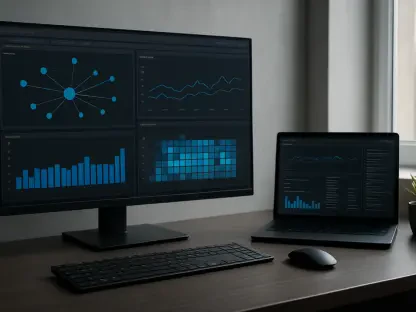
To manage this complexity, Microsoft Defender for Cloud serves as a powerful centralized dashboard for visualizing security alerts across AWS, Azure, and GCP. The August 2026 update significantly expanded its reach, allowing it to ingest telemetry from 90 additional resource types, including specialized database and analytics services. By connecting all three clouds to Defender, security operations centers (SOC) can identify cross-cloud attack patterns that might otherwise go unnoticed. For instance, an attacker might use a compromised identity in AWS to gain access to a connected GCP environment; a unified dashboard can correlate these seemingly disparate events into a single actionable incident. This centralized visibility is not just about reacting to threats but also about proactive compliance monitoring. Defender can assess all connected resources against industry standards like CIS or NIST, providing a unified compliance score that covers the entire multi-cloud estate. This level of oversight is mandatory in 2026 for enterprises operating in regulated industries where a single security lapse in a secondary cloud can have massive legal and financial consequences.
7. Build Kubernetes Clusters on All Clouds Using Terraform
Using a single Terraform script to launch EKS (AWS), AKS (Azure), and GKE (GCP) simultaneously is the most efficient way to ensure consistency across a multi-cloud environment. In 2026, the use of infrastructure-as-code is no longer optional for complex deployments; it is the only way to manage the hundreds of resources required for a resilient Kubernetes setup. By defining all three clusters in one codebase, engineering teams can apply uniform tagging, networking configurations, and versioning across all providers. Terraform 1.9 and later versions offer enhanced support for multi-provider projects, allowing for the easy passing of outputs from one cloud’s resources as inputs to another. For example, the VPC ID of an AWS environment can be used to configure the endpoint for a cross-cloud database connection in GCP within the same execution plan. This unified approach eliminates the “configuration drift” that occurs when clusters are managed through separate scripts or manual console interventions, ensuring that the production environment exactly matches the intended architecture.
Furthermore, a centralized Terraform codebase facilitates the implementation of common governance and policy-as-code. Tools like Open Policy Agent (OPA) can be integrated into the Terraform pipeline to validate that every cluster, regardless of the cloud provider, meets specific security and cost-control requirements before it is provisioned. This might include ensuring that all clusters are deployed in approved regions, use encrypted storage, or have specific logging configurations enabled. As the clusters are built, Terraform can also manage the installation of core add-ons, such as ingress controllers, service meshes, and monitoring agents, using a consistent set of Helm charts. This ensures that the operational experience for developers is identical, whether they are deploying to EKS, AKS, or GKE. In 2026, this level of abstraction is vital for developer productivity, as it allows teams to focus on writing code rather than navigating the subtle differences in how each cloud provider implements its managed Kubernetes service.
8. Run Your Application on All Three Clusters
Combining the access credentials for all three clusters into one configuration file is the final step in creating a truly portable workload. By merging the kubeconfig files for EKS, AKS, and GKE, an operator can use a single command-line context to manage deployments across the entire multi-cloud mesh. In 2026, this is often automated through CI/CD pipelines that handle the authentication and context switching behind the scenes. Once the connectivity and identity layers are verified, the same application manifest can be deployed to every cluster. This deployment serves as the ultimate test of the multi-cloud infrastructure; it requires that the container registry is accessible from all clouds, that the service accounts have the correct federated permissions, and that the underlying networking allows for health checks and service discovery. If a pod can successfully reach a “healthy” status and serve traffic on all three platforms, it confirms that the complex web of interconnects and identity trusts is functioning as intended.
Verifying that the application is “healthy” on every platform involves more than just checking if a process is running; it requires deep probing of the application’s dependencies. A truly multi-cloud application might reside in AWS but need to pull data from a GCP Spanner database or authenticate users against Azure Active Directory. During this phase, engineers must monitor readiness and liveness probes closely to ensure that cross-cloud latency does not cause timeouts or performance bottlenecks. In 2026, service meshes like Istio or Linkerd are frequently used to provide an additional layer of abstraction, offering advanced traffic management features like canary deployments and circuit breaking across the multi-cloud clusters. These tools provide the granular visibility needed to understand how traffic flows between different clouds and to identify any points of failure in the interconnect. Successfully running a workload across three different providers is a significant technical milestone, demonstrating a level of operational maturity that provides true resilience against provider-specific failures.
9. Manage All Operations through AWS Systems Manager
Registering your Azure and GCP virtual machines within AWS Systems Manager is a highly effective way to centralize administrative tasks in a multi-cloud world. AWS Systems Manager (SSM) provides a unified user interface that allows for the management of compute resources regardless of where they are physically located. In 2026, this hybrid management capability has become a standard for organizations that want to avoid the overhead of learning and maintaining separate operations tools for every cloud. By installing the SSM agent on Azure VMs and GCP instances and using the “hybrid activations” feature, these external resources appear in the AWS console as “managed instances.” This allows administrators to perform a wide range of tasks—such as executing remote commands, collecting software inventory, and applying OS patches—across their entire fleet using a single set of AWS tools and IAM permissions. It simplifies the operational burden significantly, turning what would be three separate maintenance windows into a single, coordinated process.
This centralized management is particularly valuable for maintaining a consistent security and compliance posture. SSM Patch Manager can be used to define a single patching baseline that is then applied to all managed instances across AWS, Azure, and GCP, ensuring that critical security updates are installed uniformly. Similarly, SSM State Manager can enforce specific configurations, such as ensuring that a particular security agent is always running or that unauthorized software is removed. In 2026, the integration of SSM with other AWS services like CloudWatch and EventBridge allows for the creation of sophisticated automation workflows that can respond to events in any cloud. For example, if a GCP instance fails a health check, an SSM runbook can be automatically triggered to collect logs and attempt a restart. By using AWS as the primary operations screen, teams can reduce the cognitive load on their engineers and ensure that no resource is left unmanaged or unpatched simply because it resides in a secondary cloud.
10. Evaluate Backup Switching and Network Delays
Force a mock outage in one region to see how quickly your traffic moves to the others is the only way to prove that a multi-cloud architecture delivers on its promise of resilience. Theoretical failover plans often crumble under the weight of unforeseen dependencies or slow DNS propagation. In 2026, sophisticated teams conduct “Chaos Engineering” experiments where they intentionally disable the network link to a major cloud provider or shut down an entire region’s clusters to observe the system’s response. During these simulations, it is vital to measure the recovery time objective (RTO) and recovery point objective (RPO) to ensure they align with business requirements. Does the traffic shift automatically? Are the database replicas in the surviving clouds up to date? These are the questions that can only be answered through rigorous, live testing. Observing how the system handles a sudden surge in traffic on the remaining clusters also provides insights into whether the auto-scaling policies are aggressive enough to handle a total regional loss.
Measuring the network delays during these transfer events is equally important, as a failover that results in unusable latency is not a successful failover. Engineers must monitor the impact of rerouted traffic on application performance, checking for increases in lag that could frustrate users or cause downstream service failures. In 2026, the use of automated testing frameworks allows these mock outages to be conducted regularly, ensuring that the multi-cloud mesh remains resilient as the underlying infrastructure and applications evolve. This testing phase often reveals hidden bottlenecks, such as a single cross-cloud API call that suddenly becomes a performance killer when traffic is rerouted through a different hub. By identifying and fixing these issues in a controlled environment, organizations can avoid the panic and financial loss associated with a real outage. The goal is to reach a state where a cloud provider going dark is a non-event for the end-user, a feat that requires both a redundant architecture and the confidence gained through repeated, successful failover testing.
11. Organize Cross-Platform DNS and Service Finding
Setting up shared DNS records with very low “Time to Live” (TTL) settings is the linchpin of a successful cross-cloud failover strategy. In 2026, global server load balancing (GSLB) solutions from providers like Cloudflare, Akamai, or the cloud-native offerings like AWS Route 53 and Google Cloud DNS, are used to direct users to the healthiest and closest available region. By setting TTL values to 60 seconds or less, organizations ensure that if one cloud or region becomes unavailable, DNS records can be updated almost instantly to point traffic toward the remaining working environments. This prevents the “stuck traffic” problem where users are directed to a dead IP address for minutes or even hours due to cached DNS records. However, low TTLs must be balanced against the increased load on DNS servers; in 2026, modern DNS infrastructure is more than capable of handling this increased frequency of queries to provide the necessary agility for multi-cloud deployments.
Organizing service discovery across different clouds also requires a unified naming convention and a way for services in one VPC to resolve the private IP addresses of services in another. This is often achieved through DNS forwarding or the use of private DNS zones that are shared across the multi-cloud interconnect. For instance, a service in AWS should be able to resolve database.gcp.internal to its correct private IP in the GCP VPC. In 2026, service meshes have taken over much of this complexity, providing a sidecar-based service discovery mechanism that works seamlessly across cluster boundaries. This ensures that microservices can find each other regardless of which cloud they are running in, using logical names rather than hardcoded IPs. Establishing this consistent naming and resolution framework is essential for maintaining a clean architecture where the physical location of a service is transparent to the other components of the system. It also simplifies the process of migrating or scaling services between clouds, as the service discovery layer handles the plumbing of updating connections and routes.
12. Keep Track of the Complete Multi-Cloud Environment
Consolidate data from all three clouds into a single monitoring tool like Grafana to gain a comprehensive view of the entire network’s health. In a multi-cloud setup, having three different monitoring dashboards is a recipe for missed alerts and slow incident response. In 2026, the best practice is to pull metrics, logs, and traces from AWS CloudWatch, Azure Monitor, and Google Cloud Operations into a unified observability platform. This allows for the creation of “single pane of glass” dashboards that show the status of the entire cross-cloud mesh at a glance. By correlating metrics from different providers, engineers can identify performance issues that span multiple clouds, such as an increase in latency on the AWS-to-GCP interconnect that is affecting the response time of a web application in Azure. Using OpenTelemetry as a standardized data collection layer ensures that telemetry is consistent and portable, making it easier to switch monitoring backends or add new clouds to the mix in the future.
This holistic view is critical for catching performance issues before they cause downtime and for optimizing the cost of the multi-cloud environment. By watching the health of the entire network in one place, teams can identify underutilized resources or inefficient traffic patterns that are driving up egress costs. In 2026, AI-driven anomaly detection is frequently integrated into these monitoring tools, allowing the system to automatically flag unusual patterns—such as a sudden spike in cross-cloud traffic or a gradual drift in latency—that might indicate a configuration error or a pending hardware failure. This proactive approach to monitoring is the only way to manage the inherent complexity of a three-cloud network without a massive increase in staff. Ultimately, the goal of this final step is to provide the data-driven insights needed to continuously refine and improve the multi-cloud architecture. By the end of this twelve-step journey, the resulting network was a highly resilient, observable, and high-performing asset that allowed the organization to leverage the best of what every major cloud provider had to offer while maintaining complete control over their digital destiny.