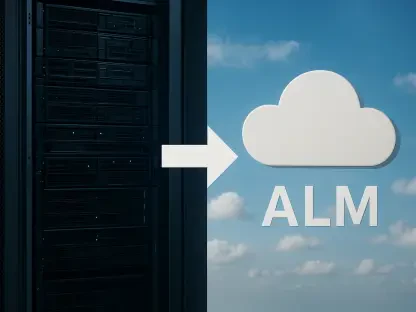

The persistent gap between deep operational records stored in legacy ERP systems and the high-speed processing requirements of modern analytical platforms is finally being bridged by the SAP Business Data Cloud Connect for BigQuery. This strategic alliance represents a fundamental shift in how large-scale organizations approach their most valuable asset: their data. For decades, the complexity of extracting meaningful insights from a dense SAP environment meant that decision-makers were often working with fragmented or outdated information. By establishing a direct link to Google Cloud’s ecosystem, companies are now moving away from the cumbersome data silos of the past and toward a unified landscape where every financial transaction, supply chain update, and customer interaction is immediately accessible for AI processing. This integration does not merely offer a faster way to move files; it provides a comprehensive framework for organizations to cultivate a truly data-driven culture that prioritizes accuracy and real-time execution across global operations.
Rethinking Data Mobility: Zero-Copy Architectures
The core innovation driving this partnership is the implementation of a zero-copy architecture that fundamentally eliminates the need for traditional data movement and replication. Historically, IT departments had to build and maintain complex Extract, Transform, Load processes, which often resulted in redundant storage costs and significant latency issues that hindered real-time responsiveness. With the current integration, data remains securely housed within the SAP environment while being accessible for complex queries in BigQuery as if it were stored locally. This approach minimizes the technical debt associated with managing massive data pipelines and ensures that the information being analyzed is always the most current version available. By bypassing the need for constant replication, enterprises can reduce their total cost of ownership while simultaneously increasing the speed at which their data science teams can test and deploy new models. This technological leap allows businesses to focus on deriving value rather than managing infrastructure complexities.
Beyond the technical aspects of storage and speed, the preservation of business semantics stands as a critical pillar of this new integration model. In traditional analytics, raw data often loses its inherent meaning when moved from its source system, requiring analysts to painstakingly reconstruct relationships and hierarchies manually. The SAP and Google Cloud partnership ensures that the complex logic defining a company’s operational reality—such as detailed financial structures or intricate supply chain dependencies—remains intact during the analytical process. This semantic continuity means that when an AI algorithm interacts with the data, it understands the specific context of a record, whether it pertains to a procurement order or a regional sales forecast. This level of contextual awareness is essential for creating reliable machine learning models that do not produce skewed or irrelevant results. By maintaining the integrity of these business definitions, organizations can trust that their AI-driven insights are deeply rooted in the actual rules that govern their daily corporate activities.
Empowering Autonomous Agents: Real-Time Business Intelligence
The emergence of agentic AI represents the next frontier in corporate automation, and this integration provides the essential data foundation required for its success. Unlike basic chatbots that simply retrieve information, autonomous agents are designed to perform complex business tasks by synthesizing real-time data from multiple sources and making informed decisions without human intervention. For example, an intelligent agent can now monitor live manufacturing signals within an SAP instance while simultaneously cross-referencing external logistics data and market demand trends in BigQuery. If a disruption occurs in a regional warehouse, the agent can automatically trigger a re-routing of procurement orders to ensure continuity in the supply chain. This shift from passive observation to active execution requires a level of data synchronicity that was previously impossible to achieve. By removing the barriers between operational records and analytical tools, businesses are enabling a new class of AI that acts as a proactive participant in the enterprise rather than just a reporting tool.
Bridging the gap between operational systems and advanced analytical platforms is democratizing data access for decision-makers at every level of the organization. In the current economic climate, waiting for overnight batch processing or “day-old” reports is no longer a viable strategy for maintaining a competitive edge in global markets. The ability to leverage real-time signals allows managers to respond to sudden shifts in consumer behavior or unexpected volatility in the price of raw materials with unprecedented agility. Furthermore, this unified data landscape encourages cross-functional collaboration, as teams from finance, marketing, and logistics can all work from a single, consistent source of truth. The resilience of an organization is directly tied to its ability to process and act upon information quickly, and this integration provides the necessary infrastructure to scale these capabilities across the entire enterprise. As more departments gain direct access to these powerful analytical tools, the pace of innovation accelerates, leading to more creative solutions for long-standing operational challenges.
Validating Integration: Real-World Industrial Applications
The practical benefits of this integration are already becoming evident in the industrial sector, where companies like the automotive manufacturer ElringKlinger are leading the way. By utilizing BigQuery as a sophisticated analytical layer on top of their existing SAP environment, they have managed to achieve comprehensive visibility into their manufacturing processes without the need for a massive and costly migration project. This strategic choice allowed the organization to protect its long-term investments in legacy systems while simultaneously adopting cutting-edge conversational AI to streamline internal workflows. The implementation demonstrates that modernization does not always require a “rip and replace” approach; instead, it can be achieved through intelligent connectivity and the layering of modern cloud services. This real-world application proves that the integration can deliver immediate operational efficiency by providing shop-floor managers with the insights they need to optimize production cycles and reduce waste. Such successes are encouraging other manufacturers to reconsider how they manage their data architectures for future growth.
Global consultancy firms including Accenture, KPMG, and PwC have noted that this integration is pivotal for moving AI initiatives from experimental laboratory settings into full-scale production. These industry leaders emphasize that the true power of AI is unleashed only when internal corporate financial data is combined with external datasets, such as global Google Trends or detailed geospatial information. This synthesis provides the groundwork for creating “intelligent agents” that possess a holistic understanding of both the internal business environment and the external world. By anchoring AI projects in a unified data strategy, companies can ensure that their technological investments translate into concrete business outcomes rather than remaining siloed as technical curiosities. The consensus among these experts is that the ability to blend disparate data sources within a single analytical environment is the primary differentiator for enterprises that will thrive in the coming years. This shift toward a more integrated approach reflects a broader trend of viewing data as a strategic asset that must be actively managed to drive long-term value and organizational transformation.
Strategic Path: Scalable AI Adoption
Strategic flexibility remains a top priority for large-scale enterprises that operate across complex, multi-cloud environments, and the rollout of this service is designed to accommodate that reality. While the connection is naturally optimized for Google Cloud, it remains versatile enough to support SAP instances running on other major platforms such as Amazon Web Services. This adaptability is crucial for multinational corporations that may have different regional operations utilizing various cloud providers or on-premises data centers. The planned expansion of support for Microsoft Azure further underscores the commitment to providing a truly interoperable data ecosystem for the global market. Furthermore, the availability of these services across North America, Europe, and the Asia-Pacific region ensures that localized data residency requirements and performance standards are met regardless of where the business operates. This global infrastructure provides the necessary scale for companies to deploy their AI strategies consistently on a worldwide basis, allowing for a standardized approach to data governance and security while maintaining the flexibility to adapt to regional market needs.
The integration of SAP and Google BigQuery provided a clear blueprint for enterprises that sought to modernize their data strategies without disrupting core operations. Organizations that adopted these zero-copy architectures realized that the path to effective AI implementation required a fundamental shift in how data was accessed and interpreted. To capitalize on these advancements, IT leaders focused on auditing their existing SAP schemas to identify which high-value business semantics were most critical for their AI initiatives. They also prioritized the development of governance frameworks that ensured the security of live data streams while allowing data scientists the freedom to experiment with external datasets. These proactive steps moved the conversation away from basic data migration and toward the creation of sophisticated, agent-based systems that drove measurable efficiency. By choosing to integrate rather than simply move data, these companies established a resilient foundation that supported continuous innovation and long-term agility. This transition proved that the most successful digital transformations were those that bridged the gap between legacy reliability and modern cloud-native capabilities.