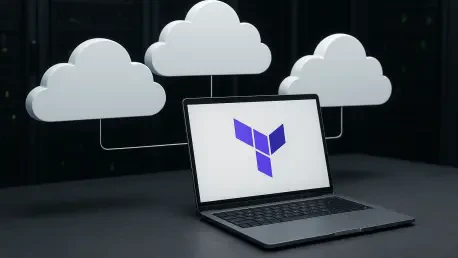

Automated validation and linting processes are essential for catching syntax errors and deprecated resource arguments before they can impact production cloud environments. As organizations in 2026 navigate a landscape where digital sovereignty and vendor redundancy have become non-negotiable, the ability to orchestrate resources across Amazon Web Services, Microsoft Azure, and Google Cloud Platform from a single control plane is a critical competitive advantage. Managing these environments independently often leads to configuration drift and security inconsistencies that can compromise the integrity of a global application. By adopting a unified Infrastructure as Code approach, engineering teams can standardize their deployment workflows, ensuring that every resource—from a simple storage bucket in Sydney to a complex Kubernetes cluster in Northern Virginia—adheres to the same architectural standards and compliance policies. This centralized management not only reduces the operational overhead associated with multi-cloud strategies but also empowers developers to experiment across different providers without the friction of learning platform-specific syntax for every new project.
The shift toward multi-cloud architectures is largely driven by the need for specialized services that individual providers offer, such as Google Cloud’s advanced data analytics, Azure’s deep integration with enterprise productivity suites, and AWS’s extensive global infrastructure footprint. However, the sheer variety of resource types and pricing models across these platforms can easily overwhelm teams that lack a structured automation strategy. Terraform acts as a bridge, providing a declarative language that translates high-level intentions into provider-specific API calls. This abstraction does not eliminate the need to understand the underlying cloud primitives, but it does harmonize the lifecycle management of those primitives. As cloud spending continues to grow at an accelerated pace in 2026, reaching record highs across the Asia-Pacific region, the demand for engineers who can seamlessly pivot between these ecosystems has never been higher. Mastering the deployment of a synchronized multi-cloud stack is the first step toward building truly resilient, cloud-agnostic systems that can survive localized outages and adapt to changing market conditions.
1. Set up Terraform and the Three Cloud Command-Line Interfaces
The foundation of any successful multi-cloud deployment begins with the local environment, where the necessary binaries must be installed and kept up to date to ensure compatibility with the latest provider features. In 2026, the Terraform CLI has reached version 1.10.x, introducing enhanced performance for large state files and improved error reporting for complex module dependencies. On a macOS system, using a package manager like Homebrew simplifies this process, allowing for a single command to fetch the Terraform binary along with the AWS, Azure, and Google Cloud SDKs. For Linux users, the transition to the most recent stable repositories is equally vital, particularly as the AWS CLI v1 has reached its end-of-life, making the move to v2 mandatory for security updates. Windows developers typically rely on Winget or direct installers, ensuring that all binaries are correctly added to the system’s execution path for seamless command-line access during the provisioning phase.
Beyond the initial installation, verifying the versions of these tools is a crucial step that prevents obscure bugs during the initialization of provider plugins. Running a version check for each CLI confirms that the local machine is ready to handle the authentication protocols and resource schemas required by the major cloud vendors. In 2026, the interoperability between these tools has improved, yet strict version pinning remains a best practice. For instance, the Azure CLI now requires specific dependencies for managing Entra ID resources, while the Google Cloud SDK has streamlined its component management to handle larger telemetry data sets. By standardizing these versions across a development team, organizations can avoid the “it works on my machine” syndrome, where a successful deployment in a local environment fails when moved to a shared CI/CD pipeline due to subtle differences in how the CLI interprets local configurations.
Maintaining a clean installation environment also involves periodically clearing out old cached provider plugins that can occupy significant disk space and lead to version conflicts. In the context of 2026 workflows, many engineers utilize a global plugin cache directory to speed up the terraform init process across multiple projects. This is especially useful when working with the large provider files required for AWS, Azure, and GCP, which can each exceed several hundred megabytes in size. Furthermore, setting up shell aliases for frequently used commands can enhance productivity, though care must be taken to ensure these aliases do not mask important error messages or warnings from the underlying binaries. Once the tooling is verified and the environment is stable, the focus can shift to establishing the secure communication channels needed to interact with each cloud’s respective management API.
2. Log in to AWS, Azure, and GCP
Authentication in a multi-cloud environment requires a multifaceted approach to handle the distinct security models of each provider while maintaining a high level of security. For AWS, the standard procedure involves configuring credentials through the CLI by providing an access key and secret key associated with an IAM user. However, in 2026, the industry has largely shifted toward short-lived credentials and role-based access, often facilitated by AWS IAM Identity Center. This allows developers to authenticate via a web portal, which then injects temporary session tokens into the local environment, significantly reducing the risk of long-term credential leakage. Verifying the current identity through the sts get-caller-identity command ensures that the session is active and that the engineer has the necessary permissions to begin provisioning resources in the specified region, such as Sydney or Melbourne.
Azure authentication typically utilizes an interactive login process where the az login command opens a browser window for a single sign-on experience. Once authenticated, it is essential to set the correct subscription context, as many enterprise accounts have access to dozens of different billing units. In 2026, Azure has tightened its security posture, requiring multi-factor authentication for almost all administrative actions, even those initiated via the CLI. For automated systems or local development that requires more stability than an interactive session, creating a service principal with a client secret or certificate is the preferred method. This service principal is then mapped to a specific scope, such as a resource group, ensuring that Terraform only has access to the components it is intended to manage, thereby adhering to the principle of least privilege across the entire Azure footprint.
Google Cloud Platform offers a unique authentication flow through its application-default credentials (ADC) system, which Terraform uses to identify the active project and user. By running gcloud auth application-default login, an engineer creates a local JSON file that the Google provider automatically detects during the planning phase. Additionally, it is necessary to enable specific APIs within the GCP project, such as the Compute Engine and Cloud Storage APIs, before Terraform can successfully create those resources. In 2026, the integration between GCP’s identity management and third-party tools has become more seamless, yet it remains important to explicitly define the project ID within the local configuration to prevent resources from being accidentally deployed to the wrong account. With all three clouds successfully authenticated, the local machine acts as a unified bridge between the different provider infrastructures.
3. Organize the Codebase Folder Hierarchy
A well-structured directory is the backbone of any scalable multi-cloud project, as it prevents the “spaghetti code” that often arises when trying to manage three different cloud providers in a single file. In 2026, the consensus among site reliability engineers is to utilize a modular approach where each cloud provider’s networking and compute resources are housed in dedicated subdirectories. The root of the project remains clean, containing only the high-level orchestration files like main.tf, variables.tf, and providers.tf. This separation of concerns allows teams to update the AWS networking logic without the risk of accidentally introducing syntax errors into the Azure or GCP configurations. Moreover, a modular structure facilitates the reuse of code across different environments, such as staging and production, by simply calling the same modules with different input parameters.
Inside the modules directory, each cloud-specific folder should contain its own set of main.tf, variables.tf, and outputs.tf files. This self-contained design ensures that every module is an independent unit of work that can be tested and versioned separately. For example, the aws-network module might focus entirely on VPC creation and subnet allocation, while the azure-network module handles resource groups and virtual networks. In 2026, as infrastructure grows more complex, some organizations further subdivide these modules by function, such as separating networking from database provisioning. However, for a standard multi-cloud deployment, a provider-based split is usually sufficient to maintain clarity. This organization also makes it easier for security auditors to review the code, as they can quickly locate the security group and firewall rules for each specific cloud platform within a predictable file structure.
The use of a centralized terraform.tfvars file in the root directory allows for the management of environment-specific data in one place. This file typically contains region selections, project IDs, and environment tags that are then passed down into the individual modules. In contrast, sensitive information should be handled through environment variables or a dedicated secrets manager to keep it out of the version control system. By 2026, most advanced teams have integrated their directory structure with a Git-based workflow, where changes to specific modules trigger targeted testing pipelines. This ensures that a change to a GCP storage bucket doesn’t require a full re-validation of the entire AWS and Azure stack. A logical folder hierarchy is not just about aesthetics; it is a fundamental requirement for maintaining operational sanity in a complex, multi-provider landscape.
4. Initialize the Required Providers
Initializing providers is the step where Terraform downloads the necessary binaries to communicate with the AWS, Azure, and GCP APIs. In the providers.tf file, engineers must specify the exact version of each provider to ensure that the deployment remains stable over time. By 2026, the HashiCorp Terraform Registry has standardized on a decentralized model that allows for faster downloads and better verification of provider signatures. Pining the versions for the AWS, AzureRM, and Google providers prevents a scenario where a provider update introduces a breaking change that halts the entire deployment pipeline. For instance, a new version of the Azure provider might change the required arguments for a virtual machine, and without a version lock, an automated apply could fail during a critical production update.
The terraform init command is the trigger that parses the configuration files and fetches the required plugins from the registry. During this process, Terraform also creates a .terraform.lock.hcl file, which records the specific versions and hashes of the providers used in the current environment. In 2026, this lock file is considered a critical artifact that must be committed to the version control system. It ensures that every member of the team and every CI/CD runner is using the exact same binary versions, providing a consistent experience across the entire development lifecycle. If a team member attempts to run a plan with a different version of a provider, Terraform will throw an error, forcing a deliberate update to the lock file and ensuring that version changes are intentional and documented.
Beyond the basic download of plugins, the initialization phase also sets up the backend configuration, which is where the state of the infrastructure is stored. In a multi-cloud context, this often involves a transition from local state storage to a remote backend to support team collaboration. Terraform 1.10.x has improved the way it handles initialization for projects with many providers, parallelizing the download process to save time for developers. Furthermore, the initialization phase is an excellent time to verify that the local machine has the correct permissions to access the provider registry, which can sometimes be blocked by corporate firewalls or proxy servers. Once the command completes successfully, the environment is fully equipped with the specialized logic needed to translate HashiCorp Configuration Language into the specific API calls required by each cloud giant.
5. Set up Global and Provider-Specific Variables
Variables are the mechanism that makes Terraform code dynamic and adaptable to different environments and regions without the need for manual code changes. In 2026, the use of strongly typed variables has become the standard, where every input is explicitly defined as a string, number, list, or map to prevent type-related errors during the planning stage. For a multi-cloud deployment, variables are often categorized into global values, such as the environment name (dev, staging, or prod), and provider-specific values like the GCP project ID or the Azure subscription ID. This distinction is important because it allows the root configuration to act as a controller, distributing relevant data to the specialized modules while keeping the internal logic of those modules hidden from the user.
Input validation rules, a feature that has seen significant enhancement by 2026, allow engineers to enforce naming conventions and value constraints directly within the variables.tf file. For example, a validation block can ensure that the environment variable only accepts specific values like “development” or “production,” or that an AWS region string follows the correct format. This proactive approach to data integrity prevents invalid configurations from ever reaching the cloud provider’s API, saving time and reducing the likelihood of partial failures. Additionally, marking variables as sensitive = true ensures that passwords, API keys, and other secrets are redacted from the console output during the plan and apply phases. This is a vital security measure in multi-cloud environments where state files and plan outputs are often shared across distributed teams.
The management of these variables is typically handled through a combination of default values and external files. While default values provide a fallback for optional settings, the terraform.tfvars file is the primary source of truth for a specific deployment instance. In 2026, many organizations also utilize environment variables prefixed with TF_VAR_ to inject secrets or dynamic data from their CI/CD pipelines. This layering of variable sources allows for a high degree of flexibility; for instance, a developer might use a local tfvars file for testing in their sandbox, while the production pipeline overrides those values with hardened secrets from a vault. Properly configured variables transform static infrastructure definitions into a versatile engine capable of standing up identical environments across the globe with minimal effort.
6. Construct the AWS Networking Component
Building the AWS portion of the multi-cloud stack involves defining a Virtual Private Cloud (VPC) that serves as the isolated network environment for all other resources. In the aws-network module, the engineer specifies a CIDR block, such as 10.0.0.0/16, which determines the IP range available for subnets. In 2026, the AWS provider has streamlined many of these networking tasks, but the fundamental need for public and private subnets remains a cornerstone of secure architecture. A public subnet, equipped with an Internet Gateway, allows resources to communicate with the outside world, while private subnets are typically reserved for databases and internal application servers. By utilizing Terraform’s aws_subnet and aws_internet_gateway resources, the entire network topology is documented as code, making it easy to replicate in different regions like Sydney or Tokyo.
Following the establishment of the network skeleton, the focus shifts to security and compute resources. A security group acts as a virtual firewall, controlling inbound and outbound traffic at the instance level. For a demonstration or a development environment, an engineer might open port 22 for SSH access, though in 2026, the use of AWS Systems Manager Session Manager has largely replaced the need for open SSH ports. The aws_instance resource is then used to provision a virtual machine, such as a t3.micro, within the public subnet. This instance is often tagged with the environment and project name, ensuring that it can be easily identified in the AWS Management Console and included in automated cost-tracking reports. This compute resource serves as the proof of concept, confirming that the VPC and subnets are correctly configured to support running workloads.
The final component of the AWS module is often an S3 bucket for object storage, which provides a durable and scalable way to store application data. In 2026, S3 buckets are created with several security features enabled by default, such as public access blocking and server-side encryption. Using Terraform to manage these buckets allows for the enforcement of consistent naming conventions, often incorporating the AWS account ID or a random string to avoid global naming collisions. By the time the AWS module is complete, it provides a functional microcosm of the cloud—networking, security, compute, and storage—all controlled by a few dozen lines of HCL. This modular approach ensures that the AWS-specific logic is entirely contained, preventing it from leaking into the configurations of Azure or GCP.
7. Construct the Azure and GCP Networking Components
Azure’s networking model differs from AWS in several key ways, starting with the requirement for a Resource Group to act as a logical container for all assets. In the azure-network module, the first step is to define this group, followed by a Virtual Network (VNet) and a subnet. Unlike AWS, Azure does not require an explicit Internet Gateway to be created and attached; outbound connectivity is often handled automatically by the platform, though inbound traffic still requires a Network Security Group (NSG). In 2026, Azure has introduced more granular control over VNet peering and private links, but the basic provisioning of a VNet remains a straightforward task in Terraform. An Azure virtual machine is then provisioned, requiring a separate network interface resource to be defined and linked to the VM, a step that distinguishes the Azure workflow from the more integrated instance creation in AWS.
Google Cloud Platform offers a global VPC model that is significantly different from the regional VPCs found in AWS and Azure. In the gcp-network module, a single VPC network can span multiple regions, with regional subnets added as needed. This architecture simplifies cross-region communication but requires careful management of IP ranges to avoid overlaps. In 2026, the GCP provider in Terraform has been optimized to handle the creation of these networks with minimal latency. A google_compute_instance is then added to the subnet, often utilizing the e2-micro machine type for cost-efficiency in testing environments. GCP’s emphasis on projects and labels allows for easy organization and billing tracking, which Terraform handles through the project-level provider configuration and resource-specific labels.
Storage in Azure and GCP also follows platform-specific paradigms that Terraform abstracts into manageable resource blocks. Azure utilizes Storage Accounts, which can contain multiple containers for blobs, files, and tables, while GCP uses Cloud Storage buckets that are similar in concept to AWS S3. In 2026, both providers have enhanced their storage security, with GCP offering uniform bucket-level access and Azure pushing for Entra ID-based authorization. By defining these storage resources in their respective modules, an engineer ensures that the multi-cloud infrastructure has a place to store data regardless of which provider is hosting the primary compute workload. This symmetry between the three modules allows the root configuration to treat each cloud as an equal participant in the global infrastructure strategy.
8. Connect the Modules Within the Primary Configuration File
The root main.tf file acts as the orchestrator, bringing together the independent AWS, Azure, and GCP modules into a single, cohesive deployment. This is achieved through module blocks that reference the source directories established earlier in the project. By calling each module from the root, the engineer can pass the necessary variables—such as region names, project IDs, and environment tags—from the top level down to the specialized resources. In 2026, the use of the source argument with local paths is common for development, while production environments often reference versioned modules stored in a private Terraform Registry or a Git repository. This connection ensures that when terraform apply is executed, all three clouds are provisioned in parallel, significantly reducing the total time required to stand up a multi-cloud stack.
Passing data between modules is another critical function of the root configuration, enabling cross-cloud workflows that would otherwise be impossible. For instance, the output of the AWS module, such as a public IP address or an S3 bucket name, can be used as an input for a monitoring tool provisioned in the GCP module. In 2026, this interoperability is a hallmark of advanced cloud-native design, where workloads are distributed based on cost, latency, or feature availability. The root file also serves as the location where the environment-wide tags are defined, ensuring that every resource created across all three clouds shares the same metadata for billing and ownership tracking. This centralized control point simplifies the management of the infrastructure, as an engineer only needs to look at the root main.tf to understand the high-level architecture of the entire multi-cloud system.
Furthermore, the root configuration allows for the implementation of conditional logic to determine which clouds should be deployed in a given scenario. Using the count or for_each meta-arguments, an engineer can design the codebase to only provision Azure resources if a specific flag is set in the variables. In 2026, this flexibility is used by many companies to optimize their cloud spend, only deploying to multiple providers for production workloads while keeping development environments confined to a single, cheaper provider. This modular and connected approach means that the infrastructure is not a rigid monolith but a flexible system that can grow and shrink as needed. By unifying the three distinct cloud provider modules through the root configuration, Terraform creates a single source of truth for the entire digital estate.
9. Configure a Remote State Backend
Remote state management is the feature that transforms Terraform from a personal tool into a collaborative platform for entire engineering teams. In 2026, local state files are viewed as a significant risk because they lack the locking mechanisms and versioning history needed to prevent simultaneous updates by different users. By configuring a remote backend, typically using an AWS S3 bucket combined with a DynamoDB table for state locking, teams can ensure that only one person or process is modifying the infrastructure at any given time. The state file acts as a detailed map of the current infrastructure, and the remote backend ensures that this map is always accurate and accessible to everyone with the correct permissions. This is especially important in multi-cloud environments where the state file tracks resources across three different sets of APIs.
Setting up the backend involves a two-step process: first, creating the storage infrastructure manually or via a separate Terraform bootstrap script, and second, adding the backend configuration block to the root terraform.tf or backend.tf file. In 2026, security is a primary concern for state storage, as these files often contain sensitive information about the network topology and resource configurations. Therefore, enabling server-side encryption and strict access control on the S3 bucket is a mandatory requirement. Additionally, enabling bucket versioning allows for the recovery of previous state versions in the event of a corruption or an accidental deletion. This safety net is vital for maintaining the continuity of operations, particularly when managing complex systems that would be difficult to reconstruct from scratch without a valid state file.
The transition to a remote backend also enables the use of Terraform workspaces, which allow for the management of multiple environments—such as dev, staging, and prod—within the same configuration. In 2026, workspaces are frequently used to isolate the state of different deployment tiers, ensuring that an experimental change in the development workspace cannot accidentally impact the production infrastructure. This isolation is reinforced by the remote backend’s locking mechanism, which prevents a CI/CD pipeline and a developer from attempting to apply changes to the same environment simultaneously. By moving the state to a centralized and secure location, organizations can build a foundation for reliable, team-based infrastructure management that scales alongside their multi-cloud ambitions.
10. Execute the Plan and Deployment Phases
The plan phase is the most critical part of the Terraform workflow, providing a transparent preview of exactly what changes will be made to the cloud environments before they occur. By running terraform plan -out=tfplan, an engineer generates an execution plan that details the resources to be created, modified, or destroyed across AWS, Azure, and GCP. In 2026, the output of this plan has become more sophisticated, with enhanced visual aids and warnings for potential cost increases or security policy violations. Reviewing this output allows the team to catch mistakes—such as an incorrectly sized VM or a storage bucket in the wrong region—without incurring any actual cloud costs or downtime. This “dry run” capability is what gives teams the confidence to move fast while maintaining strict control over their infrastructure.
Once the plan is approved, the deployment moves into the apply phase, where Terraform communicates with the provider APIs to bring the real-world infrastructure into alignment with the configuration. Executing terraform apply "tfplan" ensures that only the changes reviewed in the previous step are implemented, providing a deterministic outcome. In 2026, the speed of these operations has improved as cloud providers have optimized their administrative APIs, yet a full multi-cloud deployment can still take several minutes as physical resources like virtual machines and network interfaces are provisioned and initialized. During this time, the remote state lock prevents any other modifications, ensuring that the state file remains a perfect reflection of the physical reality of the cloud environments.
Post-deployment, Terraform provides a summary of the actions taken, confirming that the resources were created successfully. If an error occurs during the apply phase—perhaps due to a cloud-side capacity issue or a transient network failure—Terraform records the progress it did make in the state file, allowing the engineer to fix the issue and resume the deployment from where it left off. In 2026, this resilience is a major reason why Terraform remains the dominant tool for multi-cloud orchestration. After a successful apply, the infrastructure is live and ready for use, with all connections between the various providers established according to the logic defined in the HCL code. This transition from a text-based plan to a functioning global network is the culmination of the Infrastructure as Code process.
11. Generate Outputs for External Consumption
Outputs in Terraform serve as the interface between the provisioned infrastructure and the other tools or team members that need to interact with it. By defining an outputs.tf file, engineers can expose specific information, such as the public IP addresses of virtual machines, the names of storage buckets, or the connection strings for databases. In 2026, these outputs are often structured as JSON to allow for easy parsing by automated scripts, monitoring systems, or external application configurations. For instance, a CI/CD pipeline might use the outputted IP address of an AWS instance to run a post-deployment smoke test, or a developer might use the GCP bucket name to configure a local data upload script. Outputs bridge the gap between the “black box” of the infrastructure and the practical needs of the software development lifecycle.
In a multi-cloud setup, outputs are particularly useful for creating a unified summary of the disparate resources. Instead of having to log into three different cloud consoles to find the necessary connection details, a team member can simply run terraform output to see a consolidated view of the entire stack. In 2026, it is common to see outputs that combine data from multiple providers into a single map or object, providing a holistic view of the global system. This capability simplifies the onboarding of new team members and reduces the time spent searching for resource identifiers. Furthermore, sensitive outputs can be marked as such, preventing them from being displayed in the console while still making them available for programmatically consumption by authorized tools like HashiCorp Vault.
Beyond simple values, outputs can also be used to pass data between different Terraform configurations using the terraform_remote_state data source. This allows for a “layered” infrastructure design where the networking team manages the VPCs and VNets in one project, and the application team consumes those networking details as outputs in their own Terraform projects. In 2026, this pattern is essential for large-scale enterprise deployments where multiple teams must collaborate without stepping on each other’s toes. By carefully designing the output schema, an organization can create a clean, documented interface for their entire cloud platform. This turns the infrastructure into a set of services that can be easily queried and utilized by any part of the business, fostering a culture of transparency and self-service.
12. Audit, Clean, and Verify the Code
The final step before committing infrastructure code to a shared repository is a rigorous auditing and verification process to ensure quality and security. Terraform provides built-in tools like terraform fmt and terraform validate that should be part of every developer’s workflow. The fmt command automatically reformats the code to follow standard HCL style conventions, ensuring that the entire codebase remains readable and consistent regardless of who wrote a specific module. In 2026, having clean, standardized code is not just a matter of preference but a requirement for automated linting tools that scan for security vulnerabilities. The validate command then checks the internal consistency of the configuration, catching syntax errors, missing variables, or incorrect provider arguments before a plan is even generated.
In addition to the native Terraform tools, the multi-cloud landscape of 2026 relies heavily on third-party linters and security scanners like TFLint and Checkov. These tools analyze the code for best practices, such as ensuring that storage buckets are encrypted and that security groups do not have overly permissive firewall rules. For instance, a linter might flag an Azure NSG rule that allows all traffic on port 22 as a security risk, forcing the developer to narrow the allowed IP range. By integrating these checks into a pre-commit hook or a CI pipeline, organizations can enforce a high bar for code quality, preventing insecure or inefficient configurations from ever reaching the cloud. This proactive auditing is essential for maintaining a secure multi-cloud posture across the different security models of AWS, Azure, and GCP.
Cleaning the code also involves removing any unused variables, orphaned resources, or commented-out blocks that can clutter the files and lead to confusion. In 2026, a “clean” codebase is seen as a prerequisite for maintainability, as it allows engineers to quickly understand the intent of the configuration. Regular refactoring of modules to reduce duplication and improve performance is also a key part of the verification phase. By the time the code passes all these checks, it is no longer just a set of instructions but a hardened, production-ready asset. This rigorous verification process builds trust in the automation, allowing the team to deploy changes with the knowledge that the code has been thoroughly vetted against both technical and organizational standards.
13. Monitor Costs and Implement Guardrails
As multi-cloud environments scale, the complexity of tracking expenditures across AWS, Azure, and GCP becomes a significant challenge that requires automated guardrails. In 2026, the integration of FinOps principles directly into the Terraform workflow is a standard practice, utilizing tools like Infracost to provide cost estimates for every proposed change. Before an engineer applies a plan, they can see exactly how much the new resources will add to the monthly bill, allowing for informed decisions and preventing “bill shock.” This transparency is crucial in a multi-cloud context where a minor configuration change in one provider can have unexpected financial implications. By setting up automated budget alerts and cost-allocation tags as part of the Terraform configuration, organizations can maintain a granular view of their cloud spend at all times.
Policy-as-code frameworks, such as HashiCorp Sentinel or Open Policy Agent (OPA), provide the necessary guardrails to ensure that infrastructure remains compliant with both internal and external regulations. In 2026, these policies are used to enforce rules like “all AWS instances must be in a specific region” or “no Azure storage account can have public access.” If a proposed Terraform plan violates one of these policies, the deployment is automatically blocked, forcing the engineer to remediate the issue. This automated enforcement reduces the burden on manual compliance audits and ensures that security and cost-saving measures are applied consistently across all three cloud providers. Guardrails turn organizational wisdom into executable code, protecting the business from human error and misconfigurations.
Implementing these guardrails also involves a robust tagging strategy that is applied uniformly to every resource in the multi-cloud stack. Tags for owner, environment, and cost-center allow the finance team to accurately attribute costs to specific projects or departments. In 2026, many organizations use Terraform to enforce the presence of these tags, failing the plan if the required metadata is missing. This data-driven approach to infrastructure management ensures that the cloud environment is not only technically sound but also financially transparent and operationally accountable. By combining cost monitoring with policy enforcement, teams can navigate the complexities of multi-cloud deployment with the assurance that they are staying within their budgetary and security boundaries.
14. Remove All Provisioned Resources
The ability to safely and completely tear down infrastructure is just as important as the ability to build it, particularly in development and testing environments where resources are only needed temporarily. Engineers recognized that provisioning was only half the battle, leading to a standardized destruction phase that ensures no orphaned resources continue to incur costs. Executing terraform destroy triggers a comprehensive process where Terraform identifies every resource tracked in the state file and removes them in the correct order, respecting the dependencies between networks, compute instances, and storage. In 2026, this command is used to maintain a clean slate between testing cycles, preventing the accumulation of “cloud sprawl” that can bloat budgets and complicate future deployments across AWS, Azure, and GCP.
During the destruction phase, Terraform provides a final preview of the resources to be deleted, allowing for a last-minute check to ensure that no production assets are accidentally caught in the process. This is why the use of workspaces and separate state files for different environments is so critical; it provides a logical boundary that keeps the destroy command scoped to the intended targets. Once the destruction is complete, the state file is updated to reflect that the infrastructure no longer exists, and the remote state lock is released. In 2026, this clean-up process is often automated as part of a temporary environment’s lifecycle, where a CI/CD job stands up a stack for a pull request review and then tears it down once the code is merged, ensuring maximum resource efficiency.
Looking forward, the next steps for any organization mastering multi-cloud Terraform involve moving beyond basic resource provisioning and into the realm of platform engineering. This includes the development of standardized module libraries that internal teams can consume, the integration of advanced drift detection to catch manual changes in the cloud consoles, and the expansion of policy-as-code to cover complex security requirements. In 2026, the goal is to create a seamless, self-service infrastructure experience where developers can request the resources they need and have them provisioned automatically across the best possible cloud provider. By establishing a solid foundation with Terraform, teams are well-positioned to take advantage of the ever-evolving cloud landscape, ensuring their applications remain resilient, cost-effective, and ready for whatever technological shifts the future may bring.