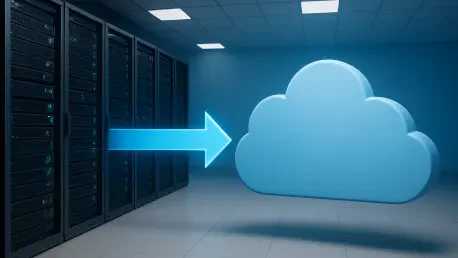

Programmatic volatility means that an ISV might start a migration under one set of incentive rules only to find the eligibility thresholds have shifted mid-project. This high-stakes transition involves moving an entire product suite and customer base from competing providers like AWS or GCP to Microsoft Azure. While the prospect of unlocking the Microsoft commercial ecosystem is enticing, the strategic move is rarely as simple as a technical update. It is a calculated business maneuver designed to access co-sell economics, which include migration funding, participation in the Microsoft Azure Consumption Commitment program, and direct engagement with a global sales force. For most Independent Software Vendors, the allure of these incentives is balanced against a rigorous, year-long commitment that places immense pressure on engineering and finance teams. This shift requires a deep understanding of the systemic risks and hidden operational costs that frequently go unmentioned in high-level marketing presentations. Success requires navigating a landscape where the promise of growth is tethered to a grueling implementation phase.
Technical Barriers and Infrastructure Re-platforming
One of the most persistent misconceptions in the cloud industry is the idea that moving between major providers is a straightforward technical swap, yet the reality involves profound architectural differences. When transitioning from AWS Lambda to Azure Functions, for example, engineering teams often encounter subtle behavioral nuances that can significantly impact the performance and reliability of the application. These differences extend deep into the security layer, as moving from AWS IAM to Microsoft Entra ID requires a complete overhaul of the identity and permission architecture. This is not merely a reconfiguration but a fundamental reconstruction of how users and services interact with the platform. Furthermore, teams must invest substantial resources into rewriting Infrastructure as Code scripts and updating CI/CD pipelines to align with Azure-specific tooling. The transition also necessitates re-instrumenting observability and monitoring tools to ensure full visibility within the new environment, adding layers of complexity to the workload.
The movement of data introduces a separate layer of financial and logistical complexity that can quickly erode the initial savings projected during the planning phase. Moving massive datasets from Amazon S3 to Azure Blob Storage often triggers significant data egress fees from the source provider, which acts as a financial penalty for departing their ecosystem. Beyond the cost of the data transfer itself, the transition requires meticulously orchestrated downtime windows and sophisticated change management protocols to minimize disruption for the end-user base. If the cutover is not handled with bespoke planning that addresses individual client needs, the Independent Software Vendor faces a high risk of customer churn. Many users view platform migrations as an unnecessary obstacle or a potential point of failure rather than a technological upgrade. Consequently, the engineering team must provide extensive support throughout the transition to ensure that the friction of the move does not drive valuable clients toward competitors who remain on more stable, familiar infrastructures.
Operational Expenses and the Dual-Cloud Burden
To maintain service reliability and ensure a seamless experience for the customer, most organizations adopt a blue/green deployment strategy during the migration process. This methodology necessitates running both the legacy cloud infrastructure and the new Azure environment simultaneously for a period that typically ranges from three to nine months. While this overlap is a critical component of risk mitigation, it creates a massive operational expenditure that can strain even the most robust financial forecasts. The company must shoulder the burden of double infrastructure costs, double licensing fees for third-party software, and double on-call engineering coverage to handle potential incidents in both environments. This parallel-run period represents a significant drain on resources that must be factored into the profit and loss statement from the very beginning of the project. Managing two disparate environments also increases the cognitive load on the operations team, as they must balance different sets of technical requirements and security protocols while the migration remains in progress.
The path to achieving the prestigious IP Co-sell status is further complicated by the race to meet the Azure Consumed Revenue threshold. To qualify for certain advanced partnership benefits, an Independent Software Vendor must generate at least $100,000 in revenue or marketplace sales within a rolling twelve-month window. This is a cumulative metric, and many organizations fail to realize that this revenue only begins to build once customers are successfully migrated and are actively utilizing workloads at scale. It is not an immediate outcome of the signing ceremony but a long-term goal that requires a steady and successful onboarding of the entire user base. Because of this lag, the financial benefits of being co-sell eligible often arrive much later than expected. The urgency to meet this threshold can lead to rushed migration schedules, which in turn increases the likelihood of technical errors and customer dissatisfaction. Balancing the need for rapid revenue generation against the technical requirements of a safe migration is a constant tension for leadership teams navigating the Azure ecosystem.
Strategic Resilience: Navigating Programmatic and Cash Realities
The landscape of partner programs within the Microsoft ecosystem is far from static, requiring a high degree of strategic agility from participating organizations. Programs such as App Accelerate or various marketplace incentives are subject to evolution every fiscal year, which begins on July 1. This means that a company might start its migration under one set of rules only to find that eligibility requirements or funding caps have shifted by the time the project reaches its conclusion. For example, recent consolidations of disparate incentive programs into more streamlined structures have forced some vendors to re-evaluate their financial models mid-cycle. This programmatic volatility necessitates constant monitoring of official updates and a flexible approach to budget management. Organizations that fail to account for these shifts may find themselves facing a funding gap that was not present at the project’s inception. Staying aligned with Microsoft’s evolving strategic priorities is essential for ensuring that the migration remains financially viable and that the expected support from the partner network continues.
One of the most critical operational truths often omitted from initial discussions is that migration funding typically operates on a reimbursement basis rather than providing advance payments. This structure forced many vendors in the recent past to cover all upfront engineering and infrastructure costs from their own capital reserves. The resulting cash-flow gap meant that companies did not see the actual financial benefits until the third or fourth quarter of the project cycle. Furthermore, the transition proved that a co-sell motion was never automatic; it required a separate, dedicated investment in building relationships with Microsoft sales teams and developing joint account plans. Successful vendors eventually discovered that the timeline for a true return on investment spanned between twelve and eighteen months. Ultimately, the transition to Azure became a technical milestone to be engineered toward rather than an incidental byproduct of the move. Organizations that adopted a disciplined, data-driven approach were the ones that mitigated churn and successfully leveraged the global reach of the Microsoft sales engine to achieve sustainable growth.