
Moving massive datasets into third-party cloud environments presents significant security risks that many organizations are no longer willing to accept for their AI workloads. This shift in sentiment has pushed the industry toward more localized and sovereign solutions, where control over proprietary information remains absolute. The introduction of the Cloudera Anywhere Cloud platform represents a strategic response to these growing concerns, specifically targeting the complex requirements of agentic AI. Unlike standard generative models that merely produce text or images, agentic AI operates as an autonomous participant in business workflows, necessitating a higher level of integration and security. By facilitating a seamless environment across public clouds, private data centers, and the network edge, the framework effectively dismantles the infrastructure bottlenecks that have historically stalled enterprise-level AI initiatives. This versatile approach ensures that high-stakes projects move from experimental labs to operational reality without the friction typical of massive data migrations.
The Infrastructure Headache: Navigating Fragmented Data
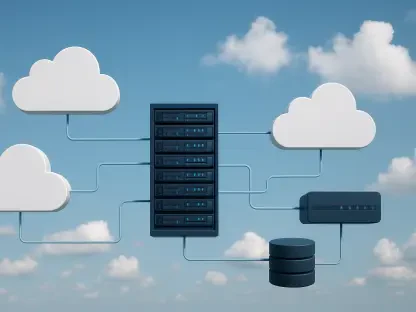
The current enterprise landscape is defined by a deep fragmentation of data, where critical information is rarely consolidated within a single repository. This dispersion often stems from a mixture of legacy infrastructure, varying security protocols, and geographical distribution, creating a “data silos” effect that paralyzes advanced analytics. Recent industry observations suggest that nearly three-quarters of IT executives identify these infrastructure constraints as the primary barrier to successful AI implementation. Consequently, businesses struggle to train models on representative datasets because the effort required to centralize that information is both cost-prohibitive and technically exhausting. Cloudera’s recent innovation addresses this by creating a fabric that stretches across these disparate locations, allowing the AI to reach the data where it resides rather than forcing the data to move. This strategy significantly reduces the risk of data corruption or loss during transfer while maintaining the operational continuity of existing legacy systems.
Beyond physical fragmentation, the regulatory environment has become increasingly stringent, particularly concerning data sovereignty and privacy. In regions such as the European Union, strict mandates require that personal and corporate data remain within specific borders, making centralized public cloud models a logistical impossibility for many global firms. This challenge is amplified for organizations in highly regulated sectors like healthcare or defense, where the security risks of external storage are non-negotiable. Cloudera Anywhere Cloud provides a solution by enabling AI to function within sovereign clouds and local private environments, ensuring that innovation does not clash with legal compliance. By utilizing an architecture that supports local processing, the platform allows enterprises to capitalize on the latest machine learning advancements without exposing themselves to the liability of international data transfers. This localized focus is essential for building trust in AI systems that handle sensitive intellectual property or customer data.
Evolution of Intelligence: From Chatbots to Autonomous Agents
There is a fundamental distinction between the basic generative AI tools that gained popularity in recent years and the sophisticated agentic systems that modern enterprises now prioritize. While simple chatbots excel at summarizing documents or generating creative content, agentic AI is designed to execute functional workflows, make decisions, and interact with other software systems autonomously. These agents require deep, real-time access to internal corporate data to understand context and perform tasks like automated supply chain adjustments or complex financial reconciliations. However, providing this level of access in a traditional cloud environment introduces significant latency and security vulnerabilities. Many organizations have found that moving massive amounts of proprietary information into a public cloud to fuel these agents is a strategic “non-starter.” Cloudera’s framework resolves this by allowing these agents to operate within the secure perimeter of the organization’s own infrastructure, thereby preserving the integrity of the data while still leveraging advanced AI.
Furthermore, traditional cloud platforms often struggle with the rapid evolution of artificial intelligence technology, as their upgrade cycles cannot always keep pace with the latest model requirements. This mismatch results in businesses being locked into older versions of software or facing exorbitant costs for high-performance hardware upgrades. Agentic AI, by its very nature, demands high-performance compute resources and the ability to pivot between different analytical engines as new methodologies emerge. Cloudera Anywhere Cloud bridges this gap by offering an identical software stack across every environment, ensuring that the same sophisticated agents can run on-premises or in a hybrid cloud without rewriting code. This consistency is vital for maintaining performance standards and ensuring that AI logic remains predictable as it scales across different business units. By decoupling the AI logic from the underlying hardware limitations, enterprises gain the flexibility to adopt new innovations the moment they are released, keeping them ahead of the technological curve.
Technical Foundations: Open Standards and Intelligent Orchestration
At the core of this new infrastructure is a technical architecture designed to simplify the “push-button” deployment of cloud-native tools wherever they are needed. The system utilizes a unified API and the Apache Iceberg open-standard table format to create what is essentially an open marketplace for corporate data. This choice is significant because it allows various analytics engines to connect to the data instantly, bypassing the need for time-consuming and expensive ETL processes. By standardizing the data format, Cloudera ensures that an AI agent can read and process information regardless of whether it was originally generated in a legacy database or a modern cloud application. This interoperability is a critical factor for organizations that need to integrate diverse data streams into a single, coherent AI strategy. It removes the technical debt associated with proprietary data formats and fosters an environment where data is treated as a versatile asset rather than a static liability stuck in one location.
To further lower the barrier to entry for non-technical users, the platform incorporates natural language orchestration capabilities that simplify complex data management tasks. This allows business analysts and department heads to describe their data needs in plain English, which the system then translates into automated, technical workflows. For instance, a logistics manager could request a report on shipping delays without needing to write complex SQL queries or understand the underlying network topography. Security for these interactions is managed through a rigorous zero-trust governance model, which ensures that every data request is verified and every action is logged. This model provides full visibility into data lineage, allowing administrators to track exactly how an AI agent used a specific piece of information and ensuring that only authorized personnel can grant access to sensitive records. This combination of ease-of-use and high-level security creates a robust framework that supports democratization while maintaining the strict oversight required by modern IT departments.
Decentralized Intelligence: Optimizing Performance and Resilience
One of the most transformative aspects of the current AI shift is the move toward decentralization and edge computing, especially in industries where data is generated far from central servers. In sectors such as manufacturing or telecommunications, massive volumes of data are produced at 5G towers, industrial sensors, and remote facilities. It is often impractical and prohibitively expensive to send all this information back to a central cloud for processing due to bandwidth limits and high costs. Cloudera’s architecture addresses this by allowing AI agents to run locally on edge devices, enabling immediate decision-making at the source of the data. This “edge-first” approach activates data that was previously considered “out of reach,” turning it into actionable intelligence in real-time. By processing information locally, organizations can significantly reduce their cloud egress fees and minimize the impact on their network infrastructure while simultaneously increasing the speed and responsiveness of their autonomous systems.
Ultimately, the practical impact of this technology was felt most in high-stakes sectors like banking and telecommunications, where AI agents performed complex tasks in their original data context. Financial institutions utilized the platform to run fraud detection on-premises, satisfying regulatory mandates while maintaining real-time processing speeds. Moving forward, organizations should have prioritized the adoption of open-standard formats like Apache Iceberg and integrated zero-trust governance to protect their decentralized workloads. The most successful enterprises were those that stopped trying to force their sensitive data into a public cloud and instead brought the compute power to the data itself. This strategy created a resilient foundation that supported continuous innovation and long-term strategic growth. By ensuring that their AI roadmaps remained aligned with localized processing needs, businesses managed to navigate the evolving landscape of global data regulations while maintaining a competitive advantage in an increasingly automated world.