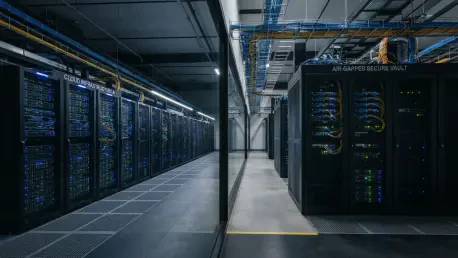

Google’s model choice strategy allows sovereign entities to select between proprietary Gemini models and open-weights alternatives like Gemma or Mistral for specific tasks. This flexibility represents a significant departure from previous cloud offerings, particularly for sectors where data security and national sovereignty are paramount. For many years, organizations in defense, intelligence, and critical infrastructure faced a difficult choice between the rapid innovation of the public cloud and the secure but technologically stagnant nature of air-gapped systems. These isolated environments, physically or logically disconnected from the internet, often lacked the modern artificial intelligence tools required to process vast quantities of data. Google is effectively closing this divide by bringing its full generative AI stack into the secure perimeter of the Google Distributed Cloud (GDC). By providing the same multimodal capabilities and high-performance computing found in public data centers, Google ensures that sovereign entities can now operate at the cutting edge of technology without ever risking a data leak to the outside world.
Boosting Performance With Advanced Hardware and High-Speed Networking
Optimized Infrastructure for Frontier AI Models
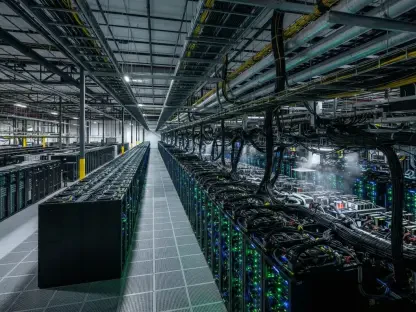
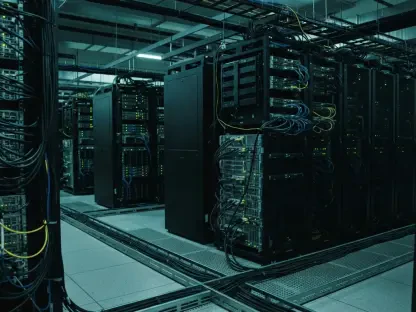
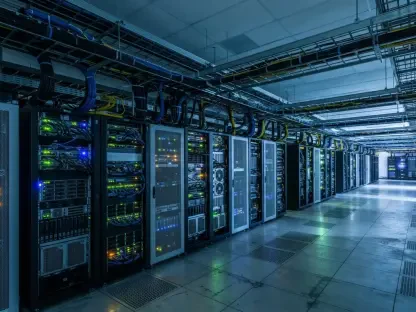
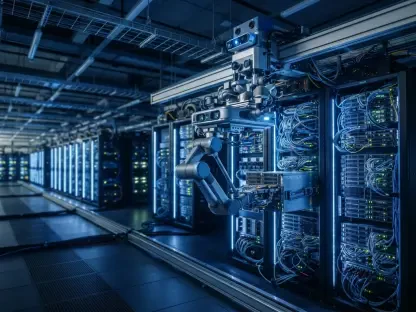
The transition to air-gapped generative AI requires more than just sophisticated software; it demands a fundamental upgrade to the hardware that powers these intensive computations. Google has addressed this need by integrating NVIDIA HGX B300 systems, built on the Blackwell Ultra architecture, into the GDC framework. These GPUs are specifically engineered to handle the massive throughput required for large-scale AI inference and the training of frontier models. In the context of a disconnected environment, having access to this level of hardware means that sovereign entities can execute complex neural network operations without relying on external data centers.
This infrastructure provides the necessary raw power to process trillions of parameters, which is the baseline for modern generative models. By embedding these high-end components directly into the local server racks of regulated industries, Google provides a foundation that can scale alongside the rapidly evolving demands of artificial intelligence research and application. Organizations have begun deploying Gemini 1.5 Flash within their private clusters, enabling a level of multimodal reasoning that was previously restricted to internet-connected facilities. This allows for the simultaneous processing of diverse data streams while maintaining strict air-gap protocols.
Eliminating Bottlenecks Through Enhanced Connectivity
High-speed hardware becomes a bottleneck if the internal network cannot facilitate the rapid movement of data between storage nodes and processing units. To resolve this, Google implemented significant enhancements to the virtual machine networking within the GDC, increasing standard speeds to 32 Gbps per instance. While this jump from the previous standard might appear incremental, it is essential for the high-frequency data exchanges required during complex AI inference tasks. In an environment where every millisecond counts, such as during the analysis of a fast-moving security threat, these networking improvements ensure that the system remains responsive and efficient.
Moreover, the architecture now supports hardware-offloaded IPsec encryption, which allows for node-to-node traffic at speeds reaching 100 Gbps. This ensures that even when massive datasets are being moved across the internal network, the data remains fully encrypted without causing a significant drop in system performance. These connectivity improvements are particularly vital when implementing Retrieval-Augmented Generation (RAG) within an isolated perimeter. RAG allows the generative AI to pull from local, authoritative databases to provide accurate, context-aware answers without the need for constant model retraining, turning a static database into a dynamic asset.
Expanding the Sovereign Ecosystem Through Strategic Partnerships
Integrating Industry-Leading Software and Analytics
The strategic expansion of Google Distributed Cloud extends beyond infrastructure to include a comprehensive suite of platform-as-a-service capabilities. By partnering with industry leaders like Teradata, Google is bringing the Vantage data warehouse and analytics platform directly into the secure, disconnected environment. This integration allows organizations to perform sophisticated data modeling and “at-the-edge” analytics on sensitive information that cannot leave their physical premises. Historically, such deep data analysis would have required moving data to a centralized location, but the new GDC model keeps the processing power right where the data resides.
Managing the complex web of microservices and AI agents that power modern sovereign applications requires specialized governance tools, which is why Google integrated Solo.io into the GDC ecosystem. These features provide advanced API management and service mesh capabilities, which are critical for maintaining the stability and security of applications synchronized across multiple isolated clusters. This level of software sophistication transforms the GDC from a simple storage repository into a functional operational hub. It enables developers within the defense and intelligence communities to build and deploy resilient, scalable applications that are as advanced as those found in the public cloud.
Secure Communication and Comprehensive Threat Detection
Effective collaboration is a cornerstone of strategic operations, yet it remains difficult to achieve securely in an air-gapped environment. Google brought the Mattermost communication platform into the GDC, providing a secure environment for tactical interactions that integrates local AI models for automated translation and summarization. These tools function entirely within the sovereign perimeter, ensuring that no sensitive communications are exposed while improving how information is understood across various levels of command. This integration represents a major shift in tactical communication, where AI aids human decision-making without external dependencies.
The integration of Elastic Security provided the final layer of protection through sophisticated threat-hunting capabilities like SIEM and EDR. These tools allowed security teams to monitor system health and detect potential threats in real-time within the disconnected perimeter. For the future, organizations should prioritize the continuous update of localized models and the expansion of internal developer skills to maintain a competitive edge. This strategic move ensured that data sovereignty and innovation were no longer mutually exclusive goals for sensitive global sectors, paving the way for autonomous secure operations and setting a new standard for technological independence.