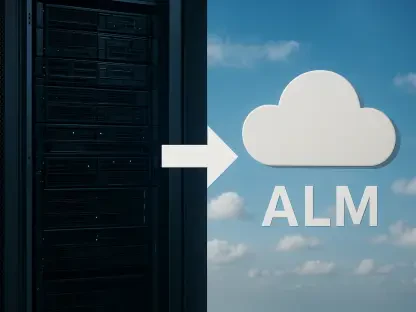

The technological landscape of the mid-2020s has been defined by a relentless pursuit of integration and accessibility, leading to a pivotal realignment of how artificial intelligence is deployed at the enterprise level. The ability to run OpenAI’s agentic workflows directly on Google’s infrastructure prevents the risky movement of sensitive corporate data across different cloud boundaries. This development reflects a sophisticated maturation of the industry, moving away from the era of exclusive, siloed partnerships and toward a more flexible, multi-cloud reality. By embedding the GPT-6 suite directly into the Google Cloud Model Garden, both organizations have acknowledged that the future of the digital economy depends on interoperability rather than closed ecosystems. This strategic shift addresses the persistent demand from global enterprises for a unified environment where diverse models can be leveraged without the friction of multiple vendor contracts or complex cross-cloud security configurations. As organizations increasingly rely on generative systems for mission-critical operations, the arrival of this partnership serves as a foundational change in the competitive dynamics of the hyperscaler market.
Technical Specifications and Capabilities of the GPT-6 Family
A Tiered Approach: Frontier Models in Detail
The deployment of the GPT-6 family within Google Cloud introduces a nuanced hierarchy of capabilities tailored to the specific operational demands of modern business. At the summit of this architecture sits GPT-6 Astra, a model engineered for unprecedented reasoning and high-level cognitive tasks. Astra functions as the flagship engine for complex scientific research, intricate software architecture design, and advanced computer-use simulations that require deep contextual understanding. Unlike its predecessors, Astra demonstrates a refined ability to maintain coherence across massive token windows, making it the preferred choice for long-form strategic planning and high-stakes decision-making. By offering this high-end intelligence tier natively on Google Cloud, OpenAI allows businesses to tackle the most difficult problems using the same infrastructure that hosts their primary data lakes, thereby reducing the latency that previously hindered the performance of such large-scale frontier systems.
Complementing the raw power of Astra are the GPT-6.1 Sol and GPT-6 Luna models, which provide a balance of speed and efficiency for high-volume applications. Sol is positioned as the efficiency-optimized tier, offering intelligence that rivals the top-end systems while being specifically tuned for low-latency agentic coding and professional workflows. This model serves organizations that require immediate responses for interactive applications without sacrificing the sophisticated reasoning required for debugging or complex document synthesis. Meanwhile, GPT-6 Luna addresses the need for massive scalability, functioning as a cost-effective solution for everyday interactions and high-frequency data processing. This tiered strategy ensures that an enterprise can allocate its computational resources effectively, using Astra for research and development while relying on Sol and Luna for customer-facing interfaces and routine automation, all within a single manageable environment.
The Evolution of Agentic Workflows: Codex in Focus
The integration of OpenAI’s Codex into the Google Cloud infrastructure marks a transition from simple autocomplete features to fully autonomous agentic workflows. In the current 2026 environment, Codex has evolved into a sophisticated multi-step agent capable of planning, executing, and verifying complex software development tasks with minimal human intervention. These workflows are designed to understand high-level intent, allowing developers to describe a feature or a system requirement and watch as the agent generates the necessary code, integrates it into existing repositories, and runs preliminary testing. Because these agents operate natively within Google’s secure compute environment, they have direct access to the necessary storage and development tools, which drastically speeds up the software development lifecycle. This native interaction eliminates the traditional barriers between AI reasoning and actual execution, fostering a more fluid and productive environment for engineering teams.
Furthermore, the security benefits of hosting these agentic workflows on Google’s specialized infrastructure cannot be overstated. By maintaining the entire process within a single cloud provider’s security perimeter, organizations can apply their existing identity and access management policies to the AI agents themselves. This means that a Codex-driven agent follows the same compliance protocols as a human developer, with full audit trails and logging for every action taken within the system. This level of oversight is critical for maintaining the integrity of corporate codebases and ensuring that autonomous systems do not introduce vulnerabilities or unauthorized changes. The partnership essentially turns the AI model from an external tool into an integrated component of the enterprise’s core technology stack, allowing for a more aggressive adoption of autonomous coding practices without the typical risks associated with third-party tool integration.
Financial Logistics and Market Transformation
Streamlined Procurement: Unified Billing and Spend Credits
For the chief financial officers and procurement leads of major corporations, the most tangible benefit of this partnership is the radical simplification of the purchasing process. By making OpenAI’s models available through the Google Cloud Marketplace, the companies have enabled a unified billing system where AI usage is consolidated into a single monthly invoice alongside other cloud expenditures. This logistical improvement removes the need for organizations to undergo separate vendor onboarding processes for OpenAI, which can often take months due to legal and security reviews. Instead, enterprises can begin leveraging GPT-6 models immediately, treating them as a standard service within their existing Google Cloud account. This move effectively treats AI intelligence as a utility, similar to storage or compute power, which simplifies the long-term planning of technology budgets and reduces the administrative burden on corporate IT departments.
The financial flexibility of this arrangement is further enhanced by the ability of enterprises to use their pre-negotiated Google Cloud spend commitments toward OpenAI services. This is a critical development because many large organizations have committed to multi-million dollar contracts with Google Cloud to secure favorable pricing on infrastructure. Previously, these funds were locked into Google-native services, creating a financial barrier to adopting OpenAI’s models. By unlocking these credits for use with GPT-6 Astra, Sol, and Luna, the partnership has effectively lowered the cost of entry for many of the world’s largest companies. This financial strategy not only incentivizes existing Google Cloud customers to stay within the ecosystem but also provides a compelling reason for them to experiment with more sophisticated and potentially expensive frontier models that might have otherwise been deemed cost-prohibitive under a separate contract.
The Shift to Multi-Cloud: Ending the Era of Exclusivity
The industry consensus has shifted toward the realization that the era of exclusive cloud-model partnerships was a temporary phase in the development of the AI market. For several years, the exclusivity between specific model makers and hyperscalers was a major differentiator, but as enterprise needs grew more complex, these rigid arrangements began to stifle innovation. OpenAI’s decision to broaden its distribution to Google Cloud, alongside its presence on other major platforms, represents a definitive pivot toward a multi-cloud strategy. This shift is driven by the demand from customers who refuse to be locked into a single provider and want the freedom to choose the best model for a specific task regardless of where their data is hosted. By breaking the exclusive mold, OpenAI has positioned itself as the industry’s primary intelligence layer, accessible to any organization regardless of their underlying cloud infrastructure.
This transformation forces cloud providers to compete on the actual quality of their hosting environment rather than just the exclusivity of their partnerships. Google Cloud’s ability to offer a diverse Model Garden that includes its own Gemini models, alongside OpenAI’s GPT-6 and others, sets a new standard for what an enterprise AI platform should look like. This competitive environment benefits the end-user, as it drives down prices and encourages the development of better governance, security, and integration tools. In this new landscape, the value proposition for a hyperscaler is no longer just about having the fastest chips or the most models; it is about providing the most seamless and secure way to orchestrate those models into a coherent business strategy. The normalization of multi-cloud AI distribution ensures that the market remains dynamic and that organizations are not penalized for maintaining diverse technology stacks.
Competitive Landscapes and Regulatory Impact
The Hyperscaler Race: Breadth of Model Choice
The competitive dynamics between Google, Microsoft, and Amazon have entered a new phase where the variety and accessibility of model families define a platform’s success. Google Cloud’s strategic move to host the GPT-6 suite has placed it in a unique position, as it now offers the three most prominent closed-source large language model families: Gemini, OpenAI, and Anthropic’s Claude. This comprehensive offering creates a compelling “one-stop-shop” for enterprises that want to compare performance across different models for specific use cases. By providing such an extensive variety, Google Cloud has effectively neutralized the competitive advantage previously held by its rivals who relied on exclusive access to specific frontier systems. The focus has shifted from the rarity of the models to the versatility of the platform that hosts them, making breadth of choice a key metric for enterprise evaluation.
This pressure is felt acutely by other major players in the cloud space, who must now find new ways to maintain their market share. Microsoft Azure, while still a major partner for OpenAI, no longer holds the exclusive key to those models, forcing it to lean more heavily into its deep integration with the broader 365 productivity suite and its specialized AI Foundry tools. Amazon Web Services, through its Bedrock platform, continues to emphasize a wide array of third-party models but must now contend with a Google Cloud environment that is arguably more integrated for those seeking top-tier OpenAI capabilities. As the hyperscaler race accelerates, the focus will likely move toward vertical integration—creating specialized versions of these models for specific industries like medicine, law, or engineering. The platform that can provide the most specialized and efficient versions of these global models will likely lead the next wave of corporate adoption.
Governance and Security: Impact on Regulated Industries
The adoption of frontier AI in highly regulated sectors like healthcare, finance, and government has historically been slowed by the immense difficulty of navigating data residency and security compliance. The partnership between OpenAI and Google Cloud directly addresses these hurdles by allowing organizations to deploy GPT-6 models within the existing compliance frameworks of Google’s global infrastructure. This means that a hospital system or a financial institution can utilize the reasoning capabilities of Astra while ensuring that all data processing occurs within a specific geographic region or under a particular security certification like HIPAA or FedRAMP. By keeping the data within the Google Cloud boundary, these organizations avoid the arduous process of conducting entirely new risk assessments for OpenAI as a standalone vendor, significantly reducing the time required to bring new AI-driven services to market.
Furthermore, the integration provides enhanced visibility and control over how these models interact with sensitive information. Google Cloud’s robust logging and auditing tools allow compliance officers to monitor every interaction the model has with internal databases, ensuring that no sensitive information is leaked or used in an unauthorized manner. This level of transparency is essential for maintaining trust in sectors where a single data breach or a failure in model governance can have catastrophic legal and financial consequences. The ability to apply uniform security policies across Gemini, GPT-6, and other models within the same cloud environment simplifies the work of security teams, who no longer have to manage disparate protocols for different AI providers. This standardized approach to governance is likely to spark a surge in AI projects within the public sector and other risk-averse industries that were previously hesitant to move beyond pilot programs.
Future Outlook and Integration Strategies
Integration with the Developer Ecosystem: Antigravity and Agents
The technical integration of OpenAI’s models into Google’s specialized developer tools, such as the Google Antigravity platform and the Gemini Agent framework, represents a significant step toward high-level interoperability. Google is not merely acting as a reseller of OpenAI’s technology; it is treating the GPT-6 suite as a foundational reasoning engine that can be swapped into existing development pipelines. This allows a developer to use Google’s native data connectors, search APIs, and storage solutions to build an application, while choosing the specific AI “brain” that best suits the task at hand. For instance, an engineer might use the Gemini Agent framework to manage the UI and data retrieval but call upon GPT-6 Astra for the most complex logic or strategic planning phases of the workflow. This modular approach to building AI agents provides a level of flexibility that was previously unavailable in a unified cloud environment.
This development also has profound implications for the creation of autonomous enterprise agents that can perform work across different software applications. By leveraging Google’s massive suite of productivity tools and enterprise software, OpenAI’s agentic models can interact with spreadsheets, documents, and communication platforms more effectively than ever before. The synergy between OpenAI’s reasoning capabilities and Google’s expansive software ecosystem creates a powerful platform for the next generation of digital workers. Developers are no longer restricted to building simple chatbots; they are now creating sophisticated systems that can navigate complex enterprise environments, make informed decisions, and execute tasks across a wide variety of tools. This deep level of integration ensures that the partnership will remain a central pillar of the enterprise technology landscape for the foreseeable future, as it provides the necessary infrastructure for the rise of truly autonomous business operations.
Synthesis of Market Impact: Looking Toward Future Strategies
The collaborative efforts between these two technology giants signaled a definitive shift in the priorities of the global AI market toward the end of the year. Industry leaders recognized that the most successful organizations were those that prioritized architectural flexibility and data security over the pursuit of a single, all-encompassing model. The partnership effectively removed the bureaucratic and technical roadblocks that had previously slowed the deployment of frontier AI, allowing for a more rapid and widespread adoption of agentic systems across the global economy. By aligning their interests, OpenAI and Google Cloud established a new benchmark for corporate cooperation, demonstrating that even fierce competitors could find common ground in the pursuit of providing better tools for their customers. This model of shared infrastructure and model neutrality became the expected standard for all major cloud providers as they prepared their strategies for the coming years.
The strategic decisions made during this period focused on long-term scalability and the reduction of operational costs for high-volume AI tasks. Competitive pricing models and the implementation of sophisticated routing layers became the primary tools for enterprises looking to optimize their AI spend. These routing layers allowed businesses to automatically direct simple queries to more efficient models like Luna, while reserving the expensive reasoning power of Astra for the most critical assignments. As the industry moved toward the next cycle of budgeting and development, the insights gained from this partnership provided a clear roadmap for how to manage a diverse and powerful AI portfolio. The move away from exclusivity ultimately fostered a more resilient and innovative ecosystem, where the value was found in the creative application of these tools rather than in the mere possession of the technology itself. This transition ensured that the benefits of frontier AI were accessible to a broader range of organizations, setting the stage for a new era of digital transformation.