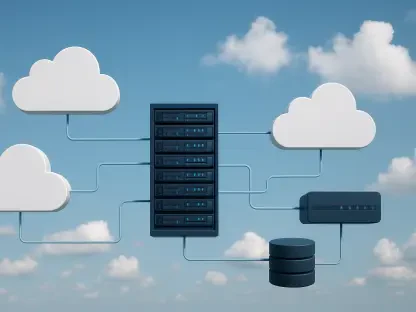

The rapid ascent of artificial intelligence is fundamentally rewriting the rulebook for enterprise data management across Southeast Asian economies where local control is now mandatory. While the allure of global public clouds remains strong, the strict reality of data residency laws and the need for low-latency processing have forced a paradigm shift toward localized infrastructure. For many government agencies and financial institutions in the region, the challenge is no longer just about adopting AI but doing so within a framework that ensures absolute sovereignty over proprietary data assets. This tension between global innovation and local regulation has paved the way for a new generation of cloud environments that prioritize physical and digital borders without sacrificing the computational power required for modern machine learning. By merging high-performance hardware with advanced virtualization, these environments provide a bridge between legacy security and future-facing intelligence, allowing for a seamless transition from experimental labs to massive production scales.
Strengthening Digital Foundations: Strategic Partnership Goals
Establishing Regional Leadership: The VMware Cloud Foundation
Viettel IDC, serving as the digital infrastructure backbone of the Viettel Group, has cultivated nearly two decades of expertise in managing complex data ecosystems within the Vietnamese market. Operating fifteen sophisticated data centers that cater to over forty thousand clients, the organization has established a significant presence that dictates the pace of technological adoption in the region. Broadcom’s recent designation of Viettel IDC as the 2026 VMware Cloud Foundation as a Service Partner of the Year for Asia Pacific serves as a testament to this operational excellence. This recognition is not merely symbolic; it reflects a deep technical proficiency in deploying managed services that satisfy the most stringent security and uptime requirements. By aligning their localized expertise with global software standards, the collaboration provides a blueprint for how national telecommunications leaders can pivot toward high-value cloud services. This partnership effectively bridges the gap between local market demands and the global technological vanguard.
The VMware Cloud Foundation serves as the cornerstone of this strategic evolution by providing a comprehensive platform that integrates compute, storage, and networking into a single automated layer. This technological core allows for the deployment of a modernized private cloud that mirrors the agility of public hyperscalers while maintaining the isolation necessary for a sovereign environment. By utilizing this framework, Viettel IDC can offer a standardized operating model that simplifies the complexity of managing large-scale data centers. The automation inherent in the platform reduces the likelihood of human error, which remains a leading cause of security vulnerabilities in modern IT environments. Furthermore, this unified approach ensures that updates and security patches are applied consistently across the entire infrastructure, maintaining a high posture of defense against evolving cyber threats. This foundational stability is essential for organizations that cannot afford downtime or data breaches in their quest for digital transformation.
Unified Operating Models: Overcoming Fragmented Architectures
Many organizations currently struggle with what is often described as a Frankenstein architecture, where disparate systems from multiple vendors are cobbled together in an attempt to meet diverse needs. This fragmentation creates significant operational overhead, as IT teams must manage different interfaces, security protocols, and support lifecycles for each component. The partnership between Viettel IDC and Broadcom addresses this specific pain point by replacing these disconnected stacks with a unified, consistent operating model. This shift allows for the management of traditional virtual machines alongside modern containerized applications on the same underlying infrastructure. By consolidating these environments, enterprises can reduce the tax of complexity that often drains budgets and slows down innovation. The move toward a single-platform approach eliminates the silos between development and operations teams, fostering a more collaborative environment. Consequently, this streamlines the delivery of new services and ensures that the business remains agile.
Beyond just consolidation, this unified model provides a predictable path for lifecycle management that is often missing in heterogenous environments. When infrastructure is standardized, the process of scaling resources up or down becomes a matter of software configuration rather than manual hardware provisioning. This level of control is particularly beneficial for organizations that are modernizing their legacy applications incrementally. Instead of a high-risk strategy, businesses can migrate workloads to the new sovereign cloud at a pace that aligns with their specific risk tolerance and budgetary constraints. The platform’s ability to handle heavy AI workloads without requiring specialized stacks further enhances its value proposition. By maintaining strict lifecycle management across all services, Viettel IDC ensures that every layer of the cloud stack—from the hypervisor to the orchestration software—remains optimized and secure. This holistic management style reduces the long-term total cost of ownership while providing the flexibility needed to adapt to future technological shifts.
Optimizing Performance: Economic and Private AI Innovation
Realizing Operational Efficiency: Private AI Advancements
The transition to a cloud environment powered by the VMware Cloud Foundation has yielded measurable economic and operational improvements for early adopters in the region. Real-world data from the banking and financial sectors suggests that consolidating infrastructure on this platform can lead to a reduction in overall operational costs by as much as forty percent. Such savings are achieved through higher hardware utilization rates and a significant decrease in the manual labor required to maintain the system. Furthermore, the time required to provision new virtual resources has been slashed by more than seventy percent, moving from a scale of weeks to just a few hours. These efficiencies allow businesses to bring new digital products to market much faster than their competitors who are still bogged down by legacy processes. With service availability reaching high thresholds, the platform ensures that critical business operations remain uninterrupted. This high level of resiliency is a non-negotiable requirement for modern enterprises.
Private AI innovation represents the next logical step for organizations that have achieved operational stability within their sovereign cloud environments. This concept allows companies to utilize the power of large language models and other advanced machine learning techniques without exposing their proprietary data to the public internet. By creating a secure island for AI development, Viettel IDC enables enterprises to train models on their own sensitive data, such as customer records or proprietary trade secrets. This approach mitigates the risks associated with data leakage and ensures that the resulting intelligence remains the exclusive property of the organization. Managed GPU clouds are instrumental in this process, providing the heavy-duty computational power necessary for training and inference at scale. As businesses move from the testing phase to full-scale AI production, having a dedicated, secure infrastructure becomes the primary differentiator for success. This focus on privacy-centric AI allows for the development of highly specialized tools tailored to local markets.
Vertical Integration: High-Security Cloud Applications
The utility of a sovereign-by-design cloud is most clearly demonstrated in high-security vertical markets such as government, finance, and healthcare. In these sectors, the legal and ethical implications of data mismanagement are severe, making the control provided by a private cloud essential. For government agencies, the platform supports the modernization of citizen-facing services, ensuring that personal data is handled in accordance with national security standards. In the financial sector, banks are using these secure environments to run complex risk assessment algorithms and fraud detection systems that require massive datasets. The ability to process this information locally reduces latency and improves the speed of decision-making, which is critical in the fast-moving world of global finance. Healthcare providers also benefit from this localized approach, as it allows for the secure storage and analysis of patient records for medical research without violating privacy regulations. This vertical integration ensures each industry leverages the cloud while remaining compliant.
Academic research and complex scientific simulations represent another area where the localized power of an AI-ready cloud provides significant advantages. Universities and research institutions often deal with vast amounts of data that are subject to strict ethical guidelines and regional funding requirements. By utilizing a managed sovereign cloud, these organizations can access the high-performance computing resources they need without the complexities of managing their own physical server farms. This democratizes access to advanced technology, allowing researchers in Southeast Asia to compete on a global stage. The platform’s ability to support diverse workloads—from genomics research to climate modeling—makes it an indispensable tool for regional innovation. Furthermore, the integration of managed services allows academic teams to focus on their research rather than on the underlying IT infrastructure. This shift in focus accelerates the pace of discovery and helps to build a more robust knowledge economy. The collaboration between technology providers and the public sector thus creates a virtuous cycle.
Aligning with Data Laws: Sovereign-by-Design Infrastructure
As the regulatory landscape in Vietnam evolved with the implementation of the Personal Data Protection Law and new cybersecurity mandates, the demand for sovereign solutions intensified. These laws placed a high premium on where data was stored and who had the authority to access it, creating a complex compliance environment for multinational and local firms alike. Viettel IDC’s sovereign-by-design architecture addressed these requirements by integrating security and residency controls directly into the foundation of the cloud. This meant that data residency was not an afterthought or an add-on feature but a core component of the system’s architecture. By choosing a cloud that was built from the ground up to respect national borders, companies significantly simplified their compliance workflows. This proactive approach to regulation reduced the risk of legal penalties and helped to build trust with both consumers and government regulators. In a world where data privacy was a major concern, having a provably secure and compliant infrastructure was a major asset.
Decision-makers successfully recognized that the move toward sovereign AI was not merely a technical upgrade but a fundamental requirement for long-term national competitiveness. They prioritized the implementation of localized data nodes that satisfied both the immediate needs of developers and the long-term demands of legal compliance officers. Organizations focused on auditing their existing data streams to identify which workloads required the enhanced security of a private cloud environment versus a public one. By establishing these clear boundaries, enterprises created a resilient roadmap for scaling machine learning models without risking their intellectual property. The integration of advanced virtualization with local physical control proved to be the most viable path forward for high-stakes industries. Leaders who acted decisively in adopting these sovereign-by-design models secured a distinct advantage in the digital economy. They ensured that their data remained protected while their innovation cycles continued to accelerate at an unprecedented pace during the transition.