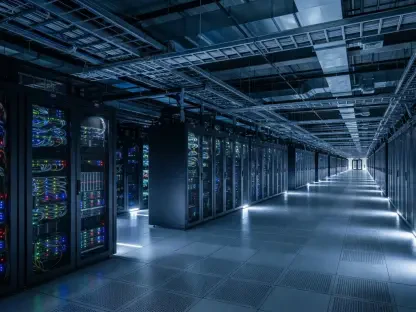

By establishing a dual-region architecture between Kuala Lumpur and Johor, Microsoft is addressing the critical need for domestic data residency and disaster recovery within Malaysia. This strategic move signifies more than just a simple expansion of data storage capacity; it represents a comprehensive commitment to the technological sovereignty of the nation in an era defined by high-intensity artificial intelligence workloads. As of 2026, the demand for localized computing power has reached a fever pitch, driven by both private sector innovation and public sector digital transformation initiatives. The introduction of the Microsoft Southeast Asia 3 region in Johor Bahru effectively doubles the company’s hyperscale presence in the country, providing a robust foundation for the next decade of digital growth. This expansion is timed perfectly to capitalize on the increasing industrialization of the southern corridor, where the proximity to regional financial hubs creates a unique ecosystem of high-speed connectivity and low-latency interaction. By diversifying its physical footprint across two distinct geographic zones, the organization ensures that its cloud services remain resilient against localized disruptions while providing the scalability required for modern generative AI models. The announcement has sent ripples through the regional tech sector, forcing competitors to reevaluate their own infrastructure strategies in light of Microsoft’s massive new capacity goals. This development positions Malaysia as a primary destination for hyperscale infrastructure, moving beyond its traditional role as a supporting player to Singapore’s established tech hub.
The Evolution: Defining Microsoft Southeast Asia 3
The launch of the Microsoft Southeast Asia 3 region in Johor Bahru marks a definitive step forward in the company’s multi-year investment plan for the region. This new deployment follows the successful activation of the Malaysia West region in Greater Kuala Lumpur, which officially began operations in May 2025. While Malaysia West provided the initial framework for sovereign cloud services, SEA3 is designed to be a far more expansive undertaking. Microsoft has projected that this southern region will eventually grow to become its largest cloud installation across the entire Southeast Asian territory. This ambition highlights a fundamental shift in how cloud providers view the Malaysian market, moving from a single-region presence to a complex, multi-site network that can handle the massive data throughput required by modern enterprises. Although the company has remained strategically vague regarding specific megawatt capacities or the exact number of data center halls currently under construction, the scale of the physical land acquisition suggests a capacity that will dwarf previous installations. The designation of this region as “coming soon” indicates that while the infrastructure is in the final stages of physical development, the provisioning of software-defined networking and specialized hardware is the current priority for local engineering teams.
Beyond the physical footprint, the conceptual design of SEA3 is built around the specific requirements of the current artificial intelligence boom. Microsoft has branded this new region as an “AI-ready” hub, a designation that implies significant architectural differences compared to traditional data centers. This includes the integration of higher power densities per rack and advanced cooling solutions designed to support the intense thermal output of modern graphics processing units used in machine learning. By focusing on these specialized capabilities, the organization is positioning SEA3 as the primary site for large-scale model training and inference within the region. This approach allows local startups and established corporations to access cutting-edge compute resources without the latency issues associated with routing traffic through international hubs. The transition from general-purpose cloud computing to these specialized AI-centric environments represents a maturation of the Malaysian digital landscape, where the focus has shifted from simple storage to high-performance computational utility. As the region moves toward full operational status, it serves as a beacon for high-tech investment, attracting a secondary ecosystem of software developers, data scientists, and infrastructure specialists who are eager to leverage the most advanced cloud tools available on the market today.
Geographic Strategy: The Johor-Singapore Nexus
The selection of Johor Bahru as the primary site for Microsoft Southeast Asia 3 is a masterstroke of geographic and economic planning. For several years, the “Johor-Singapore” corridor has been emerging as one of the most concentrated data center zones in the world, driven largely by the constraints faced by its southern neighbor. Singapore, despite its status as a global financial powerhouse, has struggled with severe limitations regarding land availability and renewable energy sourcing for new hyperscale projects. This has created a natural spillover effect where Johor provides the physical space and power infrastructure that Singapore can no longer accommodate. By establishing a massive presence just across the border, Microsoft can maintain ultra-low latency connectivity to the Singaporean business ecosystem while enjoying the scalability offered by the Malaysian mainland. This cross-border synergy is a critical component of the company’s regional strategy, allowing it to serve a diverse client base that spans two of the most active economies in Southeast Asia. The industrial parks in Johor have been transformed into high-tech corridors, supported by an extensive network of fiber optics that ensures seamless data transmission between the new data center campus and the regional headquarters located in the city-state.
The Malaysian government has been a proactive partner in this geographic transformation, utilizing the Malaysian Investment Development Authority to streamline the entry of global tech giants. The reported RM385.7 billion in data-center-related investments between 2021 and mid-2026 is a testament to the success of these initiatives. Johor, in particular, has benefited from specialized economic zones that offer tax incentives and streamlined permitting processes for infrastructure projects that meet specific sustainability and employment criteria. This supportive regulatory environment has made it easier for Microsoft to commit to long-term projects that require significant capital expenditure and complex logistical coordination. The influx of capital has also led to improvements in local utility infrastructure, ensuring that the power grid and water supply systems can support both industrial growth and the needs of the surrounding community. For Microsoft, the Johor location is not just about proximity to Singapore; it is about embedding itself in a rapidly growing domestic market that is hungry for digital tools. As manufacturing and logistics firms in southern Malaysia increasingly adopt automation and predictive analytics, having a local hyperscale region becomes a competitive advantage that drives further adoption of cloud-based services.
Architectural Integrity: The Power of Dual-Region Deployment
One of the most compelling aspects of the Microsoft Southeast Asia 3 announcement is the realization of a true dual-region architecture within the borders of Malaysia. This setup provides a level of domestic resiliency that was previously unattainable for many organizations operating in the country. For highly regulated industries such as banking, insurance, and government services, the ability to maintain primary and secondary data sites within the same national jurisdiction is a significant advantage. It allows these entities to meet strict data residency requirements while implementing robust disaster recovery protocols that ensure business continuity even in the face of catastrophic localized failures. By operating both Malaysia West in Kuala Lumpur and SEA3 in Johor, Microsoft has created a redundant system that eliminates the geographic single point of failure that often plagues smaller cloud markets. This architectural redundancy is a prerequisite for moving mission-critical workloads to the cloud, as it provides the high-availability guarantees that modern digital services demand. The 300-kilometer distance between the two regions is mathematically optimal, offering enough separation to avoid shared environmental risks while remaining close enough for high-speed synchronous data replication.
This dual-region strategy also has a direct impact on the performance and latency experienced by end-users across the country. By distributing workloads across the northern and southern industrial hubs, Microsoft can ensure that data packets take the most efficient route possible, reducing round-trip times for local enterprises. This is particularly important for real-time applications such as financial trading platforms, industrial internet of things networks, and consumer-facing mobile applications that require instantaneous feedback. Furthermore, the existence of two regions within Malaysia allows for more sophisticated load balancing and traffic management strategies. Organizations can now architect their applications to run across both regions, utilizing “active-active” configurations that provide seamless failover and better overall resource utilization. This shift in infrastructure availability is encouraging local IT leaders to modernize their legacy systems, moving away from on-premises servers that lack the scalability and resilience of a multi-region cloud environment. As the Malaysian digital economy continues to mature, the presence of two distinct sovereign regions will be seen as the gold standard for high-performance computing and data management in the Southeast Asian region.
Infrastructure Design: Scaling for the AI Era
The technical specifications of the upcoming Southeast Asia 3 region reflect a significant evolution in how hyperscale facilities are designed and operated. Unlike the general-purpose data centers of the early 2020s, the SEA3 campus is being constructed with a specific focus on the thermal and electrical demands of modern artificial intelligence. This means that the physical infrastructure—from the electrical substations to the cooling towers—is being built to support much higher rack densities than previous generations. Generative AI workloads require specialized hardware, such as the latest NVIDIA H-series or Blackwell GPUs, which consume far more power and generate significantly more heat than standard central processing units. To manage this, Microsoft is likely employing advanced cooling technologies, potentially including liquid-to-chip cooling or closed-loop evaporative systems that are more efficient than traditional air-conditioning methods. These engineering choices are essential for maintaining the stability of high-performance computing clusters that run 24/7 to train complex neural networks. The branding of the region as “AI-ready” is a signal to the market that the physical constraints of yesterday’s data centers will not limit the innovations of tomorrow.
In addition to the physical cooling and power improvements, the SEA3 region is expected to feature the latest in software-defined infrastructure and networking. This includes high-bandwidth interconnects that allow for the massive parallel processing required by large language models. By minimizing the internal latency between server racks, Microsoft can offer a computing environment where thousands of GPUs can act as a single, unified supercomputer. This level of technical sophistication is necessary for organizations that are moving beyond simple AI experimentation and into the realm of production-grade deployments. The transition from the Malaysia West region to SEA3 also provides an opportunity for Microsoft to implement the lessons learned from its global operations, integrating the most efficient and reliable hardware configurations from the outset. While Malaysia West remains a critical foundation for general compute and storage, the Johor region is clearly being positioned as the high-performance “engine room” of the Malaysian cloud ecosystem. This division of labor between the two regions allows customers to choose the environment that best fits their specific workload requirements, whether they are running a simple web application or a massive generative AI model.
Economic Catalysts: Measuring the Cloud Dividend
The economic implications of Microsoft’s expansion into Johor are vast, extending far beyond the immediate construction costs of the data center facilities. According to detailed research from the International Data Corporation, the “Microsoft Cloud Dividend” for Malaysia is expected to generate approximately $10.9 billion in new revenues for the national economy by 2028. This figure represents the broader impact of the Microsoft ecosystem, which includes the revenue generated by local partners, software vendors, and customers who utilize the cloud to grow their businesses. The availability of high-scale cloud infrastructure acts as a force multiplier for the economy, enabling small and medium-sized enterprises to access the same advanced tools as global corporations. This democratization of technology is a key driver of productivity gains, as firms can automate repetitive tasks, optimize their supply chains, and reach new markets through digital platforms. The investment in Johor is particularly significant because it focuses on a region that is already a hub for manufacturing and logistics, providing those sectors with the digital infrastructure needed to implement “Industry 4.0” technologies such as predictive maintenance and autonomous robotics.
Job creation is another critical metric for measuring the success of the SEA3 project, with over 37,000 new roles expected to be created across the ecosystem over the next few years. While many of these positions are related to the construction and physical maintenance of the data center campuses, a significant portion will be high-skilled IT roles that require advanced training in cloud architecture, data science, and cybersecurity. The demand for these skilled workers is already driving a shift in the Malaysian education sector, with universities and vocational schools developing new curricula to meet the needs of the growing tech industry. This focus on human capital is essential for the long-term sustainability of the digital economy, as it ensures that the local workforce is capable of not only maintaining the infrastructure but also innovating on top of it. The expansion also creates a ripple effect in the service sector, benefiting local businesses that provide everything from security and catering to specialized engineering services for the data center facilities. By creating a dense cluster of tech-related jobs in Johor, Microsoft is helping to diversify the local economy and reduce its dependence on traditional industries, paving the way for a more resilient and forward-looking economic future.
Competitive Dynamics: The Hyperscale Landscape in Malaysia
Microsoft is operating in an increasingly crowded and competitive market, as Malaysia has become the primary theater for the global “hyperscale war” in Southeast Asia. This competition is being fueled by a simultaneous surge in investment from other technology giants, most notably Google and Amazon Web Services. Google has announced a massive $15 billion investment plan for the region, focusing on building out its own cloud campuses and subsea cable networks to compete directly with Microsoft’s established footprint. Similarly, AWS and Oracle are expanding their Malaysian capacity to meet the growing demand for AI-driven services and high-availability cloud storage. This intense rivalry is a net positive for Malaysian enterprises, as it drives innovation and leads to more competitive pricing models across the industry. However, it also creates a situation where the speed of execution is paramount. Microsoft’s early move to establish a dual-region architecture gives it a significant head start in winning the trust of highly regulated clients who prioritize domestic residency and failover capabilities. The race to become the “largest” cloud provider in the region is not just about physical scale; it is about who can offer the most comprehensive and reliable suite of services to a diverse and demanding client base.
The competitive landscape is further complicated by the role of specialized colocation providers, such as AirTrunk, Bridge Data Centres, and Vantage. these companies build the massive physical “shells” and power infrastructure that hyperscalers often lease to accelerate their time-to-market. In many cases, the growth of the Microsoft cloud footprint is intertwined with the expansion of these colocation giants, creating a complex web of partnerships and competing interests. This proliferation of data center capacity has turned Malaysia into a regional powerhouse for digital infrastructure, attracting attention from global investors who see the country as a safer and more scalable alternative to more established markets. For Microsoft, maintaining its leadership position requires constant investment in new features and hardware, ensuring that its Azure platform remains the preferred choice for developers and IT leaders. The competition for talent is also reaching a critical point, as the simultaneous expansion of multiple hyperscale regions creates a high demand for a limited pool of specialized engineers. This environment necessitates aggressive recruitment and retention strategies, as well as deep partnerships with local governments and academic institutions to ensure a steady pipeline of skilled workers who can support the next generation of cloud services.
Resource Stewardship: Navigating Energy and Water Mandates
The unprecedented growth of the data center industry in Malaysia has brought environmental and resource challenges to the forefront of the national conversation. Data centers are notoriously resource-intensive, requiring vast amounts of electricity to run servers and millions of gallons of water to maintain efficient cooling systems. As multiple hyperscale regions begin to operate simultaneously, the strain on the national grid and municipal water supplies has become a point of concern for regulators and local communities. In response, the Malaysian government has transitioned from an “open-door” policy to a more selective and regulated approach to data center approvals. New projects are now scrutinized for their impact on local resources, with some developments being rejected in areas where water reserves are considered too thin to support both industrial and residential needs. To mitigate these risks, Microsoft and its peers are increasingly required to prove their sustainability credentials, implementing water-recycling systems and maintaining on-site reserves to prevent straining public utilities during shortages. This shift toward resource stewardship is not just a regulatory hurdle; it is a fundamental requirement for the long-term viability of the hyperscale industry in the region.
Sustainability has also become a competitive differentiator, as the Malaysian government now mandates that a significant percentage of data center energy must come from renewable sources. In Johor, this has spurred a massive surge in solar energy investments, with the state targeting 5 GW of solar generation capacity by the end of the decade. Microsoft has been at the forefront of this movement, entering into power purchase agreements and investing in local green energy projects to meet its global carbon-neutral goals. These efforts are essential for balancing the massive electrical load required by “AI-ready” facilities, which consume significantly more power than traditional cloud environments. The integration of renewable energy not only reduces the carbon footprint of the data center but also provides a more stable and predictable long-term energy cost. Furthermore, the push for energy efficiency is driving innovation in hardware design and facility management, as operators look for ways to lower their power usage effectiveness ratios. For the local community, these sustainability mandates ensure that the influx of high-tech infrastructure does not come at the expense of environmental health or resource security. As Microsoft moves forward with the SEA3 project, its ability to navigate these environmental constraints will be a key indicator of its success in the Malaysian market.
Strategic Guidance: Maximizing the Regional Ecosystem
The successful deployment of Microsoft Southeast Asia 3 in Johor Bahru provided a clear roadmap for organizations looking to leverage the next generation of cloud and AI capabilities. By analyzing the trajectory of this expansion, IT leaders and decision-makers realized that the transition to a dual-region domestic model was the single most important development for the Malaysian digital economy. This architectural shift allowed companies to finally move their most sensitive and mission-critical workloads to the cloud, knowing that they had the full support of a resilient, sovereign infrastructure. Many organizations took proactive steps by utilizing Infrastructure as Code tools to ensure their applications were portable and could easily scale across both the Kuala Lumpur and Johor regions. This approach minimized the risk of vendor lock-in and allowed for seamless failover during localized outages, setting a new standard for operational excellence in the region. The availability of specialized AI hardware in the southern region also catalyzed a wave of local innovation, as startups began building custom models that were optimized for the specific needs of the Southeast Asian market, rather than relying on generic global solutions.
The maturation of the Malaysian cloud landscape also necessitated a new focus on talent development and organizational agility. As the technical complexity of the available services increased, firms that invested in upskilling their workforce were able to capture a significantly higher share of the “cloud dividend.” This involved moving beyond basic cloud management and into specialized areas such as AI engineering, advanced data analytics, and green IT management. The collaboration between the private sector and government agencies proved to be a vital component of this success, as it ensured that the regulatory environment kept pace with technological change. Looking back, the announcement of the Johor region was the moment when Malaysia solidified its status as a top-tier global destination for technology infrastructure. The lessons learned during this period of rapid expansion served as a blueprint for other emerging markets, demonstrating that the combination of strategic geographic placement, robust regulatory oversight, and a commitment to sustainability could transform a nation’s digital future. The infrastructure laid down in 2026 became the bedrock upon which the modern Malaysian digital state was built, proving that the cloud was not just a service, but a fundamental utility for national progress.