
Traditional methods of managing industrial hardware are rapidly dissolving as enterprises embrace cloud-native connectivity solutions that treat network access as a software resource rather than a static hardware component. In this modern landscape, the physical complexity of maintaining thousands of geographically dispersed sensors often represents the primary barrier to digital transformation. By transitioning to a software-defined connectivity model, organizations can decouple their operational logic from the underlying physical infrastructure, effectively allowing them to manage their digital assets with the same agility as a cloud computing instance. This fundamental shift ensures that technological deployments are no longer constrained by the limitations of local network availability or the necessity for manual configuration. Consequently, the focus has moved toward creating tangible business value, such as enhancing supply chain visibility or improving customer experience through real-time data.
Overcoming Operational Obstacles
Managing Distributed Assets: Addressing High Costs
Managing a massive fleet of devices across disparate geographic locations has historically introduced significant operational friction that hampers the ability of an enterprise to grow. Traditionally, every time a device required a configuration change or a connectivity update, a physical visit from a technician—often referred to as a “truck roll”—was necessary to resolve the issue. This manual approach is inherently unscalable because the costs associated with labor, travel, and downtime increase linearly with the number of devices deployed. Furthermore, relying on physical intervention creates a dangerous bottleneck where technical errors can take weeks to rectify, leaving critical infrastructure vulnerable or offline. For large-scale global operations, these expenses are not just a nuisance but a complete barrier to expansion. Without a centralized, remote method to address these distributed assets, companies remained stuck in small-scale pilot programs.
To solve these persistent challenges, businesses have increasingly turned to digital management platforms that provide deep visibility into the health and status of every connection. This centralized perspective allows technical teams to diagnose problems from a remote dashboard, eliminating the need for expensive on-site visits and drastically reducing the time to resolution. By moving the management layer to the cloud, the operational cost of scaling an IoT network from a few hundred devices to several hundred thousand becomes manageable. This transition transforms connectivity from an unpredictable variable into a predictable utility that can be monitored and adjusted in real time. Organizations that prioritized this level of control found that they could deploy assets in remote or difficult-to-access environments without fearing the high costs of future maintenance. Ultimately, removing the physical burden of management is the first step toward achieving a seamless digital presence.
Scaling with Standards: Global Cellular Infrastructure
Cellular networks have established themselves as the most reliable and secure foundation for overcoming the geographic limitations that once plagued large-scale digital deployments. Unlike local Wi-Fi or specialized proprietary networks that require the installation and maintenance of local gateways at every single site, cellular technology offers a “plug-and-play” experience on a global scale. This ubiquitous coverage ensures that even mobile assets, such as shipping containers or long-haul trucks, remain connected as they move across international borders and through various carrier zones. The inherent security of cellular protocols, combined with the lack of reliance on local infrastructure, makes it an ideal choice for enterprises that need to guarantee uptime without managing the headaches of local network configurations. This stability is critical for any application where data loss could lead to significant financial consequences, providing a robust backbone for the most demanding industrial requirements.
Beyond simple connectivity, the widespread availability of global roaming and multi-carrier agreements has allowed enterprises to deploy a single hardware version to any market in the world. This standardization simplifies the manufacturing process, as companies no longer need to produce different versions of a device for different regions. By leveraging a single, unified cellular platform, organizations can treat the entire world as a single network, significantly reducing the complexity of their supply chains. Moreover, the integration of cellular connectivity with cloud platforms ensures that data is encrypted from the moment it leaves the device until it reaches its destination. This level of end-to-end security is much harder to achieve on fragmented local networks, making cellular the preferred option for high-trust environments. As a result, companies have gained the confidence to expand into new territories, knowing that their connectivity will remain consistent and secure.
The Shift to Remote Life-Cycle Management
Embedded Flexibility: Using eSIM Technology
The shift from traditional, physical SIM cards to embedded SIM technology has fundamentally changed how industrial devices are maintained over their entire functional lifespans. In many industrial applications, devices are placed in locations that are practically inaccessible, such as inside factory walls, deep underground, or atop remote utility poles. These devices are often expected to operate for a decade or longer without any physical intervention, making the prospect of manual SIM swaps a logistical nightmare. The eUICC standard allows organizations to update network profiles and switch carriers over the air without ever touching the device hardware. This capability ensures that a device remains connected even if a carrier goes out of business or if a better pricing agreement becomes available in a specific region. By embedding the connectivity logic directly into the hardware, companies are effectively future-proofing their investments against the inevitable shifts in the telecommunications market.
Modern industry standards have further simplified the process of programming these connections directly into an organization’s existing IT infrastructure and cloud environments. Instead of dealing with fragmented vendor portals, developers can now use standardized APIs to provision, monitor, and manage their connectivity resources alongside their other cloud services. This integration removes the friction that once existed between the telecommunications side of an operation and the software development side. By treating connectivity as an extension of the software stack, businesses can automate the activation of new devices the moment they are powered on for the first time. This “zero-touch” provisioning model is essential for scaling up operations, as it eliminates the potential for human error during the setup process. This streamlined workflow allows engineering teams to focus their efforts on building better applications rather than wasting time on manual network configuration.
Strategic Orchestration: Automation and Digital Integration
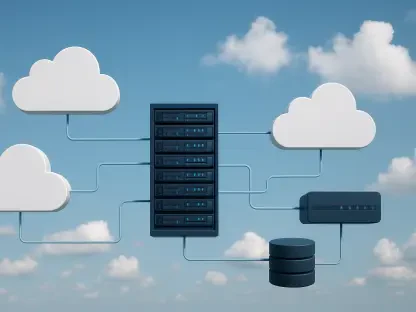
The true power of cloud-based connectivity is realized through a sophisticated software orchestration layer that automates every phase of a device’s functional life cycle. This layer serves as the brain of the operation, coordinating the complex interactions between the hardware, the mobile network, and the back-end applications. Instead of being a static feature, connectivity becomes a dynamic service that can be adjusted in real time based on specific performance metrics or budgetary constraints. For instance, an orchestration platform can automatically switch a device to a secondary network if the primary connection experiences high latency or signal degradation. This level of automation ensures that mission-critical applications remain online and functional without requiring manual oversight from a network operations center. By removing the need for constant human monitoring, companies can manage millions of endpoints with a small team, achieving a level of operational scale that was previously impossible to reach.
Early adopters who embraced this software-centric approach moved away from rigid hardware dependencies and achieved a more resilient and adaptable digital infrastructure. These organizations prioritized the integration of secure hardware identities and robust cloud platforms to ensure that their global operations remained protected from emerging cyber threats. To follow this path, businesses should have audited their current device fleets and replaced legacy physical components with modern eSIM solutions that support remote provisioning. They also utilized automated orchestration tools to minimize the overhead associated with global expansion and maintained a strict focus on data integrity through end-to-end encryption. Looking forward, the next logical step involved leveraging the vast amounts of generated data to feed predictive maintenance models and real-time business intelligence engines. By treating connectivity as a foundational software layer, these companies successfully turned their IoT deployments into a strategic asset.