
The transition from experimental artificial intelligence deployments to enterprise-wide operational reality has become the defining challenge for global business leaders as they navigate the complexities of 2026. While the previous year saw a frantic rush to adopt generative tools, many organizations found themselves trapped in a cycle of endless testing without tangible financial returns. This phenomenon, often referred to as pilot purgatory, occurred because the infrastructure required to scale complex large language models was frequently underestimated by IT departments and executive boards alike. Consequently, the strategic alliance between Accenture and Google Cloud emerged as a pivotal response to this systemic stagnation, aiming to provide the blueprints and specialized talent necessary for true industrialization. By combining massive cloud computing resources with deep industry domain knowledge, these two entities are attempting to dismantle the technical barriers that have historically prevented AI from moving beyond the confines of laboratory environments.
Bridging the Divide: Moving Beyond Proof of Concept
The core of the initiative centers on the development of specialized generative AI refineries that allow enterprises to customize foundational models like Gemini 1.5 Pro for specific vertical requirements. These refineries are not merely software platforms but comprehensive environments where raw corporate data is cleaned, structured, and utilized to fine-tune algorithms for tasks ranging from predictive maintenance in manufacturing to automated underwriting in insurance. By leveraging Google Cloud’s high-performance TPU infrastructure, Accenture can help clients reduce the time it takes to move from a conceptual idea to a production-ready application by several months. This accelerated timeline is essential because the window for establishing a competitive advantage through technological differentiation is closing faster than ever before. Furthermore, the focus has shifted from generic chat interfaces to deeply integrated systems that interact with existing enterprise resource planning software to provide context.
Another critical component of this partnership involves the deployment of agentic workflows that move beyond simple prompt-response interactions toward autonomous task execution. These sophisticated agents are capable of reasoning through multi-step processes, such as identifying a supply chain disruption and automatically suggesting alternative suppliers based on cost and lead time parameters. The collaboration ensures that these agents are built on a bedrock of responsible AI principles, which includes rigorous testing for bias and the implementation of guardrails to prevent hallucination in critical decision-making scenarios. Organizations that have embraced this model-as-a-service approach are discovering that the true value lies in the orchestration of multiple specialized models rather than a single general-purpose engine. As these systems become more prevalent, the role of the worker is evolving into that of a supervisor, focusing on high-level strategy while technology handles the data-intensive heavy lifting that once consumed thousands of hours.
The Infrastructure of Scale: Data Foundations and Security
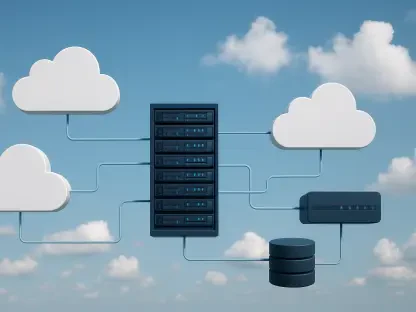
For many global enterprises, the primary obstacle to scaling artificial intelligence remains the fragmented and often inaccessible nature of their proprietary data sets across multiple legacy systems. The partnership addresses this by utilizing Google Cloud’s BigQuery and Vertex AI platforms to create a unified data fabric that serves as a single source of truth for machine learning applications. Accenture’s role in this ecosystem is to provide the architectural expertise required to migrate and modernize these data stores without disrupting ongoing business operations. This process involves the implementation of advanced vector databases that allow for more efficient information retrieval, which is a prerequisite for high-performance retrieval-augmented generation systems. Without a clean and well-governed data foundation, even the most sophisticated neural networks will fail to produce accurate or actionable insights. Consequently, the initial phases of these engagements focus heavily on data hygiene and governance protocols that ensure compliance with global privacy regulations.
The organizations that successfully bridged the gap between experimentation and full-scale deployment focused on aligning their technological investments with specific, measurable business outcomes. They avoided the mistake of treating artificial intelligence as a standalone IT project and instead integrated it into the broader corporate strategy with clear key performance indicators. Leaders recognized that culture change was just as important as the underlying code, necessitating widespread upskilling programs to ensure the workforce could effectively collaborate with new digital tools. Actionable steps for those still trailing behind included auditing existing data pipelines for readiness and establishing a dedicated cross-functional task force to oversee the transition. These pioneers realized that the most effective strategies involved a deep partnership with providers who understood both the technical nuances of the cloud and the operational realities of the industry. By prioritizing a resilient and ethical AI ecosystem, enterprises maintained the flexibility to adapt to market shifts.